Being ready for an emergency helps you keep kids safe and feel calm. This article explains simple steps Georgia early childhood providers and directors can use to learn and practice pediatric #CPR and #AED skills. We link to trusted Georgia resources and training options so you can meet rules and build staff confidence. Remember: state requirements vary - check your state licensing agency.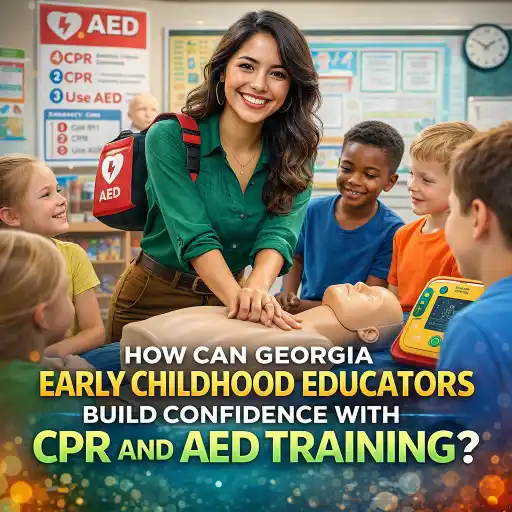
Why does CPR and AED training matter for our #Georgia classrooms?
- 🙂 Children are small, and accidents can happen fast. CPR and AED skills help staff respond in the first minutes before EMS arrives.
- 🔔 Families expect that your program can handle emergencies. Training gives parents confidence and supports your program's reputation.
2) Big benefits for staff and children:
- More calm, clear action when something goes wrong.
- Better teamwork: everyone knows their role.
- Faster reunification and paperwork after an event because you practiced plans ahead of time.
3) Links to help explain the rules and why training is part of meeting state health and safety goals. See the DECAL overview of annual training for Georgia child care staff at ChildCareEd: DECAL training rules. For a short guide on health and safety orientation (first 90 days), see Georgia 10-Hour Health & Safety. These resources show how CPR/AED fits into your bigger safety plan.
What training options meet Georgia rules and build real skills?
- 🔹 In-person pediatric First Aid & CPR/AED (hands-on practice). Example: ChildCareEd's Pediatric In-Person First Aid & CPR/AED Buy Now $95.00.
- 🔹 Blended courses (online + short skills check). Good if staff need flexible times; see ChildCareEd blended options like Blended CPR & AED resources.
- 🔹 Large providers (AHA, Red Cross, HSI) offer recognized cards that many employers accept.
2) What to look for when you sign up:
- Course covers infants, children, and adults (so staff can help anyone on site).
- Includes AED use and choking relief for different ages.
- Offers a certificate accepted by DECAL or your licensing reviewer. ChildCareEd is a DECAL-approved sponsor; see free Georgia training options.
How can centers practice and build staff confidence after training?
- 😊 Monthly drills that include grabbing the Go-Bag and calling for help. Use the ChildCareEd sample action plan and Go-Bag checklist at Sample Emergency Action Plan Buy Now $0.00.
- 🔁 Pair short refresher sessions (10–20 minutes) with staff meetings — practice compression rhythm, AED pad placement, and choking response on manikins when possible.
- 📅 Schedule a full skills check every year or after staff turnover. On-site same-day training options are available in Georgia to keep everyone current.
2) Role practice (who does what):
- Assign 3 clear roles and post them: Lead responder, Note taker/Caller, Go-Bag person.
- 🧑🤝🧑 Run small team scenarios so new staff practice both speaking calmly to children and calling 911.
- Celebrate practice — quick praise helps staff feel able and ready.
What are common mistakes and how do we stay compliant and documented?
1) Common mistakes to avoid:
- 🚫 Letting certification lapse — set calendar reminders for renewals (many cards last 2 years).
- 🚫 Not keeping proof — always save certificates and upload to GaPDS or your files.
- 🚫 Skipping hands-on practice — online-only without skills checks can leave staff unsure.
2) How to keep good documentation:
- 📁 Store certificates, class dates, and training hours in a staff folder and in GaPDS. ChildCareEd explains tracking and Georgia requirements in DECAL training rules.
- 📝 Log drills with date, staff present, time to clear the room, and any notes — these logs show preparedness for inspectors.
- ✅ Use grant funds (if available) for training and AED purchase — Georgia's Health & Safety Grants can help; see Health & Safety Grants.
Conclusion and FAQ
Conclusion: A plan with regular training, short practice drills, and clear records builds staff confidence and keeps #children safer. Start small: book a hands-on skills session, assign roles, and log each practice. If you need a ready-to-use course to certify staff in First Aid and CPR, see the overview Are You Ready? for course options and how to enroll. For more planning tools and templates, explore ChildCareEd's emergency preparedness and course pages like Health & Safety Resources Buy Now $0.00.
FAQ:
- Q: How often must staff have CPR certification? A: Many certifications last 2 years, but check your licensing rules and renew on time.
- Q: Does online training count? A: Blended courses that include a skills check are best — pure online may not meet all licensing needs.
- Q: Who pays for training? A: Some centers pay; Georgia offers grants and scholarships (see DECAL and ChildCareEd resources).
- Q: Where do I keep records? A: Keep a paper file in the center and upload copies to GaPDS or your staff tracking system.
Key links: ChildCareEd's CPR pages and Georgia training guides at Pediatric CPR & First Aid Buy Now $95.00 and Free Georgia training. Stay encouraged — small steps make big safety gains in your #safety plan.
- 45 Hour Child Growth and Development
- Basic Health & Safety and Breastfeeding Awareness
- Adult Only CPR AED and Adult First Aid Blended
- Adult/Child CPR AED and Adult First Aid Blended
- Pediatric RSV First Aid & CPR/AED
- Pediatric In-Person First Aid & CPR/AED Adult, Child, Infant
- 24 Hour Texas Pre-Service
- Texas Director Credential
- CPR for childcare providers: what to know
- Keeping Our Youngest Students Safe: The Vital Importance of Pediatric First Aid and CPR Training for Teachers
- Learn CPR and Be the Hero in a Crisis!!
- ChildCareEd: Empowering Early Childhood Educators with Quality Training
- Getting Ready for the New School Year: Prioritizing Safety with First Aid and CPR Training
- First Aid & CPR ~ Empowerment Through Lifesaving Skills
- CPR Labor Day Weekend Sale ~ Prepare for the New School Year with Pediatric First Aid and CPR
- Pediatric First Aid and CPR Training with ChildCareEd - Empower Yourself!!
- Save Lives With Skill: CPR Training
- CDA Certification en Español: Recursos y Consejos para Educadores Bilingües
- Why Every Parent and Educator Should Learn Adult, Child, and Infant CPR
- 45-Hour Child Care Training in Georgia: Requirements and Options
- How can Georgia early childhood educators build confidence with CPR and AED training?
- What health and safety training do child care programs need?
- What Certifications Do I Need to Open a Child Care Center? Owner vs. Director Requirements Explained
- Which First Aid Course Do Child Care Providers Need for Licensing?
