Measles is back in Michigan in 2026. Child care providers can help stop it. This short guide gives clear steps you can use today to protect #children in your care. Use simple routines, check records, and work with families and public health. This is about keeping kids #safe in #childcare with the power of #vaccination against #measles during an #outbreak.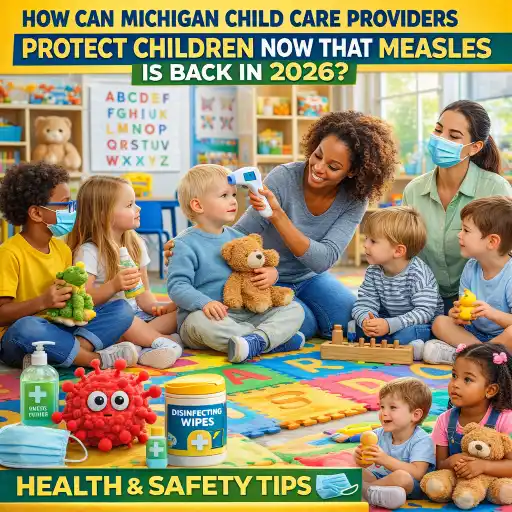
Key local info: Michigan has reported outbreaks in several counties; see recent local updates from the Ottawa County and state health news for context: Ottawa County outbreak and local reporting on state guidance.
Why does this matter to Michigan child care providers?
1. Child care centers mix many children, including babies who are too young for the MMR vaccine. That makes daycares places where disease can spread fast.
2. Outbreaks can close classrooms, worry families, and strain staff. The ChildCareEd guide on preventing illness has clear daily steps to reduce the spread.
Why it matters: protecting kids keeps programs open, parents at work, and families calm. State requirements vary - check your state licensing agency and your local health department for rules and supports.
What practical steps should we take today to prevent the spread of measles?
1. Screen at drop-off: ask about fever, cough, or recent travel. If a family says someone traveled or was exposed, follow public health advice.
2. Isolation plan: Set a quiet, supervised room to separate a child who becomes sick while waiting for pickup. Have PPE (masks, gloves) ready.
3. Clean and ventilate: clean high-touch surfaces often and improve air flow when possible. See cleaning steps in the ChildCareEd prevention guide and CDC cleaning guidance: environmental services.
- Infectious disease prevention and control: To help staff confidently implement daily screening, isolation, and cleaning routines during the outbreak, ChildCareEd's Prevention and Control of Infectious Diseases
 Buy Now $16.00 is a 2-hour online course covering how to recognize symptoms, follow exclusion guidelines, and reduce disease spread in group care settings — a direct match for the drop-off screening, isolation room, and exposure communication steps outlined in this guide.
4. Encourage vaccine access: tell families about free or low-cost options like the Vaccines for Children (VFC) program.
You can also share our Healthy Tips for Back to School guide with families; it clearly explains required immunization records and recent vaccine updates to help children return safely to group care and school.
How do we handle exposures, reporting, and working with public health?
1. Reporting and exclusion: follow local public health on who must stay home. People without proof of immunity may need to stay home up to 21 days after exposure. The CDC explains isolation and work exclusion rules for staff in measles infection control.
2. Protect staff: ensure staff have evidence of immunity (two MMR doses or lab proof). During outbreaks, vaccination for eligible staff is often recommended.
3. Communication: Send a calm, clear note to families if there is a possible exposure. Use templated letters from the CDC toolkit and ChildCareEd templates to explain next steps.
What should we tell families, and how to support vaccinated and unvaccinated children?
1. Message basics to families (short and kind):
- 📝 If made aware of exposure, call us first before bringing a child to the center.
- 🩺 If unsure about MMR records, check with your child’s doctor or local health department.
- 💉 Babies under 12 months may be eligible for an early MMR before travel—advise families who plan travel to talk to a clinician.
2. Vaccine access help: link families to local clinics, pharmacies, and the VFC program for those who qualify. Share the ChildCareEd shots article as a handout.
3. Support for families who must stay home: Be flexible with drop-off and billing during public health exclusions. Help parents know that exclusion helps protect the whole group.
Common mistakes: how to avoid pitfalls?
- ❌ Waiting to check records. Fix: Review immunization files now and ask missing families for proof.
- ❌ Sending a sick child to class. Fix: screen at drop-off and remind families of rules in writing.
- ❌ Using unclear language with families. Fix: use short templates and links to trusted sources like the CDC measles page and ChildCareEd resources.
Quick FAQ
- Q: Can a child get measles from the vaccine? A: No. The MMR vaccine cannot cause measles. See CDC measles resources.
- Q: What if a staff member was born before 1957? A: They may be considered immune, but check local public health guidance and consider vaccination if unsure.
- Q: How long is someone infectious? A: People can spread measles from 4 days before to 4 days after the rash appears.
- Q: Who pays for vaccines? A: Many insurance plans cover vaccines, and the VFC program helps eligible children get free vaccines; see VFC info.
Conclusion
Do these 3 things today: check MMR records, practice screening and isolation steps, and tell families where to get vaccines. For clear program steps,s use ChildCareEd’s guides on prevention and enrollment: prevent spread, shots of success, and basic health & safety.
Keep calm, stay connected to your local health department, and remember: state requirements vary - check your state licensing agency. The CDC and your local public health team are ready to help you during this #outbreak.
If you suspect measles, call your local health department right away before sending anyone to a clinic. The CDC has a toolkit for public health and congregate settings: Be Ready for Measles. 🩺 Health and safety requirements: For programs working to keep immunization records and exclusion policies organized and compliant, ChildCareEd's Health & Safety Requirements for Childcare Providers Buy Now $79.00 is a 10-hour online course covering infectious disease prevention, recordkeeping, and emergency planning — directly supporting the MMR record review, staff immunity verification, and family communication steps described throughout this article.
Measles spreads very easily and quickly. A sick person can infect others even before a rash appears. The CDC explains how contagious measles is.
Latest Jobs
- 45 Hour Child Growth and Development
- CDA Family Child Care Credential with Portfolio Review
- Pediatric RSV First Aid & CPR/AED
- CDA Bridge Bundle: Family Child Care
- CDA Bridge Bundle: Family Child Care without Portfolio Review
- CDA Bridge Bundle: Infant/Toddler without Portfolio Review
- CDA Bridge Bundle: Preschool without Portfolio Review
- Texas Director Credential
- CDA Certification en Español: Recursos y Consejos para Educadores Bilingües
- Child Care in Michigan: What to Expect in 2026
- Regulaciones de Licenciamiento de Cuidado Infantil en California para Centros y Hogares de Cuidado Infantil Familiar
- Proporciones de Cuidado Infantil y Tamaños de Grupo por Edad en Maryland (Guía Rápida para Centros y Hogares)
- Proporciones de Cuidado Infantil y Tamaños de Grupo por Edad en Virginia (Guía Rápida para Centros y Hogares)
- Cómo Trabajar en el Cuidado Infantil en California: Requisitos y Pasos
- What's new for child care in Michigan and how does it affect your program?
- New Daycare Regulations: What’s Changing in 2026?
- Why Are Michigan Employers Investing in Child Care — And What Does That Mean for Providers?
- Canciones, juegos y preguntas de círculo para niños
- How Can Family Child Care Homes in Michigan Join the PreK for All Home-Based Pilot?
- How can Michigan child care providers protect children now that measles is back in 2026?
- How can North Dakota child care providers protect children now that measles is back in 2026?
- How Can New York Child Care Providers Protect Children Now That Measles Is Back in 2026?
- What Do Texas's New Early Childhood Task Force and 2026 Rules Mean for Providers?
- How can I prepare my North Dakota program for the July 13 CCDF rule changes?
- How should Michigan child care providers watch for measles this summer?
- How should New York child care providers respond to a measles exposure?
- What Should Providers Know About the New Measles Guidance for Classrooms?
- What Should Providers Know About Measles and Immunization Records This Fall?
