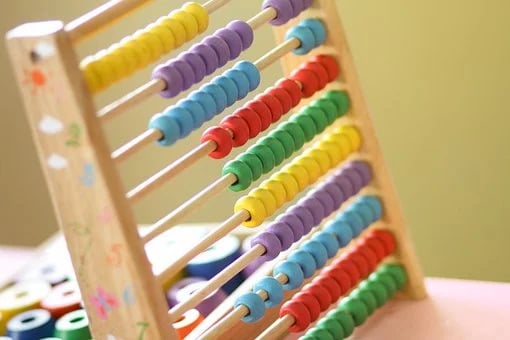
 “Studies have shown that math skills in early childhood are uniquely and strongly predictive of later outcomes across a range of domains and well into adulthood, including the likelihood of graduating from high school and college completion.”
New York City's evaluation of the Making Pre-K Count and High 5s interventions found that curriculum-linked math instruction plus teacher coaching produced measurable gains that lasted into third grade. The studies show early math should go beyond counting and intentionally develop representation, spatial reasoning, patterning, measurement, comparison, and informal problem solving to build robust number sense and mathematical thinking.
If you are seeking professional development in early‑math pedagogy, consider H&H Child Care Training courses such as No Such Thing as Boring Math  Buy Now $24.00 and Math Foundations in Early Childhood Buy Now $16.00. Both courses present research-aligned strategies for embedding mathematics into play, routines, and classroom materials while attending to developmental differences and classroom logistics.
The sections below answer frequent practitioner questions: what the research found, which classroom practices build transferable number sense, how to audit and design math-rich environments, and practical steps to confirm whether a course or certificate will be accepted by your licensing agency or registry.
What did the Making Pre-K Count and High 5s studies find?
The MDRC evaluation summarized in this post reports persistent third‑grade math gains following enhanced preschool and kindergarten math instruction. Key program elements included an explicit math scope and sequence, classroom materials that supported representational thinking, and ongoing teacher coaching. For practitioners, the take-away is twofold: (1) curriculum plus professional learning for teachers matters, and (2) effects can last when instruction targets mathematical concepts, not just counting skills.
How does early math instruction support later academic outcomes?
Early mathematics builds domain-specific skills—number sense, subitizing, and quantitative comparison—and supports domain-general skills like executive function and representational reasoning. Guiding children from concrete manipulatives to representational strategies helps prepare them for algebraic thinking and more complex problem solving. Using math language (comparison words, measurement vocabulary, ordinal terms) in routines and conversations makes concepts easier to notice and assess.
What everyday classroom practices build number sense and reasoning?
Effective practices include: careful use of counting collections to surface strategies, representational tasks that ask children to show different ways to make the same quantity, pattern investigations that probe structure rather than rote repetition, and small‑group games that require comparison and estimation. Practical examples and lesson structures (for instance, counting collections and the Number Race game) provide concrete classroom routines teachers can use to assess and move children's strategies forward. See classroom activity descriptions for representational work and Number Race for concrete teacher steps and observation prompts: Kendall Hunt — Lesson 1.
How can teachers audit and design a math-rich learning environment?
Begin with a short audit: note math vocabulary you hear, inventory open-ended materials (blocks, measuring tools, containers), observe whether labels invite counting/measurement, and check whether small‑group routines include tasks that require representation or comparison. Action steps: 1) rotate materials to scaffold representational practice; 2) script brief prompts that extend children's reasoning ("How do you know?"); 3) embed math provocations in play centers; 4) schedule brief teacher-led numeracy moments tied to routines (snack counting, calendar patterning). For examples of center-based math activities and classroom setups, see related ChildCareEd resources linked below.
How should New York providers confirm compliance with state requirements?
State acceptance of a course, the number of hours credited, or registry recognition varies by role, license type, and program setting. New York providers should confirm acceptance with their local licensing specialist, their registry (if applicable), or the Office of Children and Family Services (OCFS) policy contact before assuming a course will count for a requirement. Review the New York OCFS regulations or guidance page for current lists of approved training categories and contact information. Practical steps: check the OCFS guidance or your registry notes for the specific regulation or training category (for example, whether the requirement is for curriculum/child development, health/safety, or director training), confirm the required number of clock or continuing education hours, and ask whether online or self-paced courses are acceptable for that requirement. Ask for and keep written confirmation (email or registry entry) of acceptance and the regulation number that the licensing specialist cited. Course descriptions on ChildCareEd indicate topics and hours; whether a course counts depends on the licensing agency, your role, program type, and the specific regulation cited by OCFS or the registry.
Which ChildCareEd articles and courses can help me plan math instruction?
Relevant ChildCareEd articles: How can preschool classrooms effectively support early math skills?, How can preschool programs intentionally support early math skills every day?, How Can I Use Fun Math Activities for Preschoolers Every Day?, Preschool Arithmetic Activity, Montessori Math: Preparing Children for Abstract Thinking, and How Can Preschool Teachers Effectively Support Early Math Skills in the Classroom?.
What are the practical next steps and key takeaways for early childhood educators?
1) Review your current math routines and pick one routine to modify so children must use representational strategies (for example, ask children to show more than one way to make a quantity). 2) Schedule a short coaching cycle: observe teachers using the task, give focused feedback on asking reasoning questions ("How do you know?"), and follow up with a second observation to document change. 3) Choose a targeted professional learning course (for example, Math Foundations in Early Childhood Buy Now $16.00 or No Such Thing as Boring Math Buy Now $24.00), confirm with your registry or licensing specialist whether the hours/topic count for your role, and retain written confirmation of acceptance.
What are the key takeaways and next steps?
Research and program evaluations show that a curriculum plus coaching yield durable gains when instruction develops representation, patterning, measurement language, and informal problem solving. Start by setting one measurable goal (for example, the share of children using grouping or representation during counting collections), collect brief formative observation notes across a term, and revise materials or prompts where progress stalls. Combine deliberate routines, simple observation, and targeted professional learning to make early math instruction more likely to improve long-term outcomes.
#math #numeracy #earlylearning #pedagogy #assessment
Letter & Number Planning in Child Care Buy Now $24.00
Our goal is to educate and support the teachers of our youngest learners. We are always looking for ways we can help advance careers and support young children. Consider H&H for all of your training needs. Check our website weekly as new courses are always being added.
- CDA Home Visitor Subject Area 3 Part 3 Birth to 5
- CDA Home Visitor Subject Area 2 Part 3 Birth to 5
- Pediatric RSV First Aid & CPR/AED
- 24 Hour Texas Pre-Service
- Math Foundations in Early Childhood
- Texas Director Credential
- CDA Infants/Toddlers: Brain Development and Gene Expression
- CDA Infants/Toddlers: Stages of Development
- CDA Home Visitor Subject Area 8 Part 1 Birth to 5
- Rooted in History: Early Childhood
- ⏰ Cómo puedo facilitar las transiciones y las rutinas diarias en mi aula?
- What Preschool Math Skills Should I Teach and When?
- Por Qué la Supervisión Activa Es Clave para la Seguridad en el Cuidado Infantil
- How can I teach colors, shapes & numbers through play in Michigan classrooms?
- How Can I Use Fun Math Activities for Preschoolers Every Day?
- How can pumpkin science create meaningful, hands-on fall learning for preschool classrooms?
- Can simple kitchen activities teach valuable skills to young children in child care settings?
- How Can I Help Children Understand Shapes and Patterns?
- How Can Early Math Activities Build Young Children’s Mathematical Thinking?
- How Can a Fourth of July Activity Pack Blend Literacy and Math?
- How Do Color-Matching Activities Support Early Classification Skills?
- How Can Dot Markers Make Number Recognition Practice More Meaningful?
- How Can Concrete Models Help Children Understand Subtraction Before Worksheets?
- How Can You Use a Hundreds Chart Beyond Rote Counting?
- How Can Addition Review Feel Purposeful and Engaging for Young Children?
- ¿Cómo puede la retroalimentación visual apoyar la fluidez en la multiplicación?
- How Can You Make a Math Activity Work for Children at Different Skill Levels?
- How Can Preschoolers Build Towers of the Same Height with Different Numbers of Blocks?
- Can a Classroom Graph Mislead Children? How Picture Size and Spacing Shape What They See
