Aggressive moments—hitting, biting, pushing—can feel scary for staff, children, and families. You are not alone. This article gives clear, kind steps you can use right away and over time in your #preschoolers room. It is written for directors and child care providers who want practical, safe plans that protect everyone and teach new skills. Remember: state requirements vary - check your state licensing agency.
Why does handling aggression matter, and what should we watch for?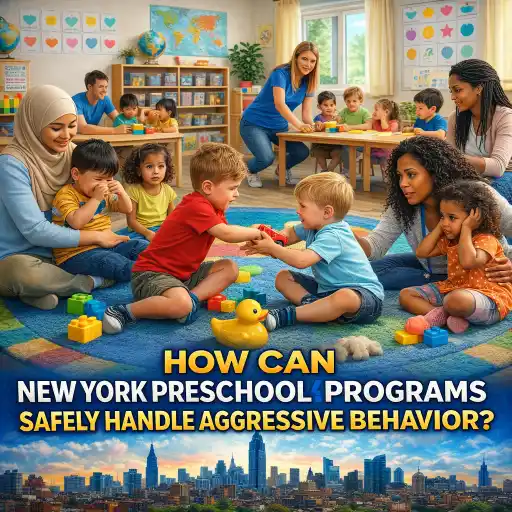
1) Why it matters:
- Children learn best when they feel #safe and connected to adults.
- How adults respond shapes future choices and self-control.
- Teaching skills lowers repeat incidents and keeps the whole group learning.
Watch for patterns: time of day, certain friends, transitions, hunger, or loud noise. Use simple tracking (Antecedent-Behavior-Consequence) to find triggers. For tools and prevention tips, see How preschool teachers can handle aggressive behavior and prevention ideas at How to Handle Challenging Behaviors. Also consider multi-tiered approaches, such as the Pyramid Model and PBIS, for system-wide planning (Linking the Pyramid Model and PBIS).
What do I do in the moment to stop harm and keep dignity?
In-the-moment steps should be short, calm, and safe. Your goals: protect, name the behavior, care for the hurt child, and teach one small skill.
- 🔒 Safety first: Gently position yourself to block further harm.
- 🗣️ One short limit: “Hands are for gentle touch. Hitting hurts.” See in-the-moment scripts at What Can Teachers Say.
- 🤕 Care for the injured child: Comfort and check for injury.
- ➡️ Brief redirection: Move the child who was aggressive to a safe spot nearby — not as punishment but to help them calm.
- 🔁 Give one replacement: “Use gentle hands” or “Say ‘stop’.”
Keep words short. Long lectures belong later when everyone is calm. For guidance on safe brief breaks and teaching after the incident, read What Can You Do Instead of Time-Out and CSEFEL materials on time-out use (CSEFEL What Works Brief).
How can we prevent aggression and teach replacement skills over time?
Prevention + teaching = fewer aggressive acts. Use small, steady steps teachers can practice every day.
- ✅ Teach one clear skill at a time (e.g., “gentle hands,” “use words,” “ask for a turn”). Practice with role-play and stories during calm times. See social-emotional teaching ideas at From Tantrums to Triumphs Buy Now $25.00.
- 📦 Prevent by design: Duplicate popular toys, create clear play zones, and offer regular movement breaks. ChildCareEd prevention tips are helpful (How can prevention plans help stop tantrums).
- 🧩 Use visuals and small tools: First/Then cards, break cards, and cue cards support children’s understanding.
- 🌟 Catch and praise desired behavior: “I saw you use gentle hands—thank you.” Positive reinforcement works (see What Can Teachers Say).
- ⏱️ Practice often: short rehearsals, timers for turns, and consistent language.
When a child shows persistent or severe aggression, use a team process, such as Positive Behavior Support, to identify the function and build a plan (CSEFEL PBS brief).
How should staff, families, and specialists work together, and what legal steps matter in New York?
1) Partner with families: Share strengths + facts + plan. Example note: “Marco loves blocks. Today he hit during clean-up twice. We will teach ‘gentle hands’ and use a 2-minute warning. What helps at home?” See family communication tips at How can preschool teachers handle aggressive behavior?
2) Track patterns: Use ABC logs (Antecedent, Behavior, Consequence) for several days to find triggers. ChildCareEd courses like The ABCs of Behavior explain this method.
3) When to get extra help: If behavior is dangerous, very frequent, or not improving after consistent steps, involve your director, a mental health consultant, or early intervention. In New York, follow local licensing and reporting rules; state requirements vary - check your state licensing agency.
4) Staff support: Train all staff on the same scripts and practice plans. Short team rehearsals and coaching help keep responses consistent. Consider trainings like From Tantrums to Triumphs (Zoom) and trauma-informed approaches such as Therapeutic Crisis Intervention (TCI Overview).
For a broader set of New York–specific strategies, program examples, and statewide supports for early childhood educators, see From Challenges to Triumphs: Strategies for Childcare Educators in New York.Common mistakes and how to avoid them
- ❌ Long lectures during a crisis — instead: short limit and teach later.
- ❌ Shaming language — instead: describe behavior, protect dignity (Managing without shame).
- ❌ Inconsistency across staff — instead: one short posted plan and weekly practice.
FAQ
- Q: When is time-out okay? A: Rarely for preschoolers; use only as part of a full plan and when safety requires it. See CSEFEL guidance on time-out (CSEFEL What Works Brief).
- Q: How long should a calm-down be? A: Short and child-led; stay nearby until they can use a calm skill.
- Q: What if a child hurts others repeatedly? A: Keep everyone safe, document, team up with families, and seek specialist help.
- Q: Where can staff get quick training? A: ChildCareEd articles and courses like What Can You Do Instead of Time-Out and From Tantrums to Triumphs Buy Now $25.00.
Conclusion
- Keep calm and secure the scene with short, kind limits.
- Teach one replacement skill and practice it often.
- Design the room and schedule to reduce triggers.
- Use trauma-informed supports when stress may be a factor and involve specialists as needed.
- Track patterns and partner with families; state requirements vary - check your state licensing agency.
You do important work. Small, steady steps—done with warmth, clear limits, and consistent team practice—make big differences for children, staff, and families. For more tools, start with ChildCareEd’s guides like How Can Preschool Teachers Handle Aggressive Behavior and What Can Teachers Say. #aggression #teachers #families
- 45 Hour Child Growth and Development
- 45 Hour Preschool Methods and Materials
- Birth to Five CDA Credential with Portfolio Review
- Pediatric RSV First Aid & CPR/AED
- Ouch! Biting & Hitting Hurts
- CDA Bridge Bundle: Family Child Care without Portfolio Review
- CDA Bridge Bundle: Infant/Toddler without Portfolio Review
- CDA Bridge Bundle: Preschool without Portfolio Review
- Texas Director Credential
- CDA Certification en Español: Recursos y Consejos para Educadores Bilingües
- Recursos en Español sobre el Sueño Seguro del Bebé
- 10 Ejemplos de Cómo la Cultura Influye en el Desarrollo Infantil
- Capacitación en Salud y Seguridad Preventiva en Línea para Proveedores de Cuidado Infantil
- Normas de Licenciamiento de Cuidado Infantil en Virginia para Centros Diurnos Infantiles y Hogares Diurnos Familiares
- Proporciones de Cuidado Infantil y Tamaños de Grupo por Edad en Virginia (Guía Rápida para Centros y Hogares)
- ¿Cuál es la Diferencia Entre la Crianza Respetuosa y la Crianza Permisiva?
- Lista para Abrir una Guardería en Casa en Dakota del Norte: Cómo Empezar
- Cómo Trabajar en el Cuidado Infantil en Carolina del Norte: Requisitos y Pasos
- How can New York preschool programs safely handle aggressive behavior?
- How can New York child care providers use simple safe sleep practices to protect infants?
- Celebrando la amistad en el cuidado infantil durante el Día de los Mejores Amigos
- Diversión fresca de verano: actividades del Día Nacional del Helado para niños
- Canciones, juegos y preguntas de círculo para niños
- Cómo simplificar la capacitación para sus empleados de daycare
- How can New York child care providers safely celebrate National Ice Cream Day with fun activities?
- How can New York child care programs best support children with food allergies?
- How should child care providers respond to biting, hitting, and aggressive behavior?
- How Can Child Care Providers Respond Effectively to Aggressive Behavior?
- Why Is My Preschooler Suddenly Aggressive, and How Can Child Care Providers Help?
