Child care providers and center directors play a big role in helping children be ready for #kindergarten. This short guide gives simple, practical steps you can use in your program. You will find: why readiness matters, classroom routines and activities, how to work with families and screen for needs, and common mistakes to avoid. Use the numbered steps and short lists to make planning easier. Remember: state requirements vary - check your state licensing agency.
Why does kindergarten readiness matter and what should we focus on?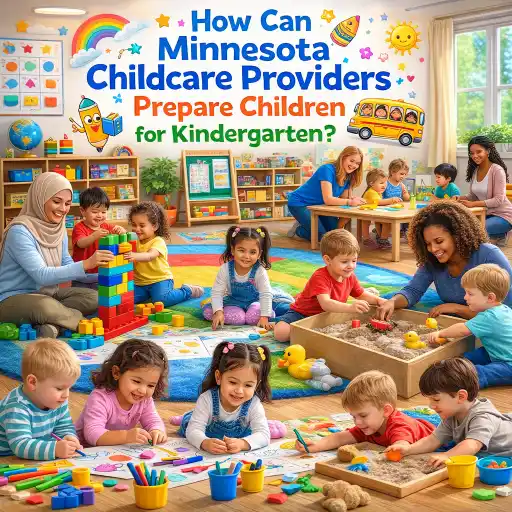
Why it matters: When children start school ready to learn, they feel safer, make friends faster, and can take part in class. Providers help children grow in five big areas: social-emotional, language, thinking, motor, and self-help. Focus on simple, daily skills that add up.
- 😊 Social-emotional: teach waiting, sharing, and calming skills. Use routines and praise to build confidence. See ideas about social skill supports at ChildCareEd on social-emotional development.
- 🧩 Language and thinking: read daily, tell stories, ask questions, and play rhyming games. Tools like ASQ help track development — learn more on ASQ Online.
- ✂️ Motor and fine motor: cut with scissors, string beads, use crayons to build hand strength.
- 🧒 Independence skills: zipping coats, using the toilet, opening snacks. These routines make the school day smoother.
- 🔍 Screening and early help: Minnesota requires early childhood screening before or within 30 days of kindergarten entry — read the state guidance at the MN Dept. of Health Early Childhood Screening.
Keep the focus on small wins. Use the checklist ideas from ChildCareEd to share with parents and staff: What should parents include on a kindergarten readiness checklist?. Use the five words below often in your planning: #readiness #families #screening #skills #kindergarten.
What classroom routines and activities help children get ready?
Simple routines teach big skills. Do these 1–2 times each day, and children learn by doing. Numbered steps make it easy for staff to copy and share with families.
- 📚 Morning circle (10–15 minutes)
- 🔹 Read a short book and ask 2 questions.
- 🔹 Sing a song with actions for body control and language.
- 🎨 Small-group activity (15–20 minutes)
- 🔸 Fine-motor table: play-dough, scissors practice, bead stringing.
- 🔸 One adult supports 4–6 children for focused help.
- 🏃 Outdoor play (20–30 minutes)
- 🔹 Games for balance, running, and taking turns (obstacle course, follow-the-leader).
- 🍎 Self-help moments
- 🔸 Let children open snack containers and hang backpacks to practice independence.
- 📈 Observation and documentation
- 🔹 Keep short notes on each child's progress. Use those notes in teacher meetings and to share with parents.
Use program trainings to help staff learn classroom strategies. ChildCareEd offers a practical training called "Are They Ready for Kindergarten?" which covers routines and social-emotional supports: Are They Ready for Kindergarten? - ChildCareEd Buy Now $35.00.
How can providers partner with families and screen for needs?
Working with families is one of the most effective ways to boost #readiness. Follow clear steps and share tools. Minnesota has screening supports and local links to help families get services.
- 📞 Make contact easy
- 🔹 Send a short weekly note about one strength and one next step. This builds trust (see tips at How to Talk to Parents About Developmental Concerns).
- 🧾 Use screening tools
- 🔸 Offer parent-report tools like ASQ and social-emotional screeners. Minnesota lists recommended instruments: Recommended Screening Instruments - MN Dept. of Health.
- 🔸 Refer families to free Early Childhood Screening through schools and Help Me Connect: Help Me Grow MN - Early Childhood Screening.
- 🤝 Co-create a plan
- 🔹 Ask families what helps at home and add those ideas to a short goal sheet. Share progress every 2–4 weeks.
- 🔗 Make warm referrals
- 🔸 If screening suggests a need, help the family connect with early intervention, health, or special education resources. Minnesota providers can also use MDE trainings to understand special education timelines and transitions: MDE Program Monitoring & Training.
Remember to remind families: state requirements vary - check your state licensing agency. Keep notes and be kind: families respond best to a strengths-based approach like the partnership ideas at How can we partner with families to support diverse learners?.
How do we avoid common mistakes and support diverse learners?
Many programs make similar mistakes. Here are simple ways to avoid them and better support every child, including bilingual or extra-needs learners.
- ⚠️ Mistake: Only teaching letters and numbers
- ✅ Fix: Balance academics with social-emotional skills and routines. The Pyramid Model gives good classroom strategies: Pyramid Model resources.
- ⚠️ Mistake: Waiting to refer
- ✅ Fix: Use screening early and connect families to services. Minnesota’s Early Childhood Screening is a key step: MN Early Childhood Screening.
- ⚠️ Mistake: Not honoring home language or culture
- ✅ Fix: Include books, greetings, and songs in home languages. For bilingual guidance, see the Reach Out and Read Minnesota session on bilingualism: Bilingualism in Early Childhood.
- ⚠️ Mistake: Using long, confusing checklists
- ✅ Fix: Give families one-page checklists and 10-minute home activities. ChildCareEd’s checklist article is an easy tool: Kindergarten readiness checklist.
Common practical tips:
- 🔹 Keep communication short and positive.
- 🔹 Train staff on screening tools and family conversations — short courses are available on ChildCareEd.
- 🔹 Track progress with short notes and share wins with families.
Conclusion: What are the first three steps to take this week?
- 1️⃣ Pick one routine to strengthen (circle time or self-help) and practice it every day for a week.
- 2️⃣ Share a one-page checklist with families and offer one quick tip they can do at home (read 10 minutes or practice zipping coats). See ChildCareEd free resources.
- 3️⃣ Start or strengthen screening: use ASQ or recommended tools and connect families to Early Childhood Screening if needed (Help Me Grow MN and MN instrument guidance).
FAQ (quick):
- Q: Do children need to read before kindergarten? A: No. Teachers expect basic letter and rhyming awareness, not full reading. See checklist: ChildCareEd checklist.
- Q: When should we refer? A: If screening flags concern or progress is limited after 4–6 weeks of targeted support, make a warm referral to early intervention or your local school screening.
- Q: Who pays for screenings? A: Early Childhood Screening is free through school districts in Minnesota; programs may be reimbursed for completed screens per state rules (MN Dept. of Health).
You are a trusted partner in each child’s start to school. Small, steady steps in routines, screening, and family partnerships make a big difference. Keep the work simple, strengths-based, and caring.
- CDA Certification en Español: Recursos y Consejos para Educadores Bilingües
- 💛🧩 ¿Cómo puedo hacer que mi enseñanza sea inclusiva para los niños con autismo?
- Capacitación en Salud y Seguridad Preventiva en Línea para Proveedores de Cuidado Infantil
- Regulaciones de Licenciamiento de Cuidado Infantil en California para Centros y Hogares de Cuidado Infantil Familiar
- Reglas de Cuidado Infantil en Georgia para Centros de Aprendizaje y Hogares Familiares
- Proporciones de Cuidado Infantil y Tamaños de Grupo por Edad en Maryland (Guía Rápida para Centros y Hogares)
- Proporciones de Cuidado Infantil y Tamaños de Grupo por Edad en Nueva Jersey (Guía Rápida para Centros y Hogares)
- Proporciones de Cuidado Infantil y Tamaños de Grupo por Edad en Virginia (Guía Rápida para Centros y Hogares)
- Cómo Celebrar el Día Nacional del Kindergarten
- Temas y Actividades para el Día Nacional del Kindergarten para Proveedores
- ¿Qué Temperatura Es Demasiado Fría para Jugar al Aire Libre en el Cuidado Infantil?
- Capacitación Previa al Servicio para Proveedores de Cuidado Infantil en Wisconsin
- What do Minnesota child care providers need to know about the CDA?
- How can Minnesota child care providers prepare for licensing visits?
- Canciones, juegos y preguntas de círculo para niños
- What changes July 1 for Minnesota child care licensing and inspections?
- How can compliant Minnesota centers protect their programs and stay open?
- What are Minnesota's Family Child Care Variances and How Do I Request One?
- Why Does Self-Regulation Matter More Than ABCs for Minnesota Kindergarten Readiness?
