Licensing visits can make you nervous. You are not alone. With a few steady systems, a licensing visit can feel like a helpful check-in. This article helps Minnesota #providers know what inspectors look for and how to get ready. It also gives simple steps you can use today. Remember: state requirements vary - check your state licensing agency.
Why do licensing visits matter?
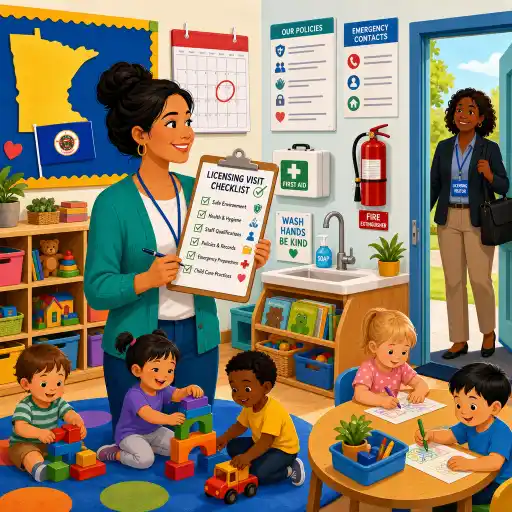
1. They keep children safe. Licensing checks make sure your program follows rules for health, supervision, and space. See guidance on calm preparation in How to Prepare for a Licensing Visit Without the Stress.
2. They protect your program. A clean record and clear files help you stay open and trusted by families. The new Minnesota Provider Hub aims to make paperwork easier for providers.
3. They help staff and families. Visits are a chance to show training, policies, and how you keep children learning and safe. When you view visits as a check-in, not a test, you reduce stress and improve your program.
Why it matters: Good visits confirm your work and point to small fixes before they become big problems. A licensing visit is about #licensing, trust, and continuous improvement.
What do licensors look for during a Minnesota visit?
Inspectors use three main methods: watch, ask, and check paperwork. Here are common items they review (numbered so you can check them off):
- Staffing and supervision: Ratios, who is assigned where, and active supervision practices. ChildCareEd explains why staffing records matter in their licensing guide.
- Training and credentials: CPR, first aid, SIDS/AHT, orientation, and ongoing hours. Use Develop-approved training so hours post correctly — see how to post hours to Develop. #training
- Health records: Immunization records and exemptions — Minnesota Health has clear forms and reporting rules at Childcare Provider Information for Minnesota's Immunization Law and reporting guidance at Childcare Providers Immunization Reporting.
- Cleanliness and infection control: Diapering, handwashing, cleaning, sanitizing, and disinfecting routines. Follow CDC cleaning guidance: How To Clean and Disinfect ECE Settings.
- Facility safety: Safe sleep rules, playground safety, exits, fire drills, and hazards like radon. See Minnesota radon guidance at Radon in Child Care.
- Records and policies: Enrollment files, attendance, medication logs, incident reports, staff files, and written policies. Keep a licensing binder so items are easy to find. ChildCareEd recommends simple binders and a "Today Folder" in their prep article.
When licensors find concerns, they note them and may ask for a plan of correction. If problems are severe, consequences can follow — a helpful reminder is the case report about license revocation in In the Matter of the Revocation of Wendy J. Melby.
How can providers prepare for a licensing visit?
Use these numbered steps to get ready. Small routines beat last-minute panic.
- 🧾 Create a Licensing Binder and a Today Folder with: 1) current attendance, 2) staff schedule, 3) emergency contacts, and 4) any active incident logs. ChildCareEd shows how a binder saves time in their article.
- 🧰 Keep staff files updated: background checks, training certificates, CPR/First Aid, orientation notes, and job descriptions. Use a simple training tracker so renewal dates don’t sneak up on you.
- 🔎 Do weekly safety walks: check exits, remove hazards, store cleaning supplies locked, and inspect playgrounds. Make short notes each week.
- 📚 Link Develop IDs and use approved online courses. Add each staff member’s Develop Registry ID to their training profile so completions post automatically — see how to sync Develop.
- 🧑🤝🧑 Practice staff answers: run a quick 5-minute drill with staff so they can calmly explain ratios, emergency plans, and where to find documents.
Common mistakes and how to avoid them:
- ❌ Missing Develop IDs before training — fix: collect IDs first and add them to profiles.
- ❌ Scattered certificates — fix: download PDFs and save in personnel files and a digital backup.
- ❌ Last-minute changes to routines — fix: keep normal routines; licensors want to see your regular operations.
Use ChildCareEd resources for bundles and director tools to save time: Group Admin tools and Minnesota course lists at How to Start a Daycare in Minnesota.
What should I do during and after the visit?
Follow these numbered steps to keep the visit calm and useful.
- 👋 Greet the licensor politely and offer the Today Folder first. A calm welcome sets a good tone.
- 📑 Provide requested documents quickly—be honest and concise. If you don’t know the answer, say you will check and follow up.
- 📝 Take notes during the visit. Record any concerns the licensor mentions and the rule cited.
- ✅ If a citation or correction is requested, write a clear Plan of Correction that shows: what happened, how you fixed it now, who will fix it, and steps to prevent it again. ChildCareEd suggests keeping photos, updated logs, and staff sign-offs as proof.
- 🔁 After the visit, follow up: file the Plan of Correction, save proof in your binder, and train staff on any new steps. If you disagree with a finding, ask for written guidance and the correct rule citation — Minnesota has new transparency options that let providers request interpretive guidance (see changes).
Keep these quick reminders: keep attendance and immunization logs current (see MDH immunization reporting), save training certificates, and run short weekly checks so a visit feels routine.
Summary — A short action plan you can use today:
- Collect every staff Develop Registry ID and add to training accounts.
- Make a Licensing Binder and a Today Folder for visits.
- Do a 10-minute weekly safety walk and log it.
- Download and save all certificates (two copies: file + digital backup).
- Practice a 5-minute staff ready-check so everyone knows their role.
FAQ (short):
- Q: Can training hours be completed online? A: Yes, if the course is Develop-approved. See how to post to Develop.
- Q: What about immunizations? A: Keep each child’s immunization form or exemption on file. MDH resources help with reports: Immunization Law.
- Q: Are inspections announced? A: Some are unannounced. Use steady systems so any visit is simple and calm.
- Q: What if I get a citation? A: Fix safety issues immediately, write a clear Plan of Correction, and keep proof of fixes. If needed, ask your licensor or CCR&R for help.
You do important work every day. Small systems — clear files, linked training IDs, weekly checks, and calm staff — make licensing visits easier. Use the ChildCareEd guides and Minnesota health resources linked above as quick supports. Stay steady, and remember you are not alone in this work.
- CDA Family Child Care Credential
- Birth to Five CDA Credential with Portfolio Review
- CDA Family Child Care Credential with Portfolio Review
- Pediatric RSV First Aid & CPR/AED
- CDA Bridge Bundle: Family Child Care
- CDA Bridge Bundle: Family Child Care without Portfolio Review
- CDA Bridge Bundle: Infant/Toddler without Portfolio Review
- CDA Bridge Bundle: Preschool without Portfolio Review
- Texas Director Credential
- Capacitación en Salud y Seguridad Preventiva en Línea para Proveedores de Cuidado Infantil
- Regulaciones de Licenciamiento de Cuidado Infantil en California para Centros y Hogares de Cuidado Infantil Familiar
- Reglas de Cuidado Infantil en Illinois
- Proporciones de Cuidado Infantil y Tamaños de Grupo por Edad en Maryland (Guía Rápida para Centros y Hogares)
- Proporciones de Cuidado Infantil y Tamaños de Grupo por Edad en Nueva Jersey (Guía Rápida para Centros y Hogares)
- Proporciones de Cuidado Infantil y Tamaños de Grupo por Edad en Virginia (Guía Rápida para Centros y Hogares)
- Lista para Abrir una Guardería en Casa en Dakota del Norte: Cómo Empezar
- Lista para Guardería en Casa en Illinois: Cómo Iniciar una Guardería en el Hogar
- Lista para Guardería en Casa en Texas: Cómo Iniciar una Guardería en el Hogar
- Cómo Trabajar en el Cuidado Infantil en Wisconsin: Requisitos y Pasos
- Capacitación CDA gratuita en Illinois
- How does ChildCareEd help Minnesota childcare providers complete their annual training hours online?
- How can Minnesota child care providers prepare for licensing visits?
- How Will Minnesota's Child Care Regulation Modernization Project Affect Your Licensing and Compliance?
- What should child care-adjacent providers in Minnesota watch for during Medicaid revalidation?
- Cómo simplificar la capacitación para sus empleados de daycare
- What changes July 1 for Minnesota child care licensing and inspections?
- How can compliant Minnesota centers protect their programs and stay open?
- What are Minnesota Child Care Ratios and Group Sizes by Age (Center + Home Quick Guide)?
- MN Daycare Rules and Regulations 2026: Current Requirements and Upcoming Changes
