Michigan preschool classrooms can turn water, fabric scraps, leaves, and kitchen tools into memorable learning invitations—without an elaborate budget. Try the ten adaptable activities below to support exploration, language, early math, and motor skills while making safety and access part of the plan. For a deeper foundation in purposeful play and responsive teaching, explore Creating Engaging and Meaningful Learning Experiences  Buy Now $55.00 and Planning for Every Child: Responsive Strategies in Action Buy Now $55.00; these courses can help you design engaging activities and adapt them to children’s individual strengths and needs.
Why are everyday sensory activities worth planning?
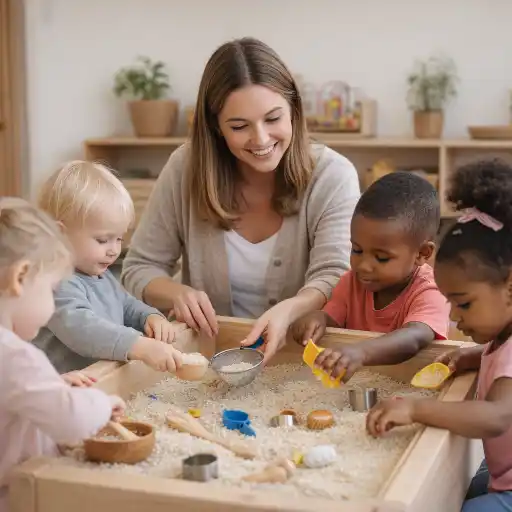
When children pour, squeeze, sort, listen, and compare, they build knowledge through action. A simple tub of water can prompt predictions about floating; a basket of fabric can invite descriptive language; and a pinecone can lead to close observation and imaginative storytelling. Sensory experiences also give educators useful opportunities to notice children’s interests, persistence, communication, and preferred ways to participate. The goal is not to create a polished product or make every child touch every material. It is to offer purposeful, low-pressure exploration with room for children to make choices.
Michigan’s changing seasons make local materials especially inviting. Leaves, snow, smooth stones, and garden finds can connect classroom inquiry with children’s surroundings. Project Learning Tree offers ideas for environmental sensory activities for preschoolers, including texture hunts and nature-based exploration. Use materials that are clean, appropriate for the group, and permitted by your program.
Keep the planning manageable: choose one learning intention, provide a few materials, and prepare a clear cleanup routine. Ask open questions such as “What do you notice?” or “What might happen next?” Then observe rather than directing every move. These small choices can make a short activity meaningful and welcoming.
What ten affordable sensory activities can you try?
- Pour-and-transfer water: Set out a shallow basin, cups, funnels, and a sponge. Invite children to fill, pour, squeeze, and compare how much each container holds.
- Ice-melt investigation: Offer large ice pieces in a tray with cups of cool water and spoons. Children can observe melting and describe temperature and change. Avoid small items frozen inside ice.
- Texture touch-and-match: Use clean fabric scraps such as cotton, fleece, and burlap. Children can sort by soft, rough, smooth, or stretchy, or match fabric squares to simple picture cards.
- Michigan nature tray: Add inspected, large leaves, smooth stones, and sturdy pinecones gathered from a safe area. Use a magnifier and invite children to compare color, shape, and texture.
- Leaf rubbings: Place a leaf under paper and rub the side of a crayon over it. Children can notice veins and patterns without needing to handle a fragile specimen directly.
- Kitchen sound studio: Provide a metal bowl, wooden spoon, plastic container, and fabric square. Compare loud and quiet sounds, then make a simple rhythm together.
- Wash-the-toys station: In a shallow tub, offer washable toys, sponges, and a small amount of water. Children can scrub, rinse, and describe wet, dry, clean, or slippery.
- Cardboard-box texture collage: Offer larger pieces of corrugated cardboard, tissue paper, and fabric scraps with child-safe glue. Invite children to layer and describe their choices.
- Homemade dough exploration: Use program-approved play dough with large, washable tools such as rollers and cookie cutters. Children can press, flatten, and compare shapes; check ingredients and allergies before use.
- Snow or winter-water discovery: When weather and outdoor conditions permit, place a small amount of clean snow in a supervised tray, or substitute cold water and ice indoors. Explore melting, temperature, and the marks tools make.
🌿 Start with a small batch of materials and let children lead the investigation; you can add a new tool or question once you see what captures their attention.
How can sensory play build language, math, and science?
Connect the activity to one or two goals rather than trying to teach everything at once. During water play, children can compare full and empty, estimate how many cups fill a container, and test whether a large or small scoop works faster. In a nature tray, children can sort leaves by color or shape, count objects, and notice similarities and differences. These practical encounters introduce early measurement, classification, prediction, and cause-and-effect reasoning.
Language grows when adults name actions and offer time to respond. Narrate without quizzing: “You squeezed the sponge and water came out,” or “This leaf feels dry and crisp.” Invite children to communicate in the way that works for them—speech, gestures, signs, home language, pictures, or an augmentative communication device. Accept pointing, selecting, demonstrating, and watching as meaningful engagement.
Observe what a child does and use that information to plan the next small challenge. A child who confidently pours between large cups might be ready to compare volumes; another may benefit from a stable tray and a larger-handled scoop. The activity remains shared, while the entry point and level of support can vary. For guidance on purposeful experiences and accessible planning, see ChildCareEd’s Creating Engaging and Meaningful Learning Experiences Buy Now $55.00 course.
How can you adapt activities so every child can participate?
Participation does not require identical actions. A child may explore with a tool instead of their hands, watch first, choose materials for a peer, or describe what they notice. Offer options respectfully and avoid pressuring children who decline a texture. A calm invitation—“You can use the spoon, watch, or choose another material”—keeps the door open while honoring comfort and choice.
- For children who avoid wet or sticky textures, start with dry fabric, a scoop, a brush, or a sealed sensory bag. Keep handwashing or a cloth available.
- For motor access, use a stable nonslip tray, larger containers, easy-grip tools, and materials placed within comfortable reach. Offer seating or standing options.
- For visual access, use high-contrast materials, uncluttered trays, consistent locations, and clear verbal descriptions. Let children explore objects before moving them.
- For communication and processing, show a brief visual sequence, model one step, use concise language, and allow extra wait time.
- For sensory comfort, reduce noise, strong smells, crowding, and the number of materials. Provide a quieter alternative nearby.
Observe individual responses rather than assuming what a child will like. A child may enjoy water but avoid dough, or prefer a sponge to direct hand contact. Adapt the activity—not the child—and collaborate with families and relevant specialists when additional support would help. ChildCareEd’s Planning for Every Child: Responsive Strategies in Action Buy Now $55.00 course offers a fuller exploration of observation-informed planning and accessible environments.
What safety practices should guide water, household, and nature play?
Safety begins before materials reach the table. Check age and developmental readiness, allergies, mouthing behaviors, sanitation needs, and program policy. Inspect natural objects for sharp edges, dirt, mold, animal waste, or small parts; avoid toxic plants, mushrooms, unknown berries, and objects that could break or splinter. Do not use water beads with young children. Food-based materials require allergy review and program approval; when unsure, choose a washable non-food alternative.
Water play calls for continuous, active supervision. Stay close enough to intervene immediately, keep water shallow, and empty containers as soon as the activity ends. National guidance on supervision near water emphasizes active supervision and touch supervision during wading or water play. Follow your program’s procedures and applicable rules; state requirements vary—check your state licensing agency.
- Set clear, simple expectations: materials stay in the tray, water is not for drinking, and tools are shared gently.
- Position the activity where staff can see and hear all children; establish who is supervising before play begins.
- Wash reusable tools, discard cracked or contaminated items, and store dry materials in labeled, sealed containers.
- Use a drop cloth or tray, keep towels nearby, and teach children a brief cleanup routine.
How can you make these activities sustainable in a busy program?
A workable sensory routine depends on simple systems, not elaborate supplies. Create a small set of labeled kits with a materials list, age and safety notes, a learning intention, and cleanup steps. Store household materials—cups, fabric, cardboard, and washable tools—separately from natural collections so staff can check and refresh items easily. Rotate one feature at a time; children often deepen their thinking by returning to familiar materials with a new prompt.
Common pitfalls are easy to prevent. Too many materials can overwhelm children and staff, so begin with one base and a few tools. A beautiful activity is not automatically accessible: offer alternate ways to participate and respect a child’s decision to observe or opt out. Do not rely on a general age label alone; inspect each item for the specific children using it. Finally, plan cleanup before play starts, rather than when the floor is already wet.
Afterward, make a brief note: what the child explored, what support helped, and a possible next step. A free printable resource, Little Explorers: Sensory Play, Learning Mazes & Classroom Toolkit Buy Now $0.00, includes environment-check and observation prompts that can support planning and reflection.
Conclusion: How can Michigan preschoolers explore through everyday sensory play?
Michigan preschoolers can investigate water, textures, nature, and household objects through ten practical activities that invite curiosity without requiring costly supplies. The strongest setups have a clear learning intention, close supervision, clean and age-appropriate materials, and flexible ways to join in. Notice children’s ideas, adapt the tools or environment when needed, and let exploration—not a uniform finished product—guide the experience.
Choose one activity to try this week, prepare its safety and cleanup plan, and observe what children discover. With thoughtful repetition and responsive adaptations, everyday materials can become a meaningful part of your classroom’s learning life.
Explore related ChildCareEd courses:
- Creating Engaging and Meaningful Learning Experiences Buy Now $55.00
- Planning for Every Child: Responsive Strategies in Action Buy Now $55.00
- Inclusive Lessons for Preschoolers Buy Now $16.00
- Effective Approaches for Autism and Inclusion Buy Now $55.00
- Lesson Planning for Preschoolers Buy Now $24.00
- Turning Behavior Around for Toddlers and Preschoolers
- 45 Hour Preschool Methods and Materials
- What Makes Me Special: An Overview of Autism and ADHD
- The ABCs of Behavior: Turning Challenges into Learning Opportunities
- CDA Bridge Bundle: Family Child Care without Portfolio Review
- Art from the Heart for Preschoolers: Open Ended Art Projects that Build Self-Esteem
- CDA Bridge Bundle: Infant/Toddler without Portfolio Review
- CDA Bridge Bundle: Preschool without Portfolio Review
- Math Foundations in Early Childhood
- Montessori Cultural Activities: Exploring the World Through Play and Learning
- Celebrando la amistad en el cuidado infantil durante el Día de los Mejores Amigos
- Canciones, juegos y preguntas de círculo para niños
- How Can Michigan Providers Prevent Summer Learning Loss in Young Children?
- How can I manage mixed-age groups in my Michigan family child care home?
- National Massachusetts Day for Kids: Explore the Bay State Through Play
- How Can Teachers Build Learning Centers on a Tight Budget?
- How Can Child Care Providers Create Effective Learning Centers in Small Spaces?
- How Can Early Math Activities Build Young Children’s Mathematical Thinking?
- How Can Everyday Classroom Problems Become Child-Led Investigations?
- How Can Preschool Teachers Recognize and Respond to Sensory Overload in the Classroom?
- How Can Teachers Turn Everyday Play Into Learning Opportunities?
- How Can Teachers Balance Alphabet Worksheets with Preschool Conversation?
- How Can Low-Cost Preschool Materials Still Meet Your Learning Goals?
- How Can Michigan Preschool Teachers Support Children Experiencing Housing Instability?
- How Can Michigan Child Care Providers Support Children With Autism in Everyday Activities?
- How Can Michigan Preschool Teachers Build Kindergarten Readiness Through Play?
- How Can Michigan Preschool Teachers Welcome Multilingual Families?
- How Can Michigan Child Care Providers Create Safe, Engaging Infant and Toddler Classrooms?
- How Can Michigan Preschool Teachers Encourage Independence in the Classroom?
- How Can Michigan Preschool Teachers Create Sensory-Rich Learning With Everyday Materials?
