How Can I Make Ice Cream In A Bag With Children?
Summer offers an excellent context for inquiry: concise, hands-on food activities can teach measurement, states of matter, and social-emotional competencies through observable, scaffolded learning. This article describes two classroom-tested projects—a no-machine ice-cream method and a galaxy/asteroid STEAM craft—designed for early childhood settings and aligned with formative assessment practices. To support intentional lesson planning and documentation, see ChildCareEd courses such as Enhancing STEM Education for Infants and Toddlers  Buy Now $16.00 and Baby Play: Planning Infant and Toddler Activities Buy Now $16.00. Below are step-by-step procedures, measurable learning objectives, differentiation suggestions, supervision guidance, and links to related classroom resources suitable for toddler and preschool cohorts.
Use the "ice-in-a-bag" technique to demonstrate freezing-point depression, measurement, and cause–effect. Materials (per 1–2 children): 1 small resealable bag, 1 large resealable bag, 1/2 cup heavy cream (or whole milk), 2 Tbsp sugar, 1/2 tsp vanilla, 1 cup crushed ice, 1/4 cup rock salt, disposable spoons, and paper towels. Demonstration video: Make Your Own Ice Cream (YouTube).
- Assemble materials and review hygiene and safety rules (no tasting until instructor approves).
- Place cream, sugar and vanilla into the small bag; remove air and seal. Confirm the bag is leak-free.
- Fill the large bag half full of crushed ice and add rock salt; mix to begin the cooling reaction.
- Place the small sealed bag inside the large bag, seal, and shake or roll for 5–10 minutes until the mixture thickens to ice-cream consistency.
- Remove the inner bag, rinse and dry it, open, and transfer contents into cups. Discuss observations: temperature change, texture and why salt lowers the freezing point.
Classroom adaptations: use timers and simple charts to record time-to-freeze (math data collection), invite older preschoolers to estimate volumes (fractions), and vary flavors for sensory comparison. For a set of ready-to-run activities and craft pairings see How to Celebrate National Ice Cream Day in Your Center and Ice Cream Day Crafts, Games, and Learning Activities. Keep food-allergy procedures and handwashing protocols in place when serving.
The video includes prompts that can be extended into STEM investigations—compare freeze times, record textures, and use simple graphs to visualize results. Avoid loose sprinkles when programs restrict glitter; use small fruit pieces or paper shapes as wet-safe, low-mess toppings.
How does the ice-in-a-bag method work and how can I adapt it for classroom investigations?
The ice-in-a-bag technique illustrates freezing-point depression: adding salt to ice lowers the mixture's tempera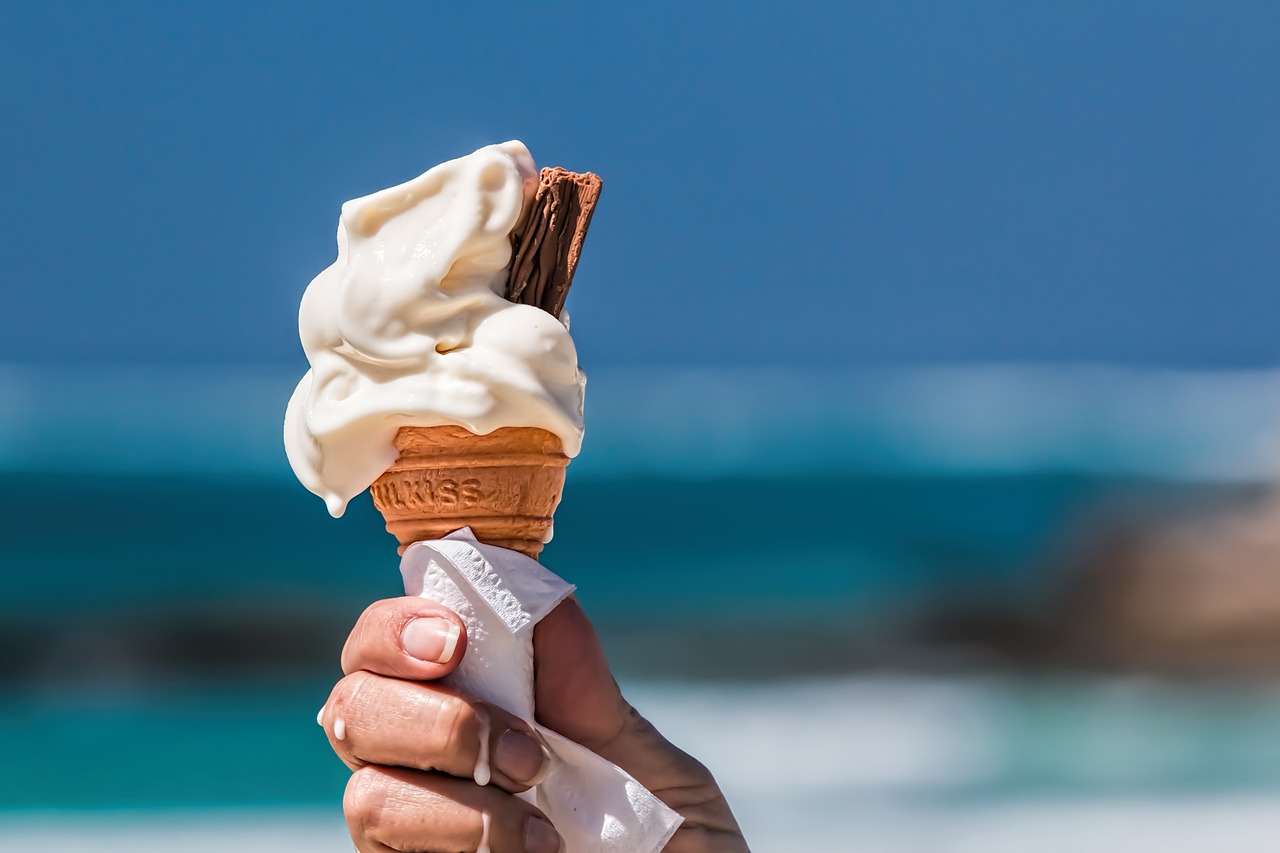 ture, creating a heat gradient that extracts thermal energy from the cream and causes it to thicken. For educators, this provides a controlled, observable experiment where variables can be manipulated and recorded. Practical classroom adaptations include using pre-chilled cream to shorten freeze time, offering small-group kits (one inner bag and one outer bag per pair), and standardizing salt and ice quantities so comparisons are meaningful. Typical timing is 5–12 minutes of continuous shaking; record start and finish times with timers to build time-measurement skills.
To foreground scientific practice and formative assessment, have children predict outcomes, record observations (temperature sensation, texture, volume), and graph results across trials. Older preschoolers can calculate approximate volumes (fractions of a cup) and compare trials where you vary one independent variable (e.g., amount of salt, size of ice pieces) while holding others constant. Use an observation checklist or simple rubric to capture each child's contribution to measurement, description, and collaboration. Safety adaptations: substitute coarse kosher salt for rock salt if local procurement dictates and keep extra salt in a sealed container away from infants. For dietary accommodations, offer nondairy substitutions and label samples; always follow your center’s allergy and food-handling policies. These protocol details create repeatable conditions for valid classroom comparisons and deepen children’s conceptual understanding of states of matter and cause–effect relationships.
How can I turn asteroids and galaxy-making into a STEAM activity?
Background and classroom resources: AsteroidDay.org and NASA’s Space Place provide factual material adaptable for young children. Below is a structured STEAM activity that foregrounds observation, measurement, collaboration, and representational art.
Learning objectives
- Describe observable properties of small bodies (size, texture, color) and connect them to simple scientific language.
- Use non-standard and standard units to measure and compare quantities and volumes.
- Collaborate to design a shared display, practicing turn-taking, descriptive vocabulary, and fine-motor control.
Materials and sequence
- Prepare shallow trays or recycled boxes for each group, tempera paints, cotton batting or torn tissue for nebulae, small pebbles or crumpled foil as "asteroids," glue, and scoops/measuring cups.
- Organize four short stations: Painting/Background, Texture/Asteroids, Measurement (fill and compare cups), and Narrative (describe your asteroid). Rotate small groups in 10–12 minute intervals.
- At the Measurement station, scaffold older preschoolers to compare halves and quarters; younger children practice one-to-one correspondence. Invite children to predict and then record outcomes with drawings.
- Assemble individual trays into a larger classroom "galaxy" mural and facilitate group reflection: Which asteroids are similar? What textures do we see?
Differentiation and policy notes: substitute glitter with sequins or pre-cut paper stars when program policy or cleaning constraints prohibit loose glitter. Provide pre-cut shapes and adaptive tools for children who need fine-motor support. Use the template and activity variations in our article Creating Your Own Galaxies and consult the International Asteroid Day resource for extensions and teacher guides.
What supervision, allergy and food-safety practices should I use?
Planning and documentation are essential when food or small manipulatives are used. Before running the ice-cream demonstration or a galaxy craft, verify each child's allergies and obtain caregiver permissions where required. Assign a staff member to each small-group station and maintain active sight-and-sound supervision; for strategies and rostering best practices see the ChildCareEd course Active Supervision: A Strategy That Works Buy Now $35.00. Maintain a clean work surface, keep salt and small materials out of reach of infants and toddlers, and ensure handwashing both before and after food activities.
When serving food: follow your center’s policies on sample sizes, shared utensils, and cross-contact prevention. If a program requires state-approved health and safety orientation, consider the relevant state course (for example, our 10 Hour Health and Safety Orientation Training Buy Now $80.00) to confirm compliance with local expectations. Document observed learning (photographs, anecdotal notes, or simple checklists) and use those artifacts to inform individual learning plans.
Summary: What should I remember and where can I find more help?
These two activities—ice cream in a bag and a galaxy-making STEAM project—are compact, observationally rich experiences that promote math, science, fine motor skills, and social interaction when planned intentionally. Key actions: 1) review allergy and consent records, 2) assign active supervision roles, 3) adapt materials to program policies, and 4) collect simple formative evidence (labels, drawings, time-to-freeze charts). For ready-made lessons and additional ideas see Sweet National Ice Cream Day Activities Kids Will Love, Creative National Ice Cream Day Ideas for the Classroom, and National Ice Cream Day: Sweet Activities for Preschoolers.
- CDA Home Visitor Subject Area 3 Part 3 Birth to 5
- 45 Hour Preschool Methods and Materials
- Children at the Wheel: Emergent Curriculum
- Pediatric RSV First Aid & CPR/AED
- CDA Bridge Bundle: Family Child Care without Portfolio Review
- CDA Bridge Bundle: Infant/Toddler without Portfolio Review
- CDA Bridge Bundle: Preschool without Portfolio Review
- Privacy Matters: Documentation and Observation in Early Learning
- Texas Director Credential
- Brighter Futures: Social Emotional Development
- Ice Cream and Asteroids!
- Creative National Ice Cream Day Ideas for the Classroom
- How to Celebrate National Ice Cream Day in Your Center
- Sweet National Ice Cream Day Activities Kids Will Love
- Cool Summer Fun: National Ice Cream Day Activities for Kids
- National Ice Cream Day: Sweet Activities for Preschoolers
- Diversión fresca de verano: actividades del Día Nacional del Helado para niños
- Celebrate Ice Cream Day with Fun Activities for Children
- Ice Cream Day Crafts, Games, and Learning Activities
- Summer Crafts and Activities for Preschool Classrooms
- How can Pennsylvania child care programs celebrate National Ice Cream Day safely and with learning?
- How can Oklahoma child care providers celebrate National Ice Cream Day safely and with learning fun?
- How can Minnesota child care providers celebrate National Ice Cream Day safely and with fun activities?
- How can Michigan child care providers celebrate National Ice Cream Day safely and with learning?
- How can Florida child care providers celebrate National Ice Cream Day safely and with learning fun?
- How can child care providers in DC celebrate National Ice Cream Day safely and with learning?
- How can Alabama child care providers celebrate National Ice Cream Day safely and with learning?
- How can New York child care providers safely celebrate National Ice Cream Day with fun activities?
- How Can Familiar Summer Vocabulary Make Syllable Instruction More Meaningful?
- How Does Word Sorting Build Phonics and Vocabulary Skills?
