Creating learning centers that fit mixed ages can feel big — but you can do it step by step. This short guide is for #providers who run or direct child care in #Minnesota. You will get simple ideas for room setup, activity planning, safety, family partnerships, and how to avoid common mistakes. Why it matters: mixed-age centers help older kids lead, younger kids copy skills, and everyone learns social skills. Programs such as Montessori intentionally use multi-age classrooms to foster collaboration and individualized learning across ages; learn more about these principles in Multi-Age Classrooms in Montessori Education. Research shows mixed-age groups boost prosocial behavior and reduce aggression, so the time you spend planning pays off (mixed-age research).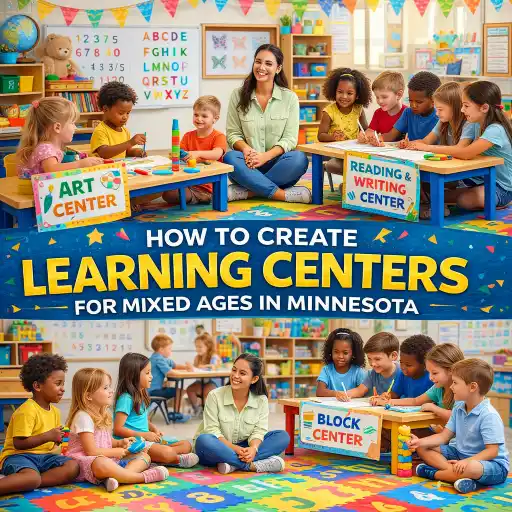
1) How do I set up centers so different ages can use them together?
Keep space clear and predictable. Use zones and low shelves so children can get and return materials by themselves. Try 4–6 zones like: quiet/reading, blocks, art, dramatic play, sensory, and table work. For practical room layouts and labeling ideas, see ChildCareEd’s guide: How to Set Up, Teach, and Manage a Mixed-Age Classroom.
- 🔹 Make one shelf = one activity. Use baskets or trays so children know where each set goes.
🧩 Learning environment design: To help staff set up centers that invite independence and support children at every level, ChildCareEd's Environments That Inspire Independence and Exploration  Buy Now $55.00 is a 6-hour online course covering how to design stimulating, organized spaces where children can self-select, explore, and build skills — directly supporting the zone setup, shelving, and labeling steps outlined in the room setup section.
- 🔸 Label homes with photos and a short word so non-readers know where to return things.
- 😊 Place materials by skill level: open-ended items (blocks, loose parts, clay) work for all ages.
- 🙂 Create a quiet nook with pillows and picture books for younger children and simple extension prompts for older children.
Tip: Use soft barriers (rugs, low shelves) to mark centers. Keep small parts in a separate higher shelf for times when older children use them in small groups. For Minnesota nature and seasonal ideas, pair centers with local outdoor work from the MN DNR PLT guides (PLT Environmental Experiences).
2) How do I plan activities so mixed ages learn together?
Plan one theme with layered choices. Focus on skills, not ages. Use a single goal and give 2–3 entry points so each child can join at their level. ChildCareEd explains layered planning and mixed-age templates in Working With Mixed Age Groups.
- 🟢 Pick one clear goal (language, counting, or fine motor).
- 🟡 Offer 2–3 ways to do the activity: easy, medium, and challenge.
- 🔵 Add a peer-help option: older children are buddies who show or coach.
Example: Theme = apples. In the sensory center, infants explore smooth real apples, toddlers scoop and sort apple slices, preschoolers measure and graph seeds. For Minnesota-friendly seasonal ideas and outdoor links, use local guides and ChildCareEd activity pages like Age-appropriate activities in Minnesota.
Document learning simply: 1 photo + 1 short note about what the child did. Use checklists and quick portfolios so staff can see growth easily.
3) How do I keep children safe, calm, and supported during centers?
Clear routines and active supervision help everyone. Use visuals for schedules and teach the schedule the first week. Simple rules like: "be safe, be kind, try your best" are short and easy to practice. For practical supervision tips, see ChildCareEd classroom management resources (Practical multi-age strategies).
- 👀 Position staff so they can see all centers. Rotate spots during the day to check every area.
- 🔔 Use the same clean-up cue each day (song, bell, or clap pattern).
- 🙂 Teach helper jobs (tray checker, shelf buddy) so older children get leadership practice.
- 😌 Make a calm corner with soft items and a small activity for children who need regulation.
Safety notes for Minnesota: follow state licensing rules and local guidance — state requirements vary - check your state licensing agency. If you screen or track development, Minnesota recommends certain tools; see the MN Dept. of Health list (Recommended Screening Instruments).
4) How do I assess progress, work with families, and avoid common mistakes?
Keep assessment simple and team-based. Use photos, a quick checklist, and a line or two about next steps. Share good news with families often. ChildCareEd has sample templates and family resources for mixed ages (Mixed-Age Group Activities Buy Now $0.00).
- 📸 Take one photo per activity and write 1 short sentence about the skill you saw.
- 📝 Use a 1-page portfolio update each month for each child.
- 💬 Send a short weekly note or photo to families and invite them to share ideas and culture.
Common mistakes and how to avoid them:
- ❌ Too many choices out at once — Fix: rotate centers and keep 2–4 activities per zone.
- ❌ Expectations unclear by age — Fix: post simple visuals that show what success looks like for each level.
- ❌ Not teaching transitions — Fix: practice transitions as mini-lessons and give 5-minute warnings.
Resources to learn more: ChildCareEd courses like "Working With Mixed Age Groups" and local Minnesota PLT and nature resources can help your team. Try one small change this week: adjust one shelf, add one layered activity, and teach one helper job. Your #children will benefit from the care and planning you put in.
👥 Mixed-age group strategies: For staff who want to deepen their skills in planning and managing mixed-age learning experiences, ChildCareEd's Working With Mixed Age Groups Buy Now $24.00 is a 3-hour online course covering layered activity planning, peer learning strategies, and classroom management approaches that work across age ranges — a direct match for the themed, multi-level activity planning described in this guide.
Conclusion
Start small, celebrate small wins, and share success with families and staff. Use clear zones, layered activities, active supervision, and simple documentation. For Minnesota ideas and seasonal links, use the MN DNR PLT activities and ChildCareEd Minnesota pages. Remember: state requirements vary - check your state licensing agency. Your thoughtful planning creates a warm learning community where mixed ages can learn together, lead, and play.
- 45 Hour Child Growth and Development
- CDA Preschool Credential with Portfolio Review
- CDA Family Child Care Credential with Portfolio Review
- CDA Bridge Bundle: Preschool
- CDA Infant/Toddler Credential with Portfolio Review
- CDA Bridge Bundle: Family Child Care
- CDA Bridge Bundle: Infant/Toddler
- Texas Director Credential
- ChildCareEd’s Montessori Curriculum Training
- CDA Certification en Español: Recursos y Consejos para Educadores Bilingües
- Proporciones de Cuidado Infantil y Tamaños de Grupo por Edad en Maryland (Guía Rápida para Centros y Hogares)
- Proporciones de Cuidado Infantil y Tamaños de Grupo por Edad en Nueva Jersey (Guía Rápida para Centros y Hogares)
- Proporciones de Cuidado Infantil y Tamaños de Grupo por Edad en Virginia (Guía Rápida para Centros y Hogares)
- Missouri Child Care Ratios and Group Sizes by Age (Center + Home Quick Guide)
- Por Qué la Supervisión Activa Es Clave para la Seguridad en el Cuidado Infantil
- Cómo Trabajar en el Cuidado Infantil en Wisconsin: Requisitos y Pasos
- How can I organize an effective preschool classroom?
- How can I create learning centers that work for mixed ages in Minnesota?
- How Can Minnesota Childcare Providers Plan a Week of Activities for Mixed-Age Groups?
- How can I manage mixed-age groups in daycare?
- Canciones, juegos y preguntas de círculo para niños
- Cómo simplificar la capacitación para sus empleados de daycare
- How can Minnesota child care programs keep kids learning and engaged over the summer?
- What are Minnesota Child Care Ratios and Group Sizes by Age (Center + Home Quick Guide)?
- How can Minnesota child care programs cover staff breaks and stay in ratio?
- How do we apply Developmentally Appropriate Practice in mixed-age groups?
- How Can You Adapt Classroom Activities for Mixed-Age Groups?
