A child’s fascination with a plastic ant in a classroom sensory bin can spark questions about the living things just beyond the door. Build on that curiosity with the Insects Coloring Activity Buy Now $0.49, inviting children to talk about the insects pictured and what they wonder before heading outside to observe. The Basic Science in Early Childhood Buy Now $25.00 course helps providers strengthen the questioning, observation, and hands-on inquiry practices that keep children’s questions at the center of learning. For ideas on creating a space that supports those discoveries, explore Creating the Natural Outdoor Classroom  Buy Now $16.00. Read on for ways to carry indoor interest into outdoor investigations shaped by what children notice.
Why connect indoor insect play with outdoor discovery?
Indoor insect play gives children a familiar, low-pressure way to explore an interest before they encounter living creatures outdoors. Toy insects, photographs, books, and sensory materials let children compare shapes, practice vocabulary, and rehearse how to use tools. When educators notice a child repeatedly sorting beetles or making a pretend ant trail, that play can become a bridge to observing real organisms and habitats.
The shift outdoors gives children access to movement, changing light, weather, plants, soil, and animal behavior that replicas cannot reproduce. A brief search can prompt questions about where insects shelter, how they move, and what they might be doing. Children practice early scientific habits by noticing, wondering, predicting, comparing, and revisiting ideas. Outdoor inquiry also creates opportunities for cooperation: children may decide together where to look or how to document a find.
Educators do not need to deliver a lecture or identify every species. A responsive adult can listen carefully, add a useful word, and help children look more closely. As Head Start’s bug-hunt guidance emphasizes, following children’s lead and observing living things respectfully can make an insect hunt an engaging learning experience.
- Connect play and real-world observation through familiar materials and questions.
- Support #curiosity, language, reasoning, and collaboration in one integrated experience.
- Model care for living things and the places they depend on.
How can indoor interests guide a purposeful insect investigation?
Start by observing what children already do indoors. Which toy insects attract attention? Do children arrange them by color, count their legs, build homes, or invent stories? Their actions offer clues about the next outdoor invitation. Rather than planning a broad “bug unit” in advance, select one accessible question that grows from the play: “Where might we find insects like these?” or “What places seem busy with insect visitors?”
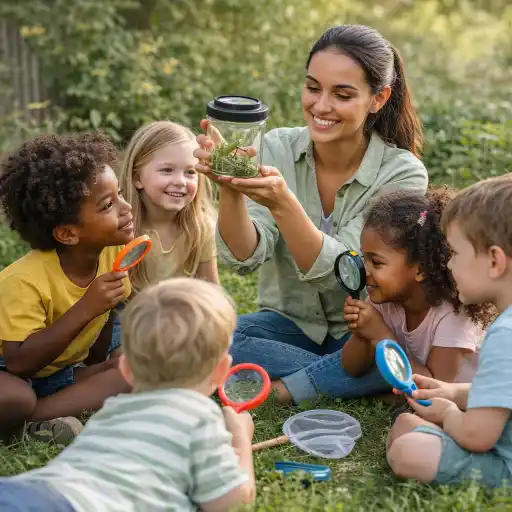
Make a simple connection between the classroom and outdoor space. If children have been exploring butterflies, look near flowers from a respectful distance. If they are interested in ants, observe a trail without blocking it or disturbing the nest. Invite children to carry a small notebook, clipboard, picture cards, or a camera used by an adult. Provide magnifiers for looking closely without handling insects. For a butterfly-focused extension, National Learn About Butterflies Day offers hands-on activities for exploring the butterfly life cycle.
Before going out, invite predictions. Children can point, draw, gesture, or explain where they expect to find an insect. While investigating, use prompts such as “What do you notice?” and “What makes you think this is a good place to look?” After returning indoors, revisit their drawings, photographs, or words. This back-and-forth turns one outing into a longer inquiry and supports a flexible, play-based curriculum. Nature-based teaching guidance from Natural Start Alliance likewise highlights how children’s interests can guide authentic investigations across indoor and outdoor settings.
- 🪲 Let children’s existing play and questions shape the investigation.
- Choose one manageable focus and a few observation tools.
- Plan a way to revisit discoveries indoors through drawings, books, or conversation.
How do educators prepare a safe and respectful outdoor search?
Begin with the site, not the equipment. Choose a familiar area away from traffic and obvious hazards, and scan it before children arrive. Gardens, planted borders, tree trunks, and leaf litter may offer interesting places to look, but the safest and most appropriate locations depend on the program’s grounds and local conditions. Establish clear boundaries and position adults so they can actively supervise while children explore.
Use tools that support observation without encouraging unnecessary collecting. Magnifiers, picture guides, clipboards, and cameras are usually enough. If a container is used for a brief, supervised look, make sure the insect can breathe and is returned promptly to the exact place where it was found. Avoid handling unfamiliar insects; never encourage children to touch an organism simply to make the activity more exciting. The California Academy of Sciences’ insect investigation lesson recommends gentle observation, appropriate tool demonstrations, and returning animals to their habitat.
Check program policies, family information, and children’s health plans before heading out. Consider allergies, sensory preferences, mobility access, weather, clothing, and handwashing afterward. Make participation flexible: a child may observe from a little farther away, use a tool, draw what others see, or choose a related indoor activity. State requirements vary - check your state licensing agency for applicable outdoor supervision and safety requirements.
- Scan the space, identify boundaries, and assign active-supervision positions.
- Teach a simple rule: observe gently, do not disturb habitats, and ask an adult before touching.
- Build in access choices for children who prefer not to touch or move close to insects.
How can questions, tools, and documentation deepen the inquiry?
Good questions encourage children to explain their thinking without turning the outing into a quiz. Begin with open prompts: “What do you notice about how it moves?” “Where did we find it?” and “What might this place provide?” For infants and toddlers, pause for gestures, gaze, sounds, and movement; adults can narrate what the child appears to notice. Preschoolers may make predictions, compare findings, or dictate a short observation.
Keep tools simple and demonstrate them before children begin. Show how to hold a magnifier steady, use a clipboard, or take a photograph without crowding an insect. A sketch can record color, shape, number of visible legs, or location. Do not insist that children produce a polished drawing or correct label. The purpose is to preserve their observations so they can revisit and refine their ideas.
Documentation can include a child’s exact words, a photograph of the habitat, a quick sketch, or a class tally of insects observed. Back indoors, compare the evidence with books or images and notice what has changed in children’s explanations. For example, a child who first says “the ant is lost” may later describe how it follows a path. This is meaningful progress in language and reasoning. NC State Extension’s insect observation activity also offers prompts that encourage children to reflect on where insects live and why they matter.
- Record children’s ideas with a photo, quote, sketch, or simple tally.
- Use #observation language such as “I notice,” “I wonder,” and “What could we find out?”
- Revisit evidence and invite children to revise a prediction or add a new question.
How can every child participate, and what pitfalls should educators avoid?
Inclusive investigation means providing meaningful ways to join, not expecting every child to touch or approach a live insect. Offer choices: look through a magnifier, use a long-handled tool, observe from a comfortable distance, take a photograph with an adult, or document what a peer finds. Search at different heights and locations, and choose routes that work for mobility devices and strollers. Visual sequence cards, home-language vocabulary, and quiet time before the outing can also help children anticipate and participate.
Children may bring different cultural experiences and feelings to insect exploration. Some are delighted; others are cautious or afraid. Validate those responses rather than teasing or pressuring children. Adults’ calm language sets the tone: “We can watch from here,” or “Let’s give it space.” Invite families to share stories, words, and traditions connected to insects and the natural world.
Common pitfalls include collecting too many organisms, promising children that they will find a particular insect, or treating a missed discovery as a failed lesson. Nature is variable; the process is the learning. Avoid handling unknown insects and do not disturb nests or habitats. If no insects appear, investigate tracks, leaves, holes, or photographs—or return another day.
- Offer several participation options without singling out children who decline touch.
- Do not equate a successful outing with catching or naming an insect.
- Keep the group focused on #habitat care and respectful observation.
Conclusion: How can educators turn insect interest into ongoing learning?
To take an indoor interest in insects outside, begin with children’s play, choose one question that matters to them, and prepare a safe, accessible place to observe. Use simple tools, open-ended prompts, and brief documentation to help children notice details, share ideas, and revisit what they learned. Above all, model patience and respect: insects are living neighbors, not classroom objects to collect.
A single observation can lead to further reading, art, sorting, storytelling, or a return visit to the same outdoor spot. When educators connect those experiences without forcing a predetermined answer, children see that their questions can guide real inquiry. The goal is not to make every child an insect expert in one outing; it is to nurture confidence, scientific thinking, and care for the natural world. With thoughtful planning and flexible participation, an ordinary classroom interest can become an investigation children remember.
Five ChildCareEd courses for continued professional learning
- 45 Hour Child Growth and Development
- Many Colors, One Canvas: MD ECE Conference
- The ABCs of Behavior: Turning Challenges into Learning Opportunities
- Tomorrow's Einsteins: Infant and Toddler Science
- Creating Environments that Nurture Growth and Community
- Texas Director Credential
- Safeguarding Young Lives: A Comprehensive Guide to Child Care Safety
- Every Moment Matters: Schedules and Transitions
- Creating Safe Outdoor Play Environments for Children: Understanding Hazards and Precautions
- CDA Certification en Español: Recursos y Consejos para Educadores Bilingües
- Outdoor Spring Play: 10 Engaging Activities to Stimulate Young Minds
- What Are Creative Ways to Use Nature as Your Classroom?
- ❄️ What Outdoor Activities Work Well for Illinois Kids in Every Season? 🌷🍂
- ❄️ ¿Qué actividades al aire libre funcionan bien para los niños de Illinois en cada estación? 🌷🍂
- List of Non-Poisonous Plants for Children: Safe Choices for Kids and Classrooms
- Temas y Actividades para el Día Nacional del Kindergarten para Proveedores
- Celebrando la amistad en el cuidado infantil durante el Día de los Mejores Amigos
- Canciones, juegos y preguntas de círculo para niños
- Can forest preschool activities be integrated into traditional programs?
- What’s Happening Outside? Fall Science Adventures for Preschoolers
- How Can Child Care Programs Make Nature-Based Learning Meaningful, Inclusive, and Safe?
- How Can Providers Bring Nature-Based Learning Into Any Program?
- How Can Child Care Programs Balance Indoor and Outdoor Learning Across the Week?
- How Can Educators Turn Indoor Insect Interest into Outdoor Investigation?
- How Can Child Observations Help You Plan More Meaningful Classroom Activities?
- How Can Child Care Providers Keep Indoor Play Manageable When Rain Lasts All Week?
- How Can One Plant Help Children Notice Gradual Change Outdoors?
