One misplaced cleaning bottle can turn an organized classroom into a preventable risk. A clear separation system helps protect children, simplifies staff routines, and makes supply checks more reliable; the Handling and Storage of Hazardous Materials course  Buy Now $10.00 offers focused training on safe handling, storage, and disposal practices. Explore the course as a practical next step while you build a classroom system your whole team can follow.
Keeping chemicals apart from crayons, books, art materials, and other everyday resources is both a safety practice and a management practice. Young children explore with their hands and mouths, while educators need dependable routines that make safe choices easy—even during a busy transition or cleanup.
Why does separating hazardous products from classroom supplies matter?
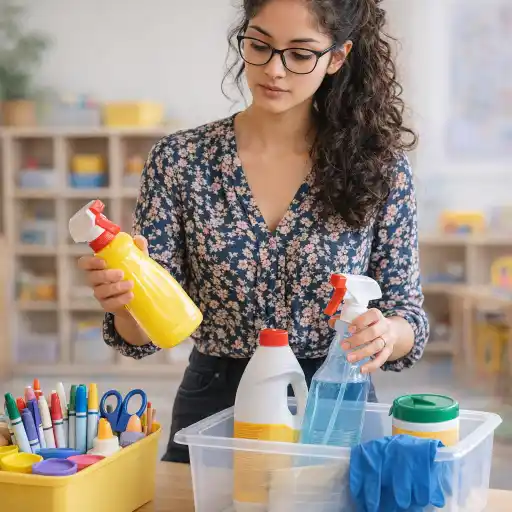
Classroom and supply areas often hold products with very different purposes: children’s learning materials, food-related items, staff supplies, cleaning chemicals, disinfectants, sanitizers, pesticides, and medications. When these are stored together, a spill, leak, mistaken grab, or unlabeled container can create exposure or contamination. Separation reduces the chance of children contacting a dangerous product and helps staff avoid using the wrong item on a surface or material.
Children may be more vulnerable to chemical exposures than adults, and exposure can happen through swallowing, breathing vapors, skin contact, or touching the eyes after handling a product. The National Pesticide Information Center’s daycare and school poison safety guidance underscores the importance of keeping products secured, using original containers, following labels, and preparing for a poisoning emergency.
Separation also makes supervision and inventory more straightforward. Staff can quickly identify which materials children may use independently and which must remain adult-only. When storage is consistent across rooms, substitutes and new staff are less likely to make a risky guess. State requirements vary - check your state licensing agency.
Which products belong in a restricted storage area?
Use the product label and your program’s policies as the starting point. Keep products that can be harmful if swallowed, inhaled, or touched out of children’s access. This commonly includes cleaners, sanitizers, disinfectants, laundry and dishwasher detergents, bleach, pesticides, aerosol sprays, and products labeled “keep out of reach of children.” Keep medications and other restricted items in their designated secure storage as well; do not place them in a general classroom-supply bin.
Do not assume a product is harmless because it is marketed as “green,” natural, or child-friendly. Check the label and follow your licensing rules. The U.S. EPA’s guidance on using chemicals and cleaning supplies advises that children should not handle cleaning chemicals, including disinfectant wipes, and that products should be used according to their labels.
- Keep toxic substances in original labeled containers; if a secondary container is permitted, label it clearly according to applicable rules.
- Store hazardous products away from food, formula, medications, and children’s activity materials.
- Maintain access to safety data sheets (SDS) when required and make emergency contacts easy to locate.
- Never mix cleaning chemicals; some combinations can create dangerous fumes.
For a quick policy reference, CFOC guidance on use and storage of toxic substances recommends original labeled containers, storage out of children’s reach, use as directed by the manufacturer, and keeping hazardous products away from food and medication.
How should you design separate storage zones?
Start by mapping the spaces where supplies are stored and used: classroom shelves, art cupboards, shared closets, utility rooms, kitchens, and diapering areas. Designate an adult-only, secured space for hazardous products, separate from food and learning resources. In many settings, a lockable cabinet or closet is the safest practical option; a high shelf alone may not meet local rules or reliably prevent access.
Set up child-accessible storage for appropriate learning materials separately. Picture-and-word labels can help children return blocks, books, and art supplies to the correct place without staff needing to direct every step. Mark restricted areas clearly for staff, but do not rely on signs as a substitute for a physical barrier or supervision.
- Choose a consistent, secure location for hazardous products and limit access to trained staff.
- Keep products in their original containers and follow manufacturer storage instructions, including ventilation and temperature guidance.
- Separate chemical storage from food preparation, food items, medication, and children’s activity spaces.
- Store maintenance tools and equipment, such as wet mops and utility products, where children cannot access them.
- Return products to secured storage immediately after use; do not leave bottles on counters, carts, or classroom shelves.
Storage rules differ by jurisdiction. For an example of how detailed a state rule can be, review Washington’s requirements for poisonous and dangerous substances. Use your own state’s licensing guidance to determine the specific lock, location, labeling, and ventilation requirements that apply.
How can an inventory guide support safer supply management?
A well-designed inventory helps a program see what it has, where it is stored, and who is responsible for checking it. Separate the inventory into clear categories—such as child-accessible learning materials, staff-only classroom tools, cleaning and sanitation products, medications, and maintenance supplies. Record each item’s name, quantity, location, condition, and review date. For hazardous products, add the storage area, label status, and SDS location where applicable.
The practical classroom supply inventory system guide describes how consistent records can connect purchasing, storage, safety, and staff accountability. A classroom supply management overview also offers ideas for organizing materials and maintaining safe routines. Use these concepts to adapt the Classroom Supply Inventory Resource Guide to your program’s actual rooms and procedures.
- Use distinct sections or lists for classroom supplies and hazardous products instead of combining them in one undifferentiated inventory.
- Give every item a specific storage location; avoid vague entries such as “closet.”
- Review quantities and condition on a routine schedule, and remove expired, unknown, damaged, or unnecessary products according to local procedures.
- Document who completes checks and how staff report missing labels, spills, or damaged containers.
- 📋 Keep an up-to-date product list and emergency contact information where staff can find them quickly, without placing hazardous products in a child-accessible area.
Inventory records support a safer environment when they reflect what is actually on the shelf. Update them when products change, not just before an inspection.
How can staff make separation part of everyday practice?
A storage system works best when every staff member knows the routine and the reason behind it. During orientation, show staff where children’s supplies belong, where hazardous products are stored, how products are returned after use, and where labels, safety data sheets, and emergency procedures are kept. Include substitutes, volunteers, and maintenance personnel in the parts of the system relevant to their roles.
Build checks into existing routines rather than adding an elaborate new process. A brief opening walkthrough can confirm that restricted storage is secured and classroom materials are in their designated zones. After cleaning, staff can check that all products have been returned, containers are closed, and no chemical residue or supplies remain accessible to children. Directors can review the inventory and storage areas periodically and respond promptly to concerns.
Common pitfalls include relying on a high shelf instead of a secured location, transferring products into unmarked bottles, leaving wipes or sprays within reach during use, and storing chemicals beside art or food supplies. Prevent these problems with clear labels, reliable access controls, prompt put-away habits, and a simple reporting process.
For more structured learning, consider Handling and Storage of Hazardous Materials Buy Now $10.00, which covers handling and storage procedures as well as disposal of biocontaminants. Review the course information and confirm whether it fits your training needs and applicable requirements.
Conclusion: What is the safest way to separate hazardous products from classroom supplies?
Keep hazardous products in a designated, secured adult-only area, separate from food, medication, and children’s materials. Retain original labels, follow manufacturer directions, return products to storage promptly after use, and maintain an inventory that shows what is on hand and where it belongs. Pair the physical system with staff orientation, routine checks, and a clear response plan.
The central goal is a classroom where children can explore appropriate materials while staff can locate and manage restricted products confidently. Start with one room or storage area, correct the highest-risk gaps, and then apply the same clear approach throughout the program. State requirements vary - check your state licensing agency.
Related ChildCareEd training:
- Handling and Storage of Hazardous Materials Buy Now $10.00
- Building and Physical Premises Safety Including the Storage and Handling of Bio-Contaminants and Hazardous Materials Buy Now $7.00 (Nevada-specific; review eligibility and details)
- Building and Physical Premises Safety Buy Now $10.00
- Prevention and Control of Infectious Diseases Buy Now $16.00
- Classroom Setup for Child Care Buy Now $24.00
- 45 Hour Child Growth and Development
- 45 hour Growth and Development Birth-age 12 ONLINE
- Legal & Ethical Essentials in Child Care
- Pediatric RSV First Aid & CPR/AED
- Staff Supervision, Observation & Feedback
- Texas Director Credential
- Every Moment Matters: Schedules and Transitions
- Family Child Care: Building, Premises, and Outdoor Safety
- 👶 ¿Cuáles son las proporciones y grupos requeridos en Dakota del Norte? 🏫
- 10 Ejemplos de Cómo la Cultura Influye en el Desarrollo Infantil
- Proporciones de Cuidado Infantil y Tamaños de Grupo por Edad en Maryland (Guía Rápida para Centros y Hogares)
- Proporciones de Cuidado Infantil y Tamaños de Grupo por Edad en Nueva Jersey (Guía Rápida para Centros y Hogares)
- Proporciones de Cuidado Infantil y Tamaños de Grupo por Edad en Virginia (Guía Rápida para Centros y Hogares)
- Cómo Trabajar en el Cuidado Infantil en Wisconsin: Requisitos y Pasos
- Illinois DCFS Rule 407: Art Materials for Toddlers in Child Care
- Celebrando la amistad en el cuidado infantil durante el Día de los Mejores Amigos
- Cómo simplificar la capacitación para sus empleados de daycare
- How can we keep diapering safe in child care?
- How can I manage childcare supplies and classroom materials efficiently and safely?
- How to Become a Daycare Owner When You’ve Never Owned a Business Before
- What Do You Need to Open a Daycare at Home? Start With Your House, Not the Toys
- Free Classroom Supplies for Teachers by Mail: How to Find Legitimate Offers
- How Do You Fill Out LIC 279? A Step-by-Step Guide for California Family Child Care Applicants
- Can Your Home Become a Daycare? What to Check Before You Apply for a License
- How Can You Create a “Yes Space” Where Infants and Toddlers Explore Safely?
- How Can Child Care Centers Properly Sanitize Toys?
- How Can You Build a Practical Classroom Supply Inventory System?
- How Can Child Care Providers Separate Hazardous Products from Classroom Supplies?
