Want simple, low‑prep nature activities you can run all year and that build real learning? Seasonal invitations to explore—planting in spring, water science in summer, leaf math in fall, and ice investigations in winter—help your team meet curriculum goals while supporting regulation, vocabulary, and gross motor growth. For a practical next step, consider Creating the Natural Outdoor Classroom  Buy Now $16.00 to build routines, site design ideas, and staff confidence; you might also pair that with the CDA: Creating the Outdoor Classroom Buy Now $16.00 course for deeper classroom alignment and documented training hours.
Quick note: state requirements vary - check your state licensing agency. Throughout this article you’ll find low‑prep, evidence‑informed activities and links to short courses that strengthen staff practice and documentation. Use these ideas to make your #outdoor time purposeful for every age group, boost #seasons learning, support #children’s development, and maintain #safety in practical ways while connecting to #STEAM goals.
Why does nature‑based play matter year‑round?
Why it matters: Outdoor, nature‑based invitations increase movement, sensory input, and opportunities for child‑led inquiry—benefits linked to improved attention, language growth, and self‑regulation. Research and practice guidance (including resources from ChildCareEd and the CDC) show that routine outdoor experiences create repeated exposures to vocabulary, observation, and measurement that are hard to replicate indoors. When staff intentionally frame short learning targets (e.g., "count four different leaves" or "predict which ice block melts fastest"), these playful moments map directly to early learning standards.
Program benefits include:
- Stronger gross‑motor and sensory development through movement and tactile exploration.
- Built‑in STEAM experiences: prediction, measurement, sorting, and simple experimentation.
- Family engagement: visible photos and short learning notes that show progress.
What easy activities work in each season?
Design 2–3 rotating stations and repeat them across the day. Low‑prep stations scale for infants through preschoolers by changing language complexity and materials.
- 🌱 Spring: seed cups (radish/lettuce), nature scavenger with picture lists, mud kitchen plus vocabulary prompts (root, sprout, bud).
- 💧 Summer: shallow water tubs for sink/float and evaporation charts, ice‑painting, shady storytime with nature journals.
- 🍁 Fall: leaf sorting + graphing, pumpkin weighing/towers, sensory bins with leaf rubbings and scent stations.
- ❄️ Winter: frozen toy excavations, salt vs. warm water melt tests, short outdoor observation walks followed by indoor journaling. For step‑by‑step plans, materials, and developmental extensions for preschoolers' ice play, see our Icy Activities page.
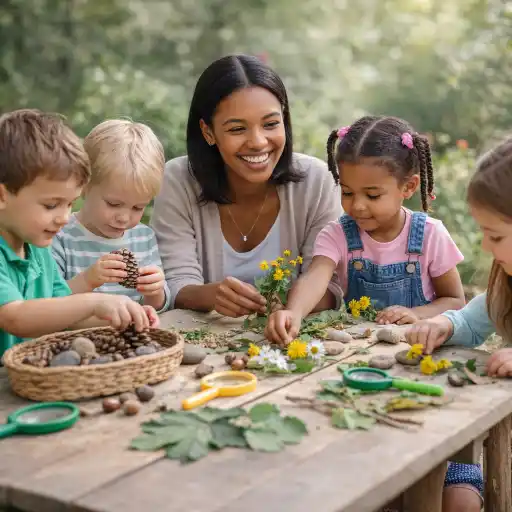
Keep materials simple—clipboards, magnifiers, tubs, and a stash of loose parts (stones, sticks, shells). For staff training on designing these outdoor invitations, see Building Early Science Foundations Buy Now $16.00 and the course Creating the Natural Outdoor Classroom Buy Now $16.00 as part of CDA Buy Now $16.00 aligned practice.
How do I adapt activities for different ages and needs?
Adaptation is about changing questions, tools, and independence expectations. For infants, prioritize safe sensory tubs and adult narration ("This is cold water. It makes bubbles."). For toddlers, use picture scavenger lists and one‑step experiments (drop/float). For preschoolers, add recording: counting, simple charts, hypothesis language ("I think the ice near the sun will melt fastest").
Inclusion tips:
- Provide choices: a calm observation spot and an active exploration area.
- Offer tools for varied abilities (tongs, scoops, pre‑cut probing tools) and pictorial cue cards for routines.
- Use peer buddies to scaffold social skills and leadership.
What safety and staffing practices keep outdoor learning reliable?
Safety is routine—plan a short pre‑outdoor checklist (weather, air quality, clothing, hazard scan) and name a zone or a "watcher" for water or icy play. The CDC guidance on outdoor play and safety offers practical precautions about sun, heat, insects, water hygiene, and supervision (see CDC guidance). For program systems, use a grab‑and‑go outdoor kit (clipboards, hand wipes, spare layers, labeled first‑aid) and short staff huddles pre‑outdoor time so roles are clear.
Courses that strengthen safety and contingency planning include Safe and Sound: Creating Healthy Environments for Every Child Buy Now $55.00 (safety, hygiene, policies) and Engaging Indoor Activities for Inclement Weather Buy Now $24.00 to cover quick indoor alternatives when the weather turns.
How can I connect outdoor play to curriculum goals and avoid common mistakes?
Link each outdoor invitation to 1–2 clear learning targets (vocabulary, counting, observation). Documentation can be light: a photo + a child quote or single‑line learning note per station works for families and licensing reviews. Use the inquiry cycle with older preschoolers: Ask → Predict → Test → Record.
Common mistakes and fixes:
- ❌ Overloading the space with too many choices — ✅ Offer 2–3 focused invitations and rotate.
- ❌ Weak supervision zones — ✅ Divide yard into named zones and assign adults.
- ❌ No weather backup plan — ✅ Prepare one indoor movement or sensory station (see Engaging Indoor Activities for Inclement Weather Buy Now $24.00).
For programs wanting to formalize learning outcomes, ChildCareEd’s CDA: Creating the Outdoor Classroom Buy Now $16.00 course offers strategies to connect outdoor design and lesson planning to competency frameworks and documentation.
FAQ: Practical questions from busy providers
- Q: How long should outdoor blocks be? A: Start with 15–30 minutes; extend as your team builds routines.
- Q: What about allergies and real food in activities? A: Always follow family notes and allergy plans; supervise food handling closely.
- Q: How can I train staff quickly? A: Use short online modules—try Creating the Natural Outdoor Classroom Buy Now $16.00 for a focused, practical option.
- Q: How to document learning without extra paperwork? A: Photo + one sentence + a child quote per week is powerful and manageable.
Conclusion: Where to start tomorrow
Pick one small change and test it for a week: add a 15‑minute outdoor block, set up one seed cup per child, or do a single ice‑investigation. Train staff with a targeted short course—Creating the Natural Outdoor Classroom Buy Now $16.00, CDA: Creating the Outdoor Classroom Buy Now $16.00, Engaging Indoor Activities for Inclement Weather Buy Now $24.00, Building Early Science Foundations Buy Now $16.00, or Safe and Sound Buy Now $55.00 can help you scale ideas into reliable practice and earn clock hours. Small, consistent outdoor invitations will make your #children more curious, active, and ready to learn across every #season.
- 45 Hour Child Growth and Development
- Professional Presence in Early Childhood
- 45 Hour Preschool Methods and Materials
- Open Ears: Listening in Child Care
- 45 Hour School Age Methods and Materials
- Texas Director Credential
- Building Early Science Foundations
- Environments That Inspire Independence and Exploration
- Supporting Families and Caregivers in Language and Literacy
- Today Is Earth Day!
- Get Ready for Summer!
- Nature’s Classroom: Why Fall Is the Best Season for Sensory Learning Outdoors
- Pumpkin Spice and Sensory Delight: Easy Autumn Sensory Bins for Early Learners
- How Neurodivergent Kids Shine During the Holidays
- DIY Snow Globes: The Fine Motor Craft That’ll Keep Kids (and Adults) Busy for Hours
- CDA Certification en Español: Recursos y Consejos para Educadores Bilingües
- ¿Cuáles son las mejores actividades del Día de la Tierra para niños en casa o en el aula?
- Normas de Licenciamiento de Cuidado Infantil en Virginia para Centros Diurnos Infantiles y Hogares Diurnos Familiares
- Proporciones de Cuidado Infantil y Tamaños de Grupo por Edad en Virginia (Guía Rápida para Centros y Hogares)
- Cómo Ser Maestra de Preescolar en Maryland
- How can New York childcare programs help children in the concrete jungle fall in love with nature?
- Pumpkin, Leaves, and Apples: Fall Activities for Preschoolers
- Calabazas, hojas y manzanas: actividades de otoño para preescolares
- Celebrando la amistad en el cuidado infantil durante el Día de los Mejores Amigos
- How can outdoor learning help young children grow and learn?
- How can childcare programs celebrate the harvest season in ways that are inclusive, safe, and sensory-rich?
- Can forest preschool activities be integrated into traditional programs?
- How Can Child Care Programs Use Easy Nature‑Based Activities for Every Season?
- Hello, Fall! Cozy Activities to Help Babies Explore the Season
