Introduction — why this matters
Burnout is common in early childhood work. When teachers get tired and stressed, children get less attention and programs lose good staff. This article gives directors and child care providers clear, practical steps to prevent #burnout and protect staff #wellbeing. For more ideas and background, see How can early childhood programs prevent burnout in educators? on ChildCareEd.
Why it matters:
- Children need calm, steady adults to learn and feel safe.
- Programs need staff who stay so families trust your center.
- Communities need quality care — and staff who are healthy give better care.
Note: state requirements vary - check your state licensing agency.
1) What are the early signs and main causes of burnout?
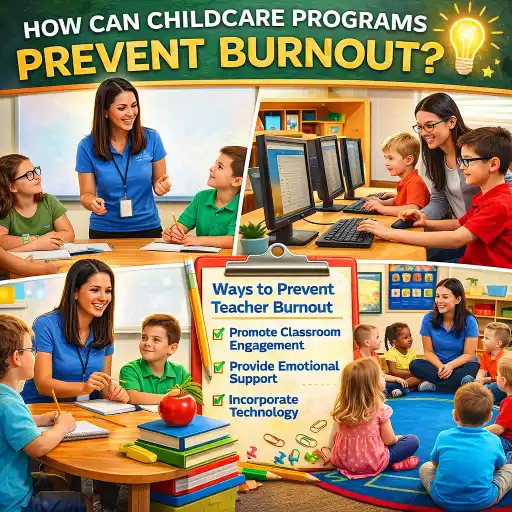
Spotting burnout early helps you act fast. Common signs to watch for include low energy, loss of patience, trouble focusing, and feeling distant from children or coworkers. See the signs list in How can early childhood programs prevent burnout in educators?.
- 😊 Emotional signs: constant tiredness, irritability, feeling numb.
- 🧠 Cognitive signs: forgetfulness, trouble planning or finishing tasks.
- ⚠️ Work signs: too many hours, paperwork overload, not enough breaks.
Common causes:
- High workload and unclear job roles, which research links to higher stress and health problems — see the study on effort-reward imbalance for childcare workers (Hamburg study).
- Low pay and few benefits, which raise financial strain and risk of leaving the field (workforce wellness research).
- Poor workplace culture: lack of peer debriefing, little leadership support, or no time for training (see ChildCareEd articles on staff support and retention Keep Them Happy, Keep Them Here).
Knowing these signs helps leaders plan supports and training before people leave. Prioritize simple screening and regular check-ins.
2) What daily habits can teachers use to protect their energy?
Small daily habits add up. Teachers can use short, easy steps each day to lower stress and keep joy in their work. See practical tips in How to Manage Stress and Avoid Burnout and quick mindfulness ideas in Finding Calm in the Classroom.
- 🧘♀️ Micro-breaks: 1–3 deep breaths between activities, 2-minute outdoor steps, or a 60-second stretch.
- 😊 Simple routines: plan 3 doable tasks each day and celebrate one small win at the end of the day.
- 🔁 Boundaries: set a clear stop time, and say no to extra unpaid tasks when the schedule is full. Remember: state requirements vary - check your state licensing agency.
- 🧠 Mindfulness and positive skills: practice brief gratitude, mindful listening, or the 5-4-3-2-1 grounding trick from ChildCareEd courses like Stressbusters.
- 📋 Healthy habits: sleep, move, drink water, and use vacation time.
Teachers who use these habits protect their energy and model healthy behavior for children. Small steps help reduce #burnout and strengthen #selfcare for all #educators.
3) How can program leaders reduce burnout across the whole center?
Leaders set the tone. Directors can build systems that stop stress before it grows. ChildCareEd has program-level ideas in How can early childhood programs prevent burnout in educators? and retention tips in Keep Them Happy, Keep Them Here. The OECD report also shows how leadership and collaboration help staff feel prepared and less stressed (OECD TALIS Starting Strong).
- 🔁 Better staffing & schedules: keep safe ratios, plan float coverage, and rotate duties to avoid repetition.
- 🤝 Peer support: set weekly team check-ins, mentoring pairs, and short debrief times after hard shifts.
- 🧘 Training & wellness: offer short courses like Mental Health in Early Childhood
 Buy Now $24.00 and group Stressbusters sessions to build skills together.
 - 📋 Clear policies: write job descriptions, protect planning time, and encourage use of leave — state requirements vary - check your state licensing agency.
- 📈 Measure what matters: quick staff surveys to spot problem areas and try small fixes, then re-check.
Leaders who invest in #support and fair systems make staff feel seen. That reduces turnover and keeps the #educators who care for children every day.
4) What common mistakes make burnout worse — and how do we avoid them?
There are predictable errors programs make that raise stress. Knowing these mistakes helps you change course quickly. Research and ChildCareEd resources show that single solutions rarely work; combine daily habits with system changes (ChildCareEd prevention guide).
- ⚠️ Mistake: Ignoring early signs. Fix: Do short check-ins and teach staff the common signs so problems are named early.
- 💸 Mistake: Asking staff to do unpaid extra work. Fix: Track tasks, simplify paperwork, and reassign duties fairly.
- 🔧 Mistake: One-size-fits-all solutions (a single wellness day). Fix: Offer choices — peer groups, coaching, mindfulness, or counseling — so staff pick what helps.
- 📚 Mistake: Training with no follow-up. Fix: Add coaching, short practice times, and refreshers to make new skills stick (see leadership and coaching models in leadership research).
- 🏗️ Mistake: Not fixing workplace systems (pay, schedule, job design). Fix: Tackle structural issues — these lower stress more than one-off events. The WELL program and other wellness efforts show combining workplace policy and individual tools works best (WELL program).
Avoid these pitfalls by listening to staff, measuring stress points, and making steady changes. This helps stop #burnout and supports long-term #support for staff.
Conclusion — quick action steps
Preventing burnout takes everyday habits and smart leadership. Start small and build steadily. Here are quick steps you can try this week:
- 🔎 Do a 5-minute staff check-in and note common stress points.
- 🧘 Offer one short daily mindfulness or stretch break (see Finding Calm).
- 🤝 Start a peer support or mentoring pair and schedule a 15-minute weekly debrief.
- 📋 Review one policy that adds work (paperwork or meetings) and simplify it.
Remember: small changes stack up. Protect your staff with clear #support, encourage #selfcare, and keep strong #educators so children get the best care. For courses and resources, visit ChildCareEd for trainings on stress, mental health, and leadership (ChildCareEd).
- Why Every Educator Needs Trauma-Informed Care Training in 2025
- CDA Certification en Español: Recursos y Consejos para Educadores Bilingües
- How can early childhood programs prevent burnout in educators?
- How can childcare programs prevent teacher burnout?
- How can early childhood programs reduce teacher burnout?
- Recursos en Español sobre el Sueño Seguro del Bebé
- How can directors keep staff, reduce turnover, and build strong leadership?
- Normas de Licenciamiento de Cuidado Infantil en Virginia para Centros Diurnos Infantiles y Hogares Diurnos Familiares
- Cómo Trabajar en el Cuidado Infantil en Carolina del Norte: Requisitos y Pasos
- Cómo Trabajar en el Cuidado Infantil en California: Requisitos y Pasos
- How can teachers manage stress and avoid burnout?
- Celebrando la amistad en el cuidado infantil durante el Día de los Mejores Amigos
- How can child care programs prevent staff burnout during Minnesota’s paid-leave staffing crunch?
- How can Georgia educators turn local leadership, wellness, and coaching into better child care programs?
- How can we prevent teacher burnout in early childhood education?
- How Can Child Care Programs Prevent Staff Burnout?
- How Can Child Care Providers Recognize Signs of Stress and Burnout?
- How can child care programs prevent employee burnout and reduce turnover?
