Running a child care program means caring for children and following rules that keep them safe. This article helps directors and providers understand the main steps to stay #licensing ready, keep good #records, train staff, and protect children every day. State requirements vary - check your state licensing agency.
Why it matters: Parents trust programs that follow rules. Good compliance reduces risk, keeps children healthy, and helps your program run smoothly. Small systems—one binder, one checklist, one trained staff member at a time—make a big difference.
What basic rules and areas does licensing usually cover?
- 👶 Staff-to-child ratios and group size — rules change by age and setting.
- 🧾 Background checks — fingerprinting and registry checks for staff and household members.
- 📚 Training and professional development — many states require health, safety, and mandated reporter training.
- 🏠 Facility safety — indoor/outdoor safety, exits, playground surfacing, and safe sleep for infants.
- 💊 Health practices and medication — written medication policies, storage, and logs.
- 📁 Records and paperwork — enrollment, emergency contacts, attendance, health records, and staff files.
For federal perspective on state licensing goals and health standards, the CDC explains how licensing supports safe early care at CDC ECE State Licensing.
How do I prepare staff, files, and a toolkit for licensing visits?
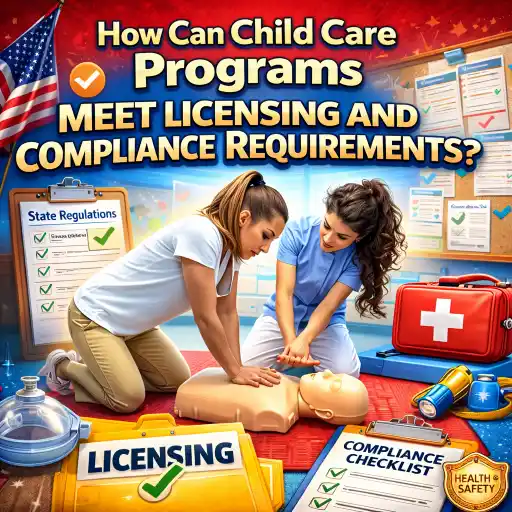
Preparation makes inspections feel easier. Start with one organized toolkit and simple routines. Child care providers often use a Provider Toolkit that holds policies, forms, and training evidence.
- 📂 Make a licensing binder with sections: 1) license & posted documents, 2) child files, 3) staff files, 4) logs (attendance, medication, drills).
- 🙂 Track training in one place. Use an online platform that issues certificates or a simple spreadsheet so no renewal is missed. See training catalogs at ChildCareEd Training Catalog Buy Now $0.00.
- 🔎 Use short weekly checks: 10 minutes to confirm ratios, certificates, and that the emergency bag has current cards.
- 📋 Post easy lists in each room: staff roles by time of day, capacity, and emergency steps.
- ✅ Run a mock review monthly so staff can find files fast—inspectors like tidy records and clear answers.
For step-by-step prep ideas tailored to New York, see How can New York providers prepare. Remember: state requirements vary - check your state licensing agency.
What health and safety practices keep children protected each day?
- 🧼 Handwashing and hygiene: schedule supervised handwashing before meals and after diapering or toileting.
- 🧯 Emergency plans and drills: post plans, do regular fire and disaster drills, and keep drill logs.
- 🍼 Safe sleep and infant care: follow state rules and best-practice safe sleep routines from health & safety courses.
- 💉 Illness policies and exclusion rules: have written guidance for when children must stay home and when they can return.
- 🚑 First Aid/CPR and medication: ensure trained staff are on site and that medication logs and permissions are complete. ChildCareEd offers courses like Health & Safety Orientation and First Aid/CPR in their catalog: Training Catalog Buy Now $0.00.
Keep a small, labeled first aid kit in each classroom and a main kit for the site. Train staff on when to call 911 and how to report incidents. Small, practiced routines protect children and calm families.
How do I avoid common mistakes and keep compliance strong over time?
A few common problems repeat in many programs. Fixes are simple and practical. ChildCareEd lists common trouble spots and fixes in an easy guide at Daycare Licensing Requirements Made Simple.
- ❌ Missing or expired trainings — set calendar reminders 30 and 7 days before expiry and keep digital copies of certificates.
- ❌ Disorganized child files — use a one-folder-per-child system and a classroom "TODAY" binder for children present that day.
- ❌ Ratio breakdowns during transitions — create a written break plan and assign a floater or schedule overlapping staff.
- ❌ Incomplete background checks — start fingerprinting early and keep proof in staff files; see examples of background processes at state pages like Tennessee's forms: TN licensing forms.
- ✅ Keep a quick monthly checklist: training, drill logs, current emergency cards, and a 10-minute site safety walk.
Long-term compliance is a habit. Build simple routines, celebrate small wins with staff, and use trusted trainings and templates from ChildCareEd. State rules change—state requirements vary - check your state licensing agency.
FAQ
- Do all programs need a license? Many do, but some small or family arrangements may be exempt. Check your state office and guides like Licensing Requirements.
- Can online courses count? Many states accept online certificates. Keep printable proof and confirm with your licensing analyst. ChildCareEd offers instant certificates in many courses.
- Who needs background checks? Usually all staff, volunteers counted in ratios, and household members in home programs. See state pages for details (example: TN background checks).
- What if I fail an inspection? Stay calm, get the citation, write a correction plan, assign tasks, and fix items by the deadline. Many violations are documentation or training gaps and are fixable.
Summary
1) Focus on the big buckets: ratios, background checks, health & safety, training, facility, and #records. 2) Make a simple Provider Toolkit and do short weekly checks. 3) Train staff on daily #safety steps and keep certificates organized. 4) Use trusted resources like ChildCareEd and the CDC for guidance. State requirements vary - check your state licensing agency. Your steady routines protect children and keep your program strong.
Most states include the same big topics in their rules. Knowing these helps you plan. For a clear, simple overview you can use in any state, see a practical guide at Daycare Licensing Requirements Made Simple.Daily routines keep children healthy and reduce disease spread. Use clear steps and train staff to follow them. The CDC lists infection control steps for early care settings at CDC Preventing Infectious Diseases.- Navigating with Limited Resources: Support for Texas Child Care Facilities
- ChildCareEd is coming to Michigan!!
- Empowering Early Childhood Education: NYAEYC
- CDA in South Dakota and how ChildCareEd can help!
- ChildCareEd Bringing High-Quality Training to Providers Across the Globe
- CDA Certification en Español: Recursos y Consejos para Educadores Bilingües
- What new child care rules, subsidies, and supports should Oklahoma providers expect?
- What are the Oklahoma child care licensing basics every educator should know?
- How can Oklahoma child care programs use daily routines to stay safe and compliant?
- What's new in Michigan child care and how can your program prepare?
- What new child care news in New York should providers know now?
- How do ChildCareEd's urban childcare courses help Michigan providers in high-density communities?
- How can child care programs meet licensing and compliance requirements?
- What Does New York's Health Care Plan Requirement Mean for Your Program?
- MN Daycare Rules and Regulations 2026: Current Requirements and Upcoming Changes
- How Old Do You Have to Be to Start Working in Daycare?
- What Massachusetts EEC Regulations Do Child Care Providers Need to Follow?
- Caring for Our Children: Is It a Law, a Licensing Rule, or a Best-Practice Guide?
- What Does California Preschool Compliance Really Cost? A Director’s Annual Budget Checklist
