Licensing visits can feel stressful, but with clear steps you can be ready. This article helps New York child care providers and directors know what inspectors look for, how to get paperwork and the space ready, and practical steps to respond if an inspector finds problems. Keep this short plan handy before every visit. Remember: state requirements vary - check your state licensing agency.
Why it matters:
1) A clean, documented program keeps children #safe and families confident. 2) Good preparation protects your program and keeps your #licensing on track. 3) Inspectors want to see care that follows rules, not to punish you. When you prepare, inspections become a chance to show strengths.
Five key words you will see in this article: #licensing #documentation #training #safety #records
What does an OCFS licensing visit check for?
Inspectors from the New York State Office of Children and Family Services look at many things. Know the main checks so your team can focus on what matters.
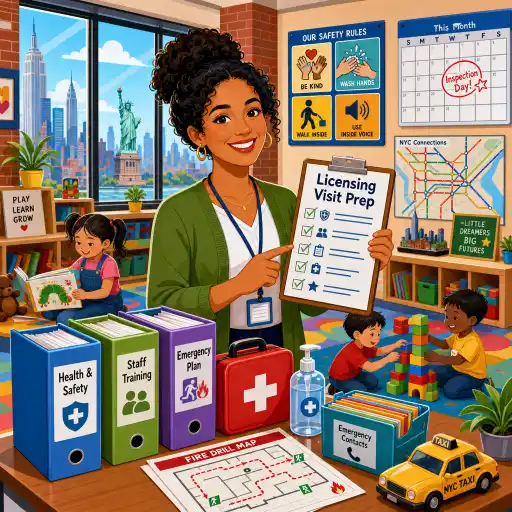
- 🔎 Licensing paperwork and application items: license or registration, posted license, and application attachments. See an overview at Understanding Childcare Licensing and Regulations in New York.
- 📁 Records and documentation: attendance, child files, staff files, health forms, medication logs, and training certificates. Use the policies guide at What child care policies does every program need? to check what should be in files.
- 🏠 Physical space and safety: indoor and outdoor safety, safe sleep for infants, playground surfacing, exits, fire drills, and cleanliness. The Playground Safety Checklist and building safety guides help here.
- 🧑⚕️ Health practices and medication: medication administration records, permission forms, and trained staff. Review medication rules at Child Care Medication Administration.
- 👥 Staff qualifications and background checks: fingerprints, comprehensive background packet, CPR/First Aid, and required annual training. See the background packet at New York Child Care Comprehensive Background Check Buy Now $0.00 and training options at State-Approved Trainings in New York.
- 📊 Ratios and supervision: correct group sizes for each age and active supervision routines.
How should I prepare paperwork, policies, and files?
Good paperwork makes inspections easy. Use numbered steps so staff can follow a quick pre-visit routine.
- 📂 Create a licensing binder with sections for:
- Licenses and applications
- Child files (health, enrollment, emergency contacts)
- Staff files (background checks, training certificates, CPR)
- Logs (attendance, medication, incidents, drills)
- 🙂 Keep current certificates handy: pack copies of OCFS orientation and core trainings. Use approved online courses at ChildCareEd New York training page.
- 🔢 Make quick checklists for the inspector: a one-page summary of your ratios, emergency plan, and where key records live.
- 📎 Organize child records in the order inspectors expect and mark missing items to fix them before the visit. Refer to policy examples at What child care policies does every program need?.
- ✅ Run a mock review once a month so staff know roles and can find items fast.
How should I get the physical space and staff ready?
Inspectors look closely at how the space is set up and how staff supervise. Use these steps to get ready.
- 🧯 Safety walk: do a daily numbered check of exits, smoke detectors, blocked doors, and furniture anchoring. Use the playground and safety checklist for the outdoor area.
- 👶 Infant care: follow safe sleep rules and have crib checks documented. Staff should know safe sleep policy from health & safety training at Basic Health & Safety.
- 🚑 Health supplies: first aid kit, medication storage with locked cabinet, and MAR (Medication Administration Record) ready. Review medication rules at Medication Administration.
- 👩🏫 Staff readiness: confirm CPR/First Aid certificates (Red Cross accepted), background checks cleared, and that staff have completed required OCFS trainings listed at State-Approved Trainings in New York.
- 🔒 Child safety habits: anchor teaching staff to active supervision plans, zone maps, and head count routines so inspectors see consistent practice.
What should I do during and after an inspection?
Be calm and professional during the visit. Inspectors want facts, not excuses. Follow these numbered steps to handle the visit well and fix any issues afterward.
- 🙂 Greet the inspector, show your posted license, and hand over the licensing binder. Offer a quick program tour if asked.
- 🔎 Answer questions simply and point to the file or policy that shows compliance (don’t guess). If you don’t know, say you will look it up and follow up.
- 🚨 If the inspector cites a violation, ask for the exact rule reference and the correction timeline. Many fixes are staff training or documentation updates—easy to correct quickly.
- ✅ Make an immediate action list with who will fix each item and note completion dates. If repairs are needed, tag broken equipment out of use and schedule a fix.
- 📣 Communicate with families about non-sensitive updates only (for example: "We will fix the playground gate this week"). Keep privacy in mind for incidents or investigations.
- 🔁 After the visit, file the inspection report and the corrective action steps in your binder. Use the report as a learning checklist for staff meetings.
Common mistakes and how to avoid them
- ❌ Missing or expired training certificates — Fix: keep a digital and paper folder and calendar renewal reminders.
- ❌ Disorganized child files — Fix: use the three-folder system (child, classroom, program) and a simple index.
- ❌ Ignoring near-misses on playgrounds — Fix: log near-misses and fix hazards fast using the playground checklist.
- ❌ Not practicing drills — Fix: do quarterly drills and save records.
FAQ
- Q: Can I show online training certificates? A: Yes, but keep printable copies in your binder. Use ChildCareEd-approved trainings: NY training page.
- Q: How long do inspectors take? A: Visits vary — from quick file checks to full site inspections that take several hours.
- Q: What if I disagree with a finding? A: Ask for the citation, document your response, and follow the appeal or correction steps OCFS provides. See steps in How do I get a New York childcare provider license.
- Q: Do household members need background checks for home daycares? A: Yes — see the Comprehensive Background Check Buy Now $0.00 packet.
Summary
1) Know what inspectors check: paperwork, health, space, staff, and supervision. 2) Keep a tidy licensing binder and daily checklists. 3) Train staff and practice safety routines. 4) During a visit, stay calm, show your files, and act on fixes fast. Use the ChildCareEd resources linked above to find NY-approved trainings, templates, and checklists. Your work matters—preparation protects children, families, and your program.
- EIP Scholarships Info Session
- CDA Family Child Care Credential
- CDA Family Child Care Credential with Portfolio Review
- Pediatric RSV First Aid & CPR/AED
- CDA Bridge Bundle: Family Child Care
- CDA Bridge Bundle: Family Child Care without Portfolio Review
- CDA Bridge Bundle: Infant/Toddler without Portfolio Review
- CDA Bridge Bundle: Preschool without Portfolio Review
- Texas Director Credential
- Regulaciones de Licenciamiento de Cuidado Infantil en California para Centros y Hogares de Cuidado Infantil Familiar
- Reglas de Cuidado Infantil en Illinois
- Proporciones de Cuidado Infantil y Tamaños de Grupo por Edad en Maryland (Guía Rápida para Centros y Hogares)
- Proporciones de Cuidado Infantil y Tamaños de Grupo por Edad en Nueva Jersey (Guía Rápida para Centros y Hogares)
- Proporciones de Cuidado Infantil y Tamaños de Grupo por Edad en Virginia (Guía Rápida para Centros y Hogares)
- Horas de Capacitación Anual para Proveedores de Cuidado Infantil en Maryland
- Lista para Abrir una Guardería en Casa en Dakota del Norte: Cómo Empezar
- Lista para Guardería en Casa en Illinois: Cómo Iniciar una Guardería en el Hogar
- Lista para Guardería en Casa en Texas: Cómo Iniciar una Guardería en el Hogar
- Cómo Trabajar en el Cuidado Infantil en Wisconsin: Requisitos y Pasos
- How can New York child care providers prepare for licensing visits?
- What are the supervision basics for child care programs in New York?
- What is the OCFS Training and Recordkeeping Checklist for New York 2-K Participation?
- Cómo simplificar la capacitación para sus empleados de daycare
- How can New York CCAP providers keep records audit-ready?
- How can I renew my New York child care license without a gap?
- How do New York day care supervision and ratio rules keep children safe?
- Do You Need a Family Day Care Registration or Group Family Day Care License in New York?
- What Certifications Do I Need to Open a Daycare? License, Training, and Credentials Explained
