Every minute matters when a child in your care becomes seriously ill or injured. This practical guide helps childcare directors and providers recognize medical emergencies, take the appropriate first steps, communicate with families, document incidents clearly, and strengthen program-wide emergency plans so staff can respond with confidence. Quick recognition and a calm, informed response can reduce harm, support families, protect staff, and preserve trust in the program. To develop essential lifesaving skills, explore ChildCareEd’s Pediatric RSV First Aid & CPR/AED Buy Now $115.00, which covers CPR, choking, injuries, diabetic emergencies, and severe allergic reactions. Providers can also strengthen their understanding of health-related situations through Illness, Medication, and Allergies in Child Care  Buy Now $32.00, which addresses signs of illness, medication administration, and allergic-reaction management.
1) How do I recognize a childhood medical emergency?
- 🔴 Respiratory distress: noisy breathing, persistent coughing that stops the child from speaking, severe wheeze, or visible recessions. See pediatric examples at ChildCareEd’s first-aid primer.
- 🟠 Altered consciousness: unresponsiveness, difficulty waking, repeated fainting, or confusion.
- 🟡 Circulatory or color change: pale, mottled, or bluish lips/skin (cyanosis) or blood loss that soaks through dressings.
- 🟢 Severe pain or focal neurologic change: persistent vomiting, stiff neck, severe headache, or seizure activity lasting >5 minutes.
- 🔵 Allergic reaction signs: swelling of face/lips/tongue, hives with breathing difficulty—treat as possible anaphylaxis.
For clinical guidance and symptom thresholds, pair your observation with trusted medical resources like the public health guidance from the CDC Early Care Portal. Memorize three actions when you spot any red flag: (1) get adult help, (2) begin care per training, and (3) call 911 if breathing or consciousness is compromised. Remember: state requirements vary - check your state licensing agency.
2) What immediate steps should staff take during a medical emergency?
- 📞 Call for help: If the child is unresponsive, not breathing, or in severe distress, call 911 immediately. Assign one person to dial and another to begin care.
- 🧯 Provide lifesaving actions per training:
- 🔸 If unresponsive and not breathing—start CPR (infant vs. child technique differs). ChildCareEd and the Red Cross outline current protocols.
- 🔸 If choking—use back blows/chest thrusts for infants and Heimlich-type abdominal thrusts for older children; follow your CPR/first-aid course steps.
- 🔸 For anaphylaxis—administer epinephrine immediately if prescribed or per standing order and call 911 (practice with trainer devices as part of staff drills).
- 👥 Ensure supervision & safety: Move other children away, assign supervision, and keep the environment safe (stop activity, clear sharp objects).
- 🩹 Use protective gear: Gloves, barrier devices for rescue breaths, and follow bloodborne pathogen protocols if exposure occurs.
- 💬 Communicate succinctly: Tell arriving EMS the child’s age, symptoms, medications given (including epinephrine), and approximate timeline.
Training matters—regular hands-on practice, including blended pediatric CPR first-aid courses, builds muscle memory. ChildCareEd offers blended options and skill-focused materials (see First Aid & CPR course overview). For programs wanting a focused, confidence-building curriculum, consider ChildCareEd's First Aid & CPR training to empower staff with practical lifesaving skills.
3) How should we document, report, and communicate after a medical emergency?
Accurate documentation protects children, families, staff, and your program. Follow this structured timeline for incident reporting—use the ChildCareEd incident-report template as a model (What to Document):
- 📝 Record facts now: date/time, location, staff present, exact observations (objective language), and immediate actions taken. Do this the same day—don’t rely on memory.
- ✍️ Timeline of care: note when 911 was called, when epinephrine/CPR began, EMS arrival time, transport destination, and who contacted parents.
- 📂 Attachables: consent forms, medication authorizations, witness statements, and a note if footage exists (do not embed footage in the report).
- 🔒 Privacy & storage: keep reports secure—share only with authorized personnel, parents/guardians, licensing, and medical teams as appropriate.
- 📣 Communication scripts: use short, factual messages to families—what happened, what you did, and what parents must do next. Templates are available at ChildCareEd’s communication guides (How can centers be ready).
Checklist to include in every report: child name, times, symptoms, interventions, calls made, and staff signatures. This consistent approach reduces liability and improves family trust.
4) What training, supplies, and plans should every program maintain?
- 📚 Training: All direct-care staff should have pediatric first aid/CPR certification and routine refreshers. Consider blended courses for flexibility. See ChildCareEd course resources and the Red Cross for standard content (ChildCareEd training, Red Cross). For a motivating, certification-focused overview that encourages practical preparedness, see Don't Let Emergencies Make You Scream!!
- 🎒 Go-Bags & kits: Maintain classroom Go-Bags with attendance lists, emergency contacts, meds per policy, first-aid kit, water, and vital records. ChildCareEd provides checklists: Go-Bag guidance.
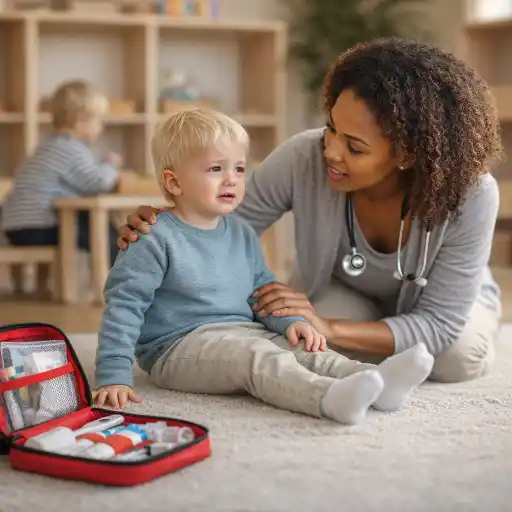
- 🗺 Written emergency plan: Evacuation, shelter-in-place, lockdown, and reunification procedures—post them and practice regularly. See the sample plan at ChildCareEd (Sample Emergency Action Plan Buy Now $0.00).
- 💊 Medication policies & training: Ensure staff who handle meds are trained in administration and documentation. Use the Medication Administration Template and follow state rules—state requirements vary; check your state licensing agency (Medication Administration).
- 🤝 Community coordination: Invite EMS, fire, and public health partners to review plans and participate in drills. The CDC Early Care Portal offers planning tools for coordination (CDC ECE).
5) How can we reduce risk, avoid common mistakes, and support children after an emergency?
Reducing risk is both preventive and organizational. Use these numbered strategies and the “how to avoid pitfalls” checklist.
- 🔍 Risk reduction: Regularly inspect equipment, supervise active play, and enforce safe food/feeding practices. Post and practice clear supervision assignments.
- 🧾 Avoid common documentation mistakes:
- ❌ Don’t sign before giving meds—always document immediately after administration.
- ❌ Don’t use scraps of paper—use a standardized MAR or incident form.
- ✅ Tip: Use objective, child-quoted language ("Child said 'I can't breathe'"), not interpretations.
- 💬 Post-event support: Provide brief, factual communication to families and a calm routine for children. Use trauma-informed language—avoid dramatic drills that frighten young children; practice calmly and age-appropriately (ChildCareEd drill guidance: practice tips).
- 🧠 Monitor and refer: Watch for changes in behavior, sleep, or eating; offer resources and referrals if stress reactions persist. The CDC offers recovery and coping resources for children after emergencies (CDC child preparedness).
Summary: What should you do first thing tomorrow?
- 📋 Update one policy: pick either your medication policy or your incident-report form and make it clear and accessible.
- 🎒 Check one Go-Bag: verify attendance lists, meds, and batteries.
- 🧑🏫 Schedule one short staff refresh: a 20–30 minute skills review (CPR steps, epinephrine use, and documentation checklist).
Key hashtags to anchor your team’s focus: #emergency #children #safety #training #documentation. For deeper templates and training, prioritize ChildCareEd resources: Emergency Preparedness Plan (course Buy Now $0.00), Incident Reporting (what to document), and medication administration tools (medication guidance). When in doubt during a medical emergency, call 911. State requirements vary - check your state licensing agency.
Quick recognition depends on objective signs and an ordered approach. Watch for the following red flags (enumerated so staff can memorize them under stress): Prepared programs combine training, written plans, and ready supplies. Use enumeration to build your operational priorities:Speed, calm, and role clarity save lives. Use this stepwise, numbered checklist so staff act consistently.
- Stay Alert! Steps for Emergency Prep
- 45 Hour Child Growth and Development
- Adult Only CPR AED and Adult First Aid Blended
- Adult/Child CPR AED and Adult First Aid Blended
- Basic Life Support (BLS) Blended Healthcare Providers
- Pediatric RSV First Aid & CPR/AED
- Adult First Aid Only - Blended
- Texas Director Credential
- First Aid and CPR
- First Aid and CPR
- Keeping Our Youngest Students Safe: The Vital Importance of Pediatric First Aid and CPR Training for Teachers
- A Lifeline for Little Ones: Why First Aid and CPR Training is Essential for Teachers and Parents
- Save Lives With Skill: CPR Training
- CDA Certification en Español: Recursos y Consejos para Educadores Bilingües
- Basic Health and Safety Training: The Essential Guide for New Child Care
- Capacitación en Salud y Seguridad Preventiva en Línea para Proveedores de Cuidado Infantil
- Proporciones de Cuidado Infantil y Tamaños de Grupo por Edad en Maryland (Guía Rápida para Centros y Hogares)
- Proporciones de Cuidado Infantil y Tamaños de Grupo por Edad en Virginia (Guía Rápida para Centros y Hogares)
- Lista para Guardería en Casa en Texas: Cómo Iniciar una Guardería en el Hogar
- Retraso del Habla en la Guardería: Cómo Pueden Ayudar los Proveedores
- Cómo Ser Maestra de Preescolar en Maryland
- Capacitación CDA gratuita en Illinois
- Cómo simplificar la capacitación para sus empleados de daycare
- How can child care providers recognize and respond to childhood medical emergencies?
- Emergency and Disaster Preparedness Training Online: What Will You Learn?
- How Can Child Care Providers Put Trauma-Informed Practices Into Action?
- ¿Todos los niños deben participar en el tiempo de círculo?
