Introduction
Directors wear many hats. You run the building, answer families, hire staff, and keep paperwork up to date. Finding #time for staff #training and professional #PD feels hard. This article gives quick ideas you can use right away. It 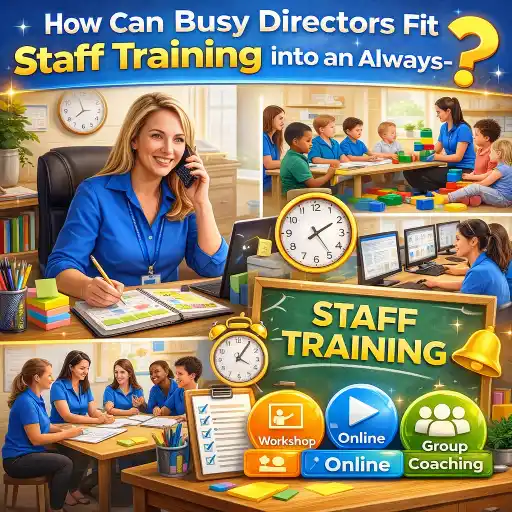 is written for child care leaders who need practical, simple steps that do not add more stress.
Why it matters: Good training helps teachers feel confident. Confident teachers make classrooms calmer, help children learn more, and keep families happy. Small, steady training also helps with staff turnover and program quality. Remember: state requirements vary - check your state licensing agency.
How can I fit meaningful training into a director's packed day?
Short learning is powerful. Try these steps to make training fit your schedule:
- Use microlearning: 10–60 minute chunks. For example, ChildCareEd offers 1-hour courses built for busy staff (1 Hour, Big Impact) and many free one-hour options (Free Online Courses).
- 🔹 Assign short lessons during planning or nap time. Make it a regular habit — once a month or every other week.
- ✅ Turn staff meetings into mini PD: 10–15 minutes to watch a clip, discuss one idea, and pick one practice to try.
- 🎯 Rotate topics so staff get steady growth: safety, guidance, family communication, and curriculum.
- 📌 Use digital tools to assign and track training. A group admin account can make assigning and checking work easier (Online Training for Childcare Teams).
Why this works: Small steps are easier to keep up. Adults learn better when training is short, useful, and repeated. Try to protect one planning hour a month for staff learning. These small actions help your #staff feel supported and grow without big disruptions to the day.
Which low-cost or no-cost PD ideas keep staff learning and motivated?
You don’t need big budgets. Use these simple, low-cost ideas that build skills and team culture:
- 🔹 Peer buddy system: Pair two teachers. Each week they share one tip and watch each other for 10 minutes.
- ✅ Video reflection: Record a 5–10 minute clip of a routine. Watch it together and name one strength and one next step. Many centers use short clips from training libraries (Eastern CT video series).
- 🎯 Book or article club: Read one short chapter or article and discuss practical ways to try the idea in class.
- 📌 Micro-challenges: Each week give a small goal (e.g., better transitions). Celebrate wins in the next meeting.
- 🔎 Use free & trusted resources: CDC’s Learn the Signs materials and 1-hour Watch Me! training are free and helpful for developmental monitoring (CDC Learn the Signs).
Keep records: write date, topic, who attended, and one action taken. Free courses with certificates can also help meet licensing hours (ChildCareEd free courses).
How do I build a simple, trackable training plan and documentation system?
Good documentation keeps you ready for visits and helps staff see progress. Try a plan that is simple and repeatable.
- Step 1: One-page staff plan for each teacher. Include: name, strengths, one growth goal, 2–3 training options, and a due date. This mirrors tips from the Texas Rising Star article on staff plans (Texas Rising Star: Staff Training Plans).
- Step 2: Use the 3-folder system to organize evidence:
- 🔹 Staff folder (training log, certificates, goals).
- ✅ Classroom folder (photos, lesson notes, observations).
- 📌 Program folder (PD calendar, meeting agendas, family engagement records).
- Step 3: Weekly habits that take 15 minutes total:
- 🕓 Monday — add new certificates to folders.
- 🕒 Wednesday — quick 10-minute walk-through notes.
- 📝 Friday — one short feedback note (2 strengths + 1 next step).
- Step 4: Use tech when possible. Group admin and online platforms let you assign, track, and print certificates (ChildCareEd group admin).
Why it helps: Clear, small systems reduce panic before inspections. Keep copies of certificates (PDFs are great). Remember: state requirements vary - check your state licensing agency. A tidy system saves you many hours later and shows families and regulators you are organized.
How can I coach staff without adding stress — and what mistakes should I avoid?
Coaching should build confidence, not fear. Use gentle, specific methods and avoid common mistakes.
- Start with practice-based coaching (PBC):
- 🔹 Observe, plan, try, and reflect. PBC is evidence-based and used for early intervention and classroom coaching (Using PBC to Coach).
- Train leaders in coaching skills: Take short courses on supervision, observation, and feedback so your notes are helpful and kind (Staff Supervision, Observation & Feedback
 Buy Now $10.00).
 - Common mistakes to avoid:
- ❌ Blaming staff in front of others. Instead, coach privately and with respect.
- ❌ Overloading with too many goals. Pick one growth goal at a time.
- ❌ No follow-up. After coaching, schedule a short check-in to see progress.
- Make feedback specific and short:
- ✅ Start with 2 strengths, then one clear next step. Use short, kind language. Coaching webinars show how to use reflective questions and supportive feedback (Coaching Conversations).
- Use gamification and recognition: Small badges, leaderboards, or public praise can boost motivation. See ideas for making safety and training fun (Safety First, Boredom Never).
Final tip: Lead by example. Join trainings with your team. When you show that learning is part of the job, staff feel supported and less singled out. This builds stronger teams and better care for children.
Conclusion
Busy directors can still grow a learning culture. Use short trainings, low-cost ideas, simple documentation, and kind coaching. Pick one small change this week: assign a 1-hour course, start a peer buddy, or create one-page staff plans. These choices add up. Your steady work helps children, families, and your #staff thrive. If you need to check rules, remember state requirements vary - check your state licensing agency.
FAQ
- Q: How long should a single training session be? A: Keep it 10–60 minutes. Short is easier to fit. See ChildCareEd 1-hour options (1 Hour, Big Impact).
- Q: Can I count staff meetings as PD? A: Yes, if you document topic, attendees, and a learning takeaway.
- Q: Where can I find free resources? A: ChildCareEd and CDC have free courses and materials (ChildCareEd free, CDC Learn the Signs).
- Q: What if staff resist training? A: Ask them what they'd like to learn. Use short, practical topics and celebrate small wins.
- Why take CDA training with ChildCareEd? Free Resources
- CDA Certification en Español: Recursos y Consejos para Educadores Bilingües
- How can DC early childhood educators meet OSSE requirements without feeling overwhelmed?
- Daycare Teacher Certification Requirements in North Dakota
- 45-Hour Child Care Training in Texas: Requirements and Options
- 45-Hour Child Care Training in North Carolina: Requirements and Options
- How Can Washington Child Care Professionals Learn on Their Schedule with ChildCareEd?
- Can Washington early childhood educators grow with ChildCareEd’s self-paced courses?
- Why should Nevada early childhood educators use ChildCareEd for flexible training?
- How are Minnesota childcare programs using AI tools to save time?
- Meet Your NAC Renewal Requirement with ChildCareEd
- Child Care Courses That Support Your Career with ChildCareEd
- Cómo simplificar la capacitación para sus empleados de daycare
- How can I manage staff training without adding extra work?
- Complete Your Child Care Training on Your Own Schedule
- Can busy child care providers finish online training and stay licensed?
- Online CDA Classes: A Flexible Path Toward Your CDA Credential
- Daycare Management Solutions for Busy Directors: Staff, Training, Records, and Compliance
- What Must Texas Child Care Programs Put in Writing for Safe Sleep?
- How Can Child Care Programs Make Handwashing Possible During the Busiest Part of the Day?
