ChildCareEd offers online courses that help early childhood staff learn how to welcome every child and family. In New York City, programs care for children from many countries, languages, and family traditions. These courses give workers tools they can use right away in their classrooms. You will see simple steps, course links, and practical ideas to support your team and the families you serve. This article mentions important trainings like What is cultural competence? and Strength in Differences: Cultural Diversity  Buy Now $24.00. For an accessible overview of why cultural competency matters in early childhood and to explore related training options, see Colorful Culture. We use easy lists so you can scan. This piece is for program directors and providers working in New York and beyond. Remember: state requirements vary - check your state licensing agency. You'll also find short tips on avoiding common mistakes and a FAQ to share with staff. Our focus is practical and kind — tips you can try tomorrow. You'll read the words #Cultural #Competency #Training #NewYork and #Diversity often because they are central to the work.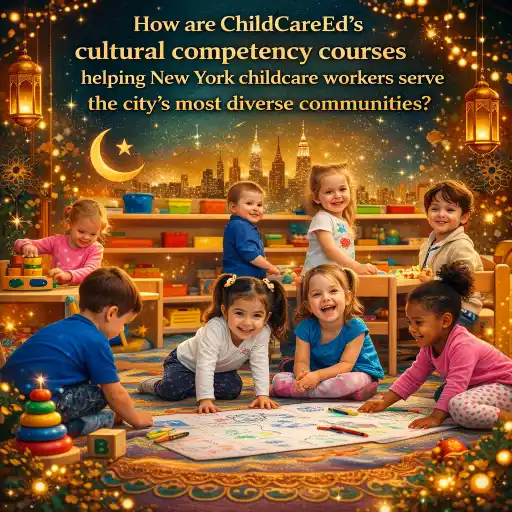
What do ChildCareEd's cultural competency courses teach?
- 🔹 Definitions and awareness: what culture and cultural sensitivity mean, from ChildCareEd.
- 🔸 Practical strategies: adding family photos, home-language labels, and books that reflect children’s lives (see Cultural Competence in Early Childhood Education).
- 🔹 Curriculum tools: lesson planning that honors home traditions and strengths, such as the Strength in Differences Buy Now $24.00 course.
- 🔸 Family partnerships: building trust, asking respectful questions, and inviting family stories into class (see Promoting Diversity, Equity, and Inclusion).
- 🔹 Reflective practice: tools to notice bias and make small changes over time (training examples available on ChildCareEd).
Why this matters for staff learning:
- Staff gain clear steps to include culture every day.
- Courses use short modules and tests so busy workers can learn on their schedule (course example Buy Now $24.00).
- Many trainings map to required topics for New York caregivers, helping with staff development and compliance (NY training requirements).
How are these courses helping New York childcare workers on the job?
- 📌 Better communication with families
- Staff learn to ask open questions about home routines and language and use that information in lesson plans (see Culturally Sensitive Classrooms).
- 📌 Classroom changes
- Simple steps like labels in home languages, family photos, and culturally varied books make children feel seen. ChildCareEd’s resources show how.
- 📌 Policy and licensing support
- Courses map to New York’s training topics so you can meet requirements more easily (see NY requirements). Remember, state requirements vary - check your state licensing agency.
- 📌 Funding and scholarships
- Programs like New York’s EIP scholarship can help staff pay for longer certificates and CDAs listed on ChildCareEd (EIP Scholarship).
- 📌 Better child outcomes
- When classrooms reflect children’s cultures, kids show more confidence, social skills, and readiness to learn. ChildCareEd articles and courses link practice to these benefits.
Why does cultural competency matter in New York's diverse classrooms?
- 🌟 Build trust: Families are more likely to share needs and work with caregivers when they feel respected.
- 🌟 Support identity: Children whose cultures are honored feel safer and more ready to learn (see How culture shapes development).
- 🌟 Reduce unfair gaps: High-quality, culturally responsive classrooms help close learning gaps across neighborhoods. Research also shows that improving staff skills and program leadership raises program quality overall (OECD).
Concrete benefits for children and programs:
- Children show more positive behavior and engagement when classrooms match their home experiences.
- Programs that train staff in cultural competency see better family partnerships and smoother classroom routines.
- Directors who support staff learning create stronger teams and higher quality care (administration and mentoring work matters; see director training research linked on ChildCareEd and external studies).
What common mistakes do providers make and how can they avoid them?
Common pitfalls and quick fixes:
- ❗ Mistake: Treating culture like a single event (one festival a year).
✅ Fix: Add daily steps—home language labels, songs, and family photos—so inclusion is routine (Culturally Sensitive Classrooms). - ❗ Mistake: Assuming one cultural rule fits every family.
✅ Fix: Ask respectful, open questions and listen. Use family input for plans (DEI guide). - ❗ Mistake: Skipping staff reflection on bias.
✅ Fix: Use short team reflection times after shifts. ChildCareEd courses include reflection tools to help staff notice bias and try new responses. - ❗ Mistake: Not linking learning to policy or licensing.
✅ Fix: Choose ChildCareEd courses that map to state topics so training counts toward requirements (NY requirements).
FAQ (quick answers for staff):
- Q: How long are typical courses? A: Many are short (0.2–0.3 CEUs, 2–3 hours) and self-paced (course example Buy Now $24.00).
- Q: Can these courses help with CDA or EIP? A: Yes. ChildCareEd lists CDA training and New York EIP scholarship options (EIP info).
- Q: Do short courses change behavior? A: When paired with staff reflection and director support, short trainings lead to better interactions and stronger family ties.
Conclusion
ChildCareEd's cultural competency offerings give New York childcare workers clear, practical steps to serve families with warmth and skill. The trainings are short, field-tested, and linked to real program needs like New York's training topics and scholarship supports. Start small: pick one course for your team, try one classroom change, and invite one family to share something from home. Small changes add up to a more welcoming, effective program. For more information, explore ChildCareEd’s pages on cultural competence and diversity listed above. Keep supporting your team—every step toward #Cultural #Competency and #Diversity makes a difference for children in #NewYork. State requirements vary - check your state licensing agency.
ChildCareEd courses explain what cultural competency means and how to turn ideas into classroom habits. Topics include: New York is one of the most diverse cities in the world. ChildCareEd courses help workers turn learning into everyday actions. Here are common ways they help, with examples you can use right away: Why it matters: New York classrooms include many languages, family structures, and traditions. Cultural competency helps staff do three important things:
- Many Colors, One Canvas: MD ECE Conference
- Engaging Families During a Pandemic
- Birth to Five CDA Credential with Portfolio Review
- CDA Family Child Care Credential with Portfolio Review
- Pediatric RSV First Aid & CPR/AED
- CDA Bridge Bundle: Family Child Care
- CDA Bridge Bundle: Family Child Care without Portfolio Review
- CDA Bridge Bundle: Infant/Toddler without Portfolio Review
- CDA Bridge Bundle: Preschool without Portfolio Review
- Texas Director Credential
- How Can Childcare Educators Thrive in the Big Apple?
- CDA Certification en Español: Recursos y Consejos para Educadores Bilingües
- 🚌🌄 Ideas de excursiones atractivas en Nevada
- 🚌❤️ Ideas de excursiones en Illinois
- Cómo Abrir Una Quardería En Casa Sin Dinero?
- ¿Cómo incluir a niños con necesidades especiales en cuidado infantil? Guía práctica y sencilla
- Curso de Comunicación de 9 Horas de Maryland
- 10 Ejemplos de Cómo la Cultura Influye en el Desarrollo Infantil
- Requisitos de Cuidado Infantil en Nueva Jersey para Centros y Proveedores de Cuidado Infantil Familiar
- Lista para Abrir una Guardería en Casa en Dakota del Norte: Cómo Empezar
- Lista para Guardería en Casa en Illinois: Cómo Iniciar una Guardería en el Hogar
- Cómo Trabajar en el Cuidado Infantil en Carolina del Norte: Requisitos y Pasos
- Cómo Trabajar en el Cuidado Infantil en California: Requisitos y Pasos
- Cómo Ser Maestra de Preescolar en Illinois
- Requisitos para Guarderías en Casa en Georgia
- How can New York childcare workers help children build a strong sense of identity in a big city?
- How are ChildCareEd's cultural competency courses helping New York childcare workers serve the city's most diverse communities?
- How can New York childcare workers in the Bronx find Spanish-language CEU courses?
- ¿Todos los niños deben participar en el tiempo de círculo?
