Introduction: Why teach "care of the environment" while cleaning?
Cleaning is more than chores. In child care, cleaning can teach skills like responsibility, motor control, and kindness. When children tidy up, they practice steps, solve small problems, and feel proud. This idea is sometimes called "care of the environment" and fits well with practical-life teaching, like in Montessori classrooms — see Montessori Practical Life and how care tasks build #independence.
Why it matters:
1. Healthy spaces cut illness: good cleaning + handwashing reduces germs (see CDC cleaning guidance).
2. Big learning from small jobs: sweeping, sorting, and wiping build motor skills, counting, and self-help.
Quick note: state requirements vary - check your state licensing agency.
Look for these ideas in your #classroom: let kids help with real tasks to grow their #cleaning skills, respect the #environment, practice #hygiene, and care for other #children.
1) How can cleaning be a real learning activity for young children?
- Show 3–6 slow steps. Example: "1. Pick up blocks. 2. Put blocks in the basket. 3. Snap basket lid."
- Use child-sized tools (small brooms, cloths, spray bottles) so children can do the job themselves. This mirrors practical-life ideas shared in Montessori Practical Life.
- Repeat and praise effort. Children learn by doing the same task many times.
Make learning clear and measurable:
- 🧹 Count how many toys go in the bin (math practice).
- 🧽 Time scrubbing for 20 seconds to match handwashing songs (health habit).
- 🧺 Match socks or sort by color to practice classification.
Teaching tip: Use a short demonstration, then step back and let children try. Offer help only when needed. This helps build confidence and #independence.
2) What routines, materials, and setups make "care of the environment" work?
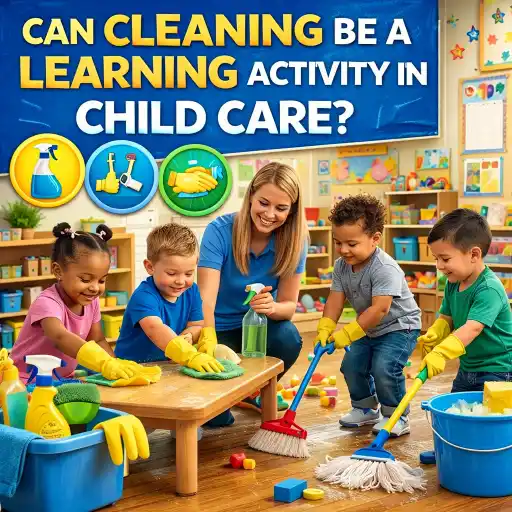
Answer: Plan 1) routines, 2) child tools, and 3) space. A clear plan helps teachers keep cleaning consistent without losing teaching time.
1) Routines (use a schedule):
- 👣 Arrival tidy: put backpacks in a spot.
- 🍽 Snack clean-up: wipe table, wash hands before and after (see Handwashing for Kids).
- 🧸 End-of-day wash bin: mouthed toys go in a "Wash Me" bin to be sanitized later (see toy-sanitizing tips at Preschool Plan-It).
2) Child tools and trays:
- 🧺 Small baskets, low hooks, tiny brooms, spray bottles with safe solutions.
- 🧴 Use labeled containers and picture cues so children know what belongs where.
- 🧾 Keep a simple checklist so older preschoolers can mark off jobs — this builds planning skills.
3) Space and presentation:
- 📚 Low shelves with materials within reach, so children can choose tasks independently (a Reggio- inspired idea helps design space; see Reggio-inspired classroom tips).
- 🪴 Display children's work about care tasks (photos, drawings) so the group sees their progress.
When materials, timing, and space are ready, cleaning becomes a routine that children expect and enjoy. This supports the program's overall health and learning goals (see Creating Healthy Learning Environments).
3) How do we teach safe hygiene and proper cleaning while children help?
Basic safety steps:
- 🧴 Use child-safe cleaners or diluted bleach solutions only when adults prepare them. The CDC explains cleaning, sanitizing, and disinfecting and when to use each method (CDC ECE cleaning guidance).
- 🧤 Adults handle stronger chemicals and blood/body-fluid incidents. Teach children not to touch cleaning bottles and to tell an adult when there's a spill — see CDC cleaning procedures for high-risk situations.
- 🧼 Teach and practice handwashing steps: wet, soap, scrub 20 seconds, rinse, dry. Make it fun with a song or story (ChildCareEd handwashing ideas).
Practical learning tasks children can do safely:
- 🧽 Wipe low tables with a damp cloth.
- 🧺 Match and fold towels or washcloths.
- 🧴 Spray water (not chemicals) to dampen a cloth for dusting.
- 🧹 Sweep with child-size broom and count strokes.
Teach the "why" briefly: "We wipe to keep our friends healthy." Children learn motivation when you link the task to care for others. Use posters or pictures to remind them of steps.
For shared items, keep a schedule for deeper sanitizing (toys, sensory bins) and follow your local rules — see toy sanitizing guidance at Classroom Cleaning: Lists and Schedules and Sanitizing Toys.
4) How do I plan cleaning schedules, avoid common mistakes, and meet rules?
Answer: Use a clear plan, staff time, and simple checks. Common mistakes happen when cleaning is unplanned or left as extra unpaid work.
Step-by-step planning:
- 🗓 Make a written schedule: daily tasks, weekly deep-clean, and shared-item rotation. Use input from staff — see a team process suggested at Preschool Plan-It.
- 👥 Assign responsibility: who cleans when children are out or during paid prep time. Avoid expecting teachers to clean while supervising children.
- ✅ Use checklists and logs so staff can mark completed tasks. This reduces missed jobs and shows compliance.
Common mistakes and how to avoid them:
- ❌ Mistake: Mixing chemicals. ✅ Fix: Only use labeled products and never mix cleaners. Train staff on safe use (CDC guidance).
- ❌ Mistake: Expecting deep cleaning during child time. ✅ Fix: Schedule deep cleaning when rooms are empty or add paid cleaning time.
- ❌ Mistake: Not sanitizing mouthed toys. ✅ Fix: Use a "Wash Me" bin for toys that need daily sanitizing (toy sanitizing).
Remember: state requirements vary - check your state licensing agency. Build your plan around those rules and national guidance like the CDC and your health department.
-
If you want a big-picture health + safety foundation that supports your “healthy spaces cut illness” message, use Health & Safety Requirements for Childcare Providers: https://www.childcareed.com/courses-health-safety-requirements-for-childcare-providers.html
-
For a quick orientation-style course to pair with your routines (arrival tidy, snack clean-up, end-of-day “Wash Me” bin), add Health and Safety Orientation: https://www.childcareed.com/courses-health-and-safety-orientation-training.html
-
To connect directly to your “cleaning + handwashing reduces germs” section (and the idea of preventing spread in group care), include Prevention and Control of Infectious Diseases: https://www.childcareed.com/courses-prevention-and-control-of-infectious-diseases.html
Conclusion: What next — how to start tomorrow?
1) Pick one simple task to teach kids this week (folding washcloths, sweeping a mat).
2) Demonstrate 3 steps, give child tools, and practice every day for a week.
3) Add a visible chart and let children mark the job done. Celebrate progress.
By doing this, you build health, learning, and community. Cleaning becomes a chance for children to grow skills, not just to tidy up.
Resources you can read now: ChildCareEd's practical life and health pages (Practical Life, Health & Hygiene, Handwashing), and CDC cleaning guidance (How to Clean and Disinfect ECE settings).
For specific information about Mpox (monkeypox) and practical steps to protect children in your care, see the CDC resource on Mpox for child care providers: CDC resource on Mpox.Five words to remember: #cleaning #environment #independence #hygiene #children
FAQ
- Q: Can toddlers really help? A: Yes. Give short steps and tools sized for them. Start with simple tasks like wiping a small table.
- Q: What about chemicals? A: Adults should handle stronger disinfectants. Children can use damp cloths and water. See CDC guidance.
- Q: How often should toys be sanitized? A: Make a plan: daily for mouthed toys, weekly for soft toys, and rotate shared bins for cleaning — see toy sanitizing tips.
- Q: How do I fit cleaning into the day? A: Use short 5–10 minute clean-up times and schedule deeper cleaning during nap or prep time. Put cleaning on staff schedules so it’s fair.
- Q: Where do I learn more? A: ChildCareEd has short articles and courses on health, Montessori practical life, and classroom setup (links above).
- Developing Skills Through Fall Crafts in Childcare
- How to Include Kids in the Kitchen
- CDA Certification en Español: Recursos y Consejos para Educadores Bilingües
- Cómo Solicitar una Licencia de Guardería en Texas
- Proporciones de Cuidado Infantil y Tamaños de Grupo por Edad en Virginia (Guía Rápida para Centros y Hogares)
- How can I use beach and ocean-themed summer activities in my California early childhood classroom?
- Capacitación CDA gratuita en Illinois
- Celebrando la amistad en el cuidado infantil durante el Día de los Mejores Amigos
- In-House Field Trips for Kids: Fun Ideas for Daycare
- How Can Simple Cooking Activities Teach Skills in North Dakota Child Care Programs?
- How can early childhood programs effectively support children's oral health?
- How to Set Up a Preschool Classroom That Makes Cleanup Easier
- When Learning Feels Hard: Positive Discipline Strategies for Children Who Struggle
- How Can STEM Activities Turn Everyday Preschool Play Into Powerful Learning?
- How Can Child Care Providers Use Sensory Play to Support Young Children’s Development?
- What Are 7 Printable Tools That Save Child Care Teachers Time?
- How Can Child Care Programs Measure the Hidden Setup and Reset Costs of Classroom Activities?
- How Can You Plan a Food-Learning Activity for Children with Different Dietary Needs?
