Fall foods can turn a classroom activity into a meaningful invitation for children to share who they are and what their families enjoy. Try the Sorting Mat - Fruits or Vegetables Buy Now $1.49 to spark conversation through familiar autumn produce, and consider Health and Nutrition  Buy Now $24.00 for practical learning about children’s nutritional needs, food allergies, and healthy classroom practices. Together, these tools can help you create an inclusive seasonal experience while strengthening your professional knowledge.
Why connect fall foods with family traditions?
Food carries stories: a soup prepared when the weather turns cool, apples picked together, or a dish shared at a family gathering. When children see those familiar foods welcomed in the classroom, they have a natural way to contribute to the group and feel that their home lives matter. A seasonal activity can therefore support belonging and identity as well as learning about food.
Fall produce offers a rich starting point. Apples, pears, cranberries, pumpkins, carrots, squash, and sweet potatoes appear in many seasonal food traditions. The USDA’s fall produce guide lists a broad range of fruits and vegetables, giving educators ideas to connect classroom conversation with what may be available locally.
Invite children to share without expecting every family to celebrate the same holidays or eat the same foods. A simple prompt—“What food do people in your family enjoy when the weather gets cooler?”—makes room for different traditions, languages, and experiences. Children may answer with words, drawings, gestures, photographs, or by listening to peers.
- Support #belonging by showing that family knowledge is welcome.
- Build #language as children name, describe, and compare foods.
- Encourage #curiosity about ingredients, growing, and preparation.
How can a sorting mat open a conversation?
A fruit-or-vegetable sorting mat gives children a concrete way to look closely at food before deciding where it belongs. The ChildCareEd sorting mat Buy Now $1.49 features familiar produce such as apples, bananas, strawberries, grapes, corn, carrots, lettuce, and broccoli. In fall, you can add picture cards or clean play foods representing pumpkins, pears, squash, and sweet potatoes.
Start with a few items and model the activity aloud: “I see a pear. I’m placing it with the fruit. I wonder how your family eats pears.” The question connects classification to lived experience without asking a child to prove knowledge. Children might describe a food’s color, shape, texture, or where they have seen it.
Keep categories flexible and explain that foods can be grouped in different ways depending on the question. A tomato, for example, is botanically a fruit but is often treated as a vegetable in everyday cooking. Rather than marking a child’s choice simply right or wrong, ask what clues or meal experiences informed the decision.
- Pair each picture with its name, including home-language words when families share them.
- Offer large cards, play food, or pointing choices for different motor and communication needs.
- Ask open questions: “What do you notice?” “How might this be used in a family meal?”
How can educators invite family knowledge respectfully?
Make participation easy and voluntary. A short note or conversation at drop-off can invite caregivers to share a seasonal ingredient, food name, recipe, or memory. Ask what families would like to share rather than assuming that a child’s culture or traditions can be inferred from a name, appearance, or language.
Food traditions are diverse within every community, and families may have different access to ingredients, dietary practices, religious observances, or comfort levels with sharing. A picture or a child’s description can be as meaningful as a recipe. If families contribute a food story, credit it to them as they prefer and ask permission before displaying photographs or identifying details.
Seattle Farm to Preschool’s Food Traditions lesson plan describes how food can connect family, identity, and community. Use that idea to shape a welcoming exchange rather than a presentation in which children are expected to represent an entire culture.
- 📣 Invite families to share one food memory or ingredient, with no pressure to bring food.
- Use children’s own words and honor the names families use for foods.
- Include familiar foods alongside new examples, avoiding a “strange” or “exotic” label.
- Offer alternate participation, such as drawing, storytelling, or choosing a picture.
How can you plan an engaging, safe fall activity?
Keep the learning experience playful and age-appropriate. Begin with the sorting mat, then extend children’s questions into art, early science, literacy, or dramatic play. For instance, children can sort produce cards, draw a food that matters to their family, and create a pretend harvest market with labeled baskets. Seasonal cooking experiences can also connect measuring, vocabulary, and sensory exploration; Good2Know’s fall recipe ideas offer examples for educators planning food-based learning.
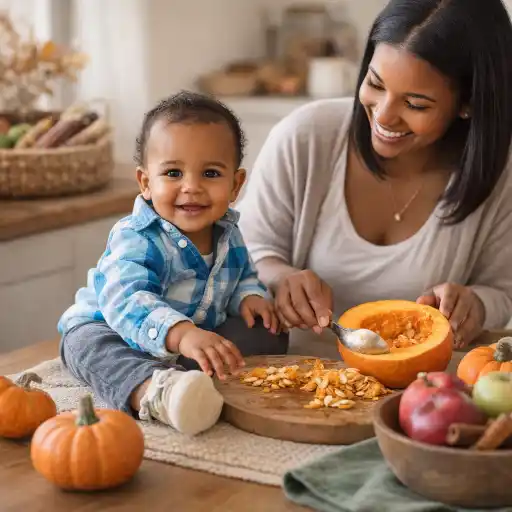
Decide in advance whether the activity uses pictures, play food, or actual produce. If food is handled or served, check individual allergy and medical plans, prevent cross-contact, wash hands and surfaces, supervise closely, and follow age-appropriate preparation and choking-prevention practices. Never make tasting a requirement: children can learn by looking, sorting, touching safe materials, smelling when appropriate, or talking.
- Prepare: choose a small selection of familiar fall foods and clear visual labels.
- Explore: invite children to sort, compare, count, draw, or describe.
- Connect: ask whether anyone would like to share how a food appears in a family meal or tradition.
- Reflect: record children’s questions and ideas to guide a follow-up activity.
State requirements vary - check your state licensing agency, especially when activities involve food preparation, tasting, sanitation, allergies, or classroom meals.
What common pitfalls should providers avoid?
A well-intended nutrition activity can unintentionally make children feel judged or singled out. Avoid describing foods as “good” or “bad,” ranking family dishes, or treating one cuisine as the norm. Focus instead on neutral observations: color, flavor, texture, growing conditions, and the many ways people prepare and enjoy food. Children’s family traditions deserve respect whether or not they match the classroom’s seasonal theme.
Another pitfall is asking a child to speak for a whole community or requiring families to contribute ingredients, recipes, or personal details. Offer options and let children decide what they want to share. Likewise, do not use tasting as a measure of learning. A child who sorts a picture, listens to a story, or describes a food is participating meaningfully.
- Avoid: “Everyone eats this at the harvest festival.” Try: “Some families enjoy this food; what do you notice?”
- Avoid: correcting a child dismissively. Try: explore how foods can be classified in more than one way.
- Avoid: real-food activities without a safety check. Try: use pictures or play food when needed and follow program procedures.
Directors can support staff by planning inclusive prompts together, reviewing food safety routines, and making sure classroom materials reflect the children and families enrolled.
How can you carry the learning beyond one activity?
Build a short sequence around children’s interests rather than treating the sorting mat as a one-time worksheet. If children wonder where squash grows, look at pictures of plants or explore a garden. If a family shares a pear dish, invite children to describe its ingredients or draw how it is served. A seasonal-food theme can naturally connect classification and counting with stories, art, science, and family partnerships.
Document the process, not just the finished product. Note children’s comments, new vocabulary, sorting strategies, questions, and moments of peer collaboration. These observations help staff decide whether to introduce more foods, revisit a category, or invite families to contribute another perspective. Celebrate curiosity and participation rather than whether a child tastes or prefers a particular food.
For professional learning that can deepen your nutrition and safety planning, explore ChildCareEd’s Nutrition Essentials for Child Care Providers Buy Now $16.00. The course addresses children’s nutritional needs, food storage and preparation, allergies, and feeding challenges—useful foundations for turning seasonal food activities into thoughtful classroom practice.
- Use children’s ideas to choose a follow-up story, art project, or garden investigation.
- Share classroom learning with families in a brief note or display, respecting privacy and permission.
- Review staff observations to identify whose voices and food experiences are represented.
Conclusion: How can fall foods help children explore family traditions?
Fall foods can help children explore family traditions when educators connect seasonal produce with open conversation, inclusive materials, and respect for each family’s choices. A simple fruit-and-vegetable sorting activity can support classification, vocabulary, curiosity, and belonging while offering a gentle starting point for sharing food memories.
Keep participation voluntary, avoid ranking foods or cultures, invite family contributions without pressure, and plan carefully for allergies and food safety. Most importantly, follow children’s questions: the best seasonal learning grows from what they notice and the stories they choose to share.
Five helpful courses for child care providers
- Health and Nutrition Buy Now $24.00 — explore children’s nutritional needs, health, and food allergies.
- Nutrition Essentials for Child Care Providers Buy Now $16.00 — learn about nutrition, safe food handling, and feeding concerns.
- On My Plate: Children’s Nutrition Buy Now $24.00 — build knowledge of balanced meals, portions, and meal planning.
- Food Preparation and Nutrition Buy Now $32.00 — review food planning, preparation, storage, and allergy prevention.
- Wellness in Action: Teaching Healthy Habits to Children Buy Now $55.00 — explore inclusive food learning and family engagement.
- Moving About the Classroom: Effective Transitions for Everyday
- CDA Home Visitor Subject Area 3 Part 3 Birth to 5
- CDA Home Visitor Subject Area 2 Part 3 Birth to 5
- Birth to Five CDA Credential with Portfolio Review
- CDA Bridge Bundle: Family Child Care without Portfolio Review
- Emergent Learning & Development
- Creating Environments that Nurture Growth and Community
- Texas Director Credential
- Every Moment Matters: Schedules and Transitions
- CDA Certification en Español: Recursos y Consejos para Educadores Bilingües
- 🔍 ¿Qué ves cuando observas a un niño aprender?
- 💛🧩 ¿Cómo puedo hacer que mi enseñanza sea inclusiva para los niños con autismo?
- ¿Cómo empiezo mi certificación CDA en Florida en línea?
- Capacitación en Salud y Seguridad Preventiva en Línea para Proveedores de Cuidado Infantil
- Proporciones de Cuidado Infantil y Tamaños de Grupo por Edad en Nueva Jersey (Guía Rápida para Centros y Hogares)
- Proporciones de Cuidado Infantil y Tamaños de Grupo por Edad en Virginia (Guía Rápida para Centros y Hogares)
- Lista para Guardería en Casa en Illinois: Cómo Iniciar una Guardería en el Hogar
- Cómo Trabajar en el Cuidado Infantil en Carolina del Norte: Requisitos y Pasos
- Las Mejores Ideas de Excursiones para Guarderías en Texas
- Celebrando la amistad en el cuidado infantil durante el Día de los Mejores Amigos
- Canciones, juegos y preguntas de círculo para niños
- How can childcare programs celebrate the harvest season in ways that are inclusive, safe, and sensory-rich?
- How can my classroom celebrate multiple traditions in ways that are fair, meaningful, and sustainable?
- 15 Around-the-World Activities Toddlers Can Explore Through Play
- Mawlid Around the World: How Kids Can Explore Different Traditions and Celebrations
- From Mealtime to Manners: How Cultural Influences Show Up in Everyday Child Care
- How Can Providers Talk About Food Variety Without Shaming Children’s Lunches?
- How Can You Plan a Food-Learning Activity for Children with Different Dietary Needs?
- How Can Fall Foods Help Children Explore Family Traditions?
