A child suddenly feels warm, loses interest in play, and the classroom routine shifts in an instant. Start with calm observation, a temperature check that follows program policy, and a quick assessment of urgent symptoms; Illness, Medication, and Allergies in Child Care  Buy Now $32.00 can help you build deeper knowledge of illness signs and safe response procedures. This focused course can strengthen your day-to-day practice as you support children and communicate with families.
Why does the first response matter?
A fever can be unsettling, but it is a sign—not a diagnosis. In child care, the first task is to determine whether the child needs emergency help, a quiet place and close observation, or family pickup under the program’s illness policy. A deliberate first response protects the child while helping staff maintain safe supervision of the rest of the group.
Consistent steps also reduce confusion. That framework helps staff make an observable, fair decision rather than reacting to a number alone.
Families may feel worried or pressed by work schedules. A warm, matter-of-fact explanation can acknowledge that stress while keeping the child’s needs central. Follow your written procedures, document what you observe, and remember that state requirements vary - check your state licensing agency.
What should you do first when a child feels feverish?
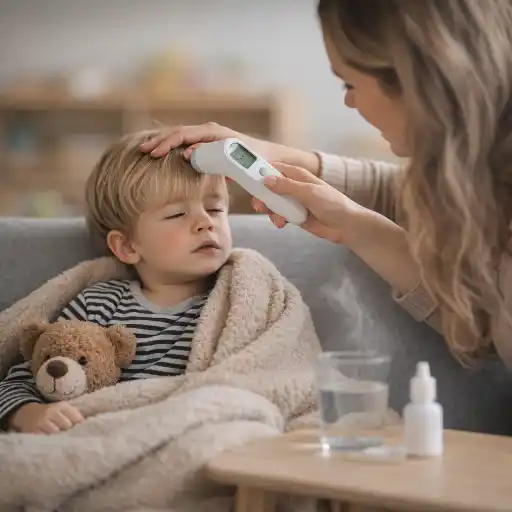
Begin by staying with the child and observing their overall condition. Look for changes in alertness, interaction, breathing, comfort, fluid intake, and ability to participate. If the child appears stable, take a temperature using the method and equipment specified by your program. Record the reading, time, and measurement method; use a clean thermometer and follow its instructions and infection-control procedures.
A temperature of 100.4°F (38°C) or higher is commonly recognized as a fever, but policies and measurement guidance can differ. The AAP’s fever guidance for child care and schools describes 100.4°F as an elevated temperature in infants and children. Do not rely on touch alone or compare readings from different methods as if they were identical.
- 🌡️ Check the child’s temperature according to the program’s approved method; note the result and method.
- Observe behavior, breathing, skin appearance, hydration cues, and any additional symptoms.
- Ask a colleague or supervisor for help with group coverage while you attend to the child.
- Do not diagnose, give fever-reducing medicine, or use a medication to keep the child in care unless permitted by policy, written authorization, and applicable rules.
These first observations guide the next decision; they do not replace medical evaluation when needed.
How can you tell whether this is an emergency?
Before arranging routine pickup, check for signs that call for immediate action. If the child has severe difficulty breathing, becomes unresponsive or unusually difficult to wake, has a seizure, or deteriorates rapidly, activate the program’s emergency response plan and call emergency services as indicated. Follow your training, keep the child supervised, and have another staff member contact the family and retrieve emergency information when possible.
For a very young infant, fever deserves particular urgency. Caring for Our Children guidance states that an infant younger than two months with a temperature of 100.4°F or higher needs exclusion and immediate medical attention, whether or not other symptoms or behavior changes are present. The AAP advises prompt medical contact for a fever of 100.4°F or higher in a baby younger than three months. Since age-specific medical advice and program rules may differ, contact the family promptly and follow applicable local requirements rather than attempting to assess the cause yourself.
Other concerning signs can include unusual drowsiness, severe irritability, stiff neck, breathing difficulty, repeated vomiting, dehydration concerns, or an unexplained rash with illness. The AAP’s guidance on when to call a pediatrician lists symptoms that warrant urgent medical advice. Child care staff should describe observations to the family and defer diagnosis and treatment decisions to health professionals.
If there are no emergency signs, continue to supervise and comfort the child while applying the program’s exclusion policy.
When should the child be separated from the group and the family contacted?
If the child meets your program’s exclusion criteria, move them to a comfortable, designated area away from close group activity. The child must remain under continuous adult supervision, ideally with a familiar caregiver. Offer reassurance and reasonable comfort, and provide fluids only when appropriate and consistent with the child’s needs and program procedures. Separation should protect health without making the child feel isolated or punished.
Contact the parent, guardian, or authorized pickup person promptly when exclusion is required. Explain the facts, not a suspected diagnosis: “We measured a temperature of 100.6°F using our forehead thermometer at 10:20. Sam is unusually tired and is not joining play. Our policy asks that Sam be picked up.” This clarity helps families understand the decision and what happens next.
- State the temperature, measurement method, time, and observed behavior or symptoms.
- Share whether the child appears stable or whether urgent medical action has been taken.
- Explain the expected pickup arrangements and the program’s return-to-care criteria.
- Record the contact attempts, messages, staff actions, and pickup time.
The inclusion and exclusion guidance recommends that a child who needs exclusion be moved away from other children, monitored, and supervised until an authorized adult arrives. Keep conversations private and protect the child’s dignity and family confidentiality.
What should you document, and what should you avoid doing?
Write a brief, factual record while details are fresh. Include the date and time, temperature and method, visible symptoms, behavior and participation, comfort measures, parent contacts, instructions given, and pickup time. Avoid interpretations such as “has the flu” or “is contagious.” A neutral entry might read: “10:20 a.m.—forehead temperature 100.6°F; tired, declined snack, rested with familiar teacher; parent called at 10:25; pickup at 10:55.”
Several common missteps are preventable:
- Making a decision from a warm forehead alone instead of checking the child and following the approved procedure.
- Using different thresholds or measurement methods inconsistently between classrooms.
- Giving medication, or permitting medication to mask a fever, outside written policy and required consent.
- Leaving the child alone, even briefly, while staff arrange pickup or care for the group.
- Discussing the child’s condition where other families can hear.
Do not require a medical visit or doctor’s note automatically for every routine fever unless your jurisdiction, public-health guidance, or specific circumstances call for it. The CDC notes that blanket note requirements can burden families and health systems. For fever care information for families, see the AAP’s fever resource; providers should use their own policy and local health guidance for care decisions.
When can the child return, and how can the program prevent spread?
Many programs allow return after a child has been fever-free for at least 24 hours without fever-reducing medicine and is well enough to participate. The CDC’s sick-child and return guidance uses this 24-hour criterion for general school return, while emphasizing improvement and participation. It is not a substitute for your state’s rules or disease-specific directions, so state requirements vary - check your state licensing agency and local health department.
Make sure families know the program’s return rules before illness occurs. Clarify how the fever-free period is counted and what other symptoms may affect return. For a diagnosed communicable illness, follow instructions from the child’s health professional and public health authorities.
Pair exclusion procedures with everyday infection prevention. The CDC’s early care infection-prevention guidance recommends hand hygiene, routine cleaning and disinfection when someone is ill, separating personal belongings, optimizing ventilation, and maintaining an area where a sick child can be supervised.
- Review illness procedures with all staff and keep thermometers, forms, and emergency contacts accessible.
- Clean and disinfect affected surfaces and shared items according to product instructions.
- Notify public health when required or when a cluster of similar symptoms raises concern.
Conclusion: What should you do first when a child has a fever at daycare?
First, stay with the child, assess their behavior and symptoms, and take a temperature according to program procedure. Check immediately for emergency warning signs; seek emergency help when indicated. If the child is stable but meets exclusion criteria, provide a comfortable supervised space, promptly contact the family, document objective observations, and explain return expectations.
A fever number matters, but it is only one part of a careful response. Consistent policy, compassionate communication, appropriate supervision, and infection-control practices help providers protect the child and the group while supporting families through a stressful moment.
Related professional development:
- Prevention and Control of Infectious Diseases Buy Now $16.00 — a focused online course about reducing illness and germ spread.
- How To Keep A Healthy Class: Six Tips for Germ Control Buy Now $35.00 — strategies for communicable-disease response and hygiene procedures.
- Administration of Medicine Buy Now $16.00 — training on medication procedures and illness response in child care.
- Health and Safety Orientation Buy Now
$55.00$45.00 — broader health and safety topics, including infectious-disease prevention and medication administration.
- 45 Hour Child Growth and Development
- Pediatric Blended First Aid & CPR/AED Adult, Child, Infant
- Pediatric RSV First Aid & CPR/AED
- 45 Hour School Age Methods and Materials
- Texas Director Credential Renewal
- Texas Director Credential
- Bienvenido! Welcoming All Families
- 24 Hour Family Child Care Pre-Service Training ONLINE
- 👧 ¿Cómo iniciar y abrir una guardería en Texas? Lo que necesitas saber
- 🚨 Reporte Obligatorio en Nevada
- Qué capacitación se requiere para ser director de cuidado infantil en Texas?
- Recursos en Español sobre el Sueño Seguro del Bebé
- Regulaciones de Licenciamiento de Cuidado Infantil en California para Centros y Hogares de Cuidado Infantil Familiar
- Lista para Guardería en Casa en Illinois: Cómo Iniciar una Guardería en el Hogar
- Lista para Guardería en Casa en California: Cómo Iniciar una Guardería en el Hogar
- Lista para Guardería en Casa en Texas: Cómo Iniciar una Guardería en el Hogar
- Cómo Trabajar en el Cuidado Infantil en California: Requisitos y Pasos
- Cómo Ser Maestra de Preescolar en Dakota del Norte
- Capacitación Previa al Servicio para Proveedores de Cuidado Infantil en Dakota del Norte
- Can a Child Come to Daycare With a Fever?
- Can a Child Attend Daycare With a Cough or Runny Nose?
- What Should Daycare Illness Policies Include to Protect Children, Staff, and Families?
- How Long Should a Child Stay Home After Vomiting?
- What Should Parents and Providers Ask Before a Child Returns to Child Care After Illness?
- Cold, Flu, or RSV? How Can Child Care Providers Tell the Difference and Respond?
- A Child Has a Fever at Daycare: What Should You Do First?
- Fever-Free and Ready to Return? How Can Child Care Programs Make Safe, Fair Decisions?
- A Runny Nose, Persistent Cough, or Fever: When Should Childcare Providers Contact Parents?
