A runny nose may be the start of a mild cold—or the first sign of an illness that needs closer attention, especially in an infant. The ChildCareEd course Prevention and Control of Infectious Diseases  Buy Now $16.00 offers focused learning on infection prevention in child care and can help providers strengthen everyday practices while pursuing relevant training hours. Read on for practical ways to observe symptoms, support families, and recognize when a child needs prompt medical care.
Why does it matter to distinguish common winter illnesses?
Cold, influenza (flu), and respiratory syncytial virus (RSV) can all cause congestion and cough, and their symptoms overlap. A provider cannot reliably identify the virus from symptoms alone; testing and clinical assessment may be needed. Still, understanding typical patterns helps staff communicate observations clearly and respond without minimizing a child's distress or making a diagnosis.
These distinctions matter in group care because infants and young children share toys, close space, and caregiving routines. Some children—particularly very young infants and children with certain underlying conditions—are more vulnerable to serious respiratory illness. A thoughtful response combines close observation, prompt family communication, infection-control routines, and appropriate medical referral.
Use this information as a guide to observation, not a substitute for a health professional's advice. Follow the child's health plan and your program's illness policy; state requirements vary - check your state licensing agency.
What symptoms are more typical of a common cold?
Colds are caused by many different respiratory viruses and are often milder than flu. Children may have a runny or stuffy nose, sneezing, cough, sore throat, and sometimes a mild fever. Symptoms often peak within a few days, and many colds improve in about a week, although some symptoms can last longer.
Color or thickness of nasal mucus alone does not tell you which virus is responsible or whether the child needs antibiotics. Instead, consider the whole picture: Is the child comfortable, breathing normally, drinking, and able to take part in the day? Are symptoms stable, improving, or getting worse?
- Record observable details, such as coughing frequency, energy, fluid intake, temperature when indicated, and participation.
- Use tissues and support handwashing after wiping noses or coughing.
- Keep shared cups, utensils, and personal items separate.
- Contact the family if symptoms interfere with participation or the child needs more care than staff can safely provide.
Everyday cold guidance from the CDC notes that cold-like symptoms can also come from viruses such as flu and RSV. Avoid diagnosing based on a single symptom.
How might flu differ from a cold or RSV?
Flu symptoms often begin suddenly and may include fever or chills, cough, sore throat, body aches, headache, and marked fatigue. Children may also experience vomiting or diarrhea. A runny nose can occur, and not every person with flu has a fever, so fever alone cannot confirm or rule it out.
Flu can lead to serious complications, and children under 5—especially those under 2—and children with certain health conditions are at increased risk. When a young child has suspected flu, families should contact the child's health care provider promptly; prescription antiviral treatment may be considered, and it is most useful when started early. Providers should not recommend or administer medication outside the child's written care plan and program procedures.
Flu and colds share symptoms, making clinical testing sometimes necessary to determine the cause. Staff can help by sharing precise observations with the family: when symptoms began, whether they changed suddenly, the child's activity and fluid intake, and any measured temperature. Annual flu vaccination is recommended by the CDC for eligible people aged 6 months and older; families can discuss individual questions with their health professional.
Review current CDC flu symptoms and emergency warnings as part of staff preparation.
What should providers know about RSV in infants and young children?
RSV often begins with cold-like symptoms, such as a runny nose, congestion, cough, sneezing, reduced appetite, or fever. Symptoms may develop in stages, and some children become more unwell several days after the illness starts. RSV can affect the lower airways and cause bronchiolitis or pneumonia, with infants and some children at higher risk for severe illness.
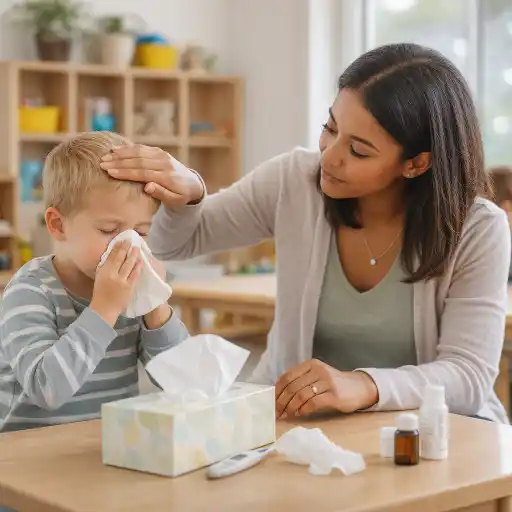
In very young infants, the signs may be less obvious than a typical cough-and-fever picture. A baby may be unusually irritable or less active, feed less, or have pauses in breathing; some infants with RSV do not develop a fever. Changes in breathing and feeding deserve particular attention.
- Watch for rapid or difficult breathing, wheezing, nostrils flaring, or the skin pulling in around the ribs.
- Notice whether the child is drinking less, has fewer wet diapers, or seems unusually sleepy or difficult to engage.
- Seek urgent medical attention for breathing difficulty, inadequate fluid intake, or worsening symptoms.
RSV may be difficult to distinguish from other respiratory viruses by appearance alone. The CDC RSV guidance for infants and young children describes risk factors and warning signs. Keep observations factual and let a health professional assess the cause.
When should a child receive urgent medical attention?
Providers are not expected to diagnose an illness, but they can recognize concerning changes and act promptly. Call emergency services or follow your emergency plan for severe breathing difficulty, bluish or gray lips or face, ribs pulling in with each breath, a seizure, or a child who is unresponsive or very difficult to wake.
Contact the child's health care provider promptly if breathing, drinking, or overall condition is worsening. Dehydration concerns—such as very little urination, dry mouth, or no tears when crying—also need attention. For infants younger than 12 weeks, any fever is an emergency warning sign in CDC flu guidance; caregivers should contact a medical professional immediately for direction.
- Stay with the child and remain calm while another staff member supervises the group, if available.
- Notify the family and share specific observations rather than a suspected diagnosis.
- Follow the child's written emergency or health plan and your program's response procedures.
- Do not delay emergency care while waiting for a family member to arrive if symptoms are severe.
When uncertain, consult the child's health care provider or emergency services according to the severity of symptoms. For additional guidance on early signs of respiratory distress in children, review your staff response plan and practice who calls for help and who supervises the other children.
How can child care programs reduce spread and support families?
No single measure prevents every infection, but consistent layers reduce opportunities for germs to spread. Build handwashing, respiratory etiquette, cleaning, and ventilation into routine practice rather than waiting for several children to become ill. Make soap, tissues, and hand-drying supplies easy to access, and coach children with calm, age-appropriate reminders.
- Wash hands with soap and water for at least 20 seconds, especially after wiping noses, toileting, diapering, and before meals.
- Teach children to cough or sneeze into a tissue or elbow, then clean their hands.
- Clean frequently touched surfaces and shared toys; follow product directions and program procedures for sanitizing or disinfecting.
- Improve airflow when feasible and keep personal belongings, cups, and bottles separate.
- Use a supervised area for a child who becomes ill while waiting for pickup; maintain comfort and dignity.
Communicate illness policies before the winter season. Tell families what symptoms prompt a call, when a child may need pickup, and how the program determines return to care. Follow public-health guidance and licensing rules rather than relying on a blanket assumption that every cough requires exclusion. See CDC infection-prevention practices for early care and education for additional program-level measures.
For further professional learning, explore How To Keep A Healthy Class: Six Tips for Germ Control Buy Now $35.00, Illness, Medication, and Allergies in Child Care Buy Now $32.00, How To Keep A Healthy Class for Infants/Toddlers Buy Now $32.00, and Shoo, Germs! Don't Bother Me! Buy Now $24.00. Check each course page and your local requirements to confirm fit for your professional-development plan.
Conclusion: How can providers respond confidently to winter illness?
Cold, flu, and RSV symptoms overlap, so providers should not try to identify a virus from appearance alone. A cold is often milder; flu can start abruptly and cause more intense symptoms; RSV may begin like a cold and worsen, particularly for infants. These are patterns—not diagnostic rules.
Observe the child's breathing, activity, fluid intake, and ability to participate; document facts; communicate promptly and respectfully with families; and follow program policy and public-health guidance. Seek immediate medical attention for severe or worsening breathing difficulty, signs of dehydration, or other urgent warning signs. Steady prevention routines and clear communication help protect children while supporting families through a stressful season.
This article is educational and does not replace medical advice, diagnosis, or treatment. State requirements vary - check your state licensing agency.
- Recognize, Respond, Respect: Supporting Diverse Learners
- 45 Hour Child Growth and Development
- Basic Health & Safety and Breastfeeding Awareness
- Pediatric RSV First Aid & CPR/AED
- Positive Attention: Interactions & Supervision for Infants & Toddlers
- Creating Environments that Nurture Growth and Community
- Texas Director Credential
- CDA Certification en Español: Recursos y Consejos para Educadores Bilingües
- ⏰ Cómo puedo facilitar las transiciones y las rutinas diarias en mi aula?
- 🚨 Reporte Obligatorio en Nevada
- How can we reduce germs and prevent falls this fall in child care?
- Cómo usar tu certificación de 90 horas en Maryland para completar tu CDA
- Cómo ser director de cuidado infantil en Maryland
- ¿Cómo pueden los equipos de cuidado infantil practicar habilidades rápidas de primeros auxilios en situaciones reales?
- 10 Ejemplos de Cómo la Cultura Influye en el Desarrollo Infantil
- Capacitación en Salud y Seguridad Preventiva en Línea para Proveedores de Cuidado Infantil
- Regulaciones de Licenciamiento de Cuidado Infantil en California para Centros y Hogares de Cuidado Infantil Familiar
- Proporciones de Cuidado Infantil y Tamaños de Grupo por Edad en Maryland (Guía Rápida para Centros y Hogares)
- Proporciones de Cuidado Infantil y Tamaños de Grupo por Edad en Nueva Jersey (Guía Rápida para Centros y Hogares)
- Proporciones de Cuidado Infantil y Tamaños de Grupo por Edad en Virginia (Guía Rápida para Centros y Hogares)
- Lista para Abrir una Guardería en Casa en Georgia: Cómo Empezar
- Lista para Guardería en Casa en Texas: Cómo Iniciar una Guardería en el Hogar
- Cómo Trabajar en el Cuidado Infantil en Wisconsin: Requisitos y Pasos
- Canciones, juegos y preguntas de círculo para niños
- Cómo simplificar la capacitación para sus empleados de daycare
- Cold, Flu, or RSV? How Can Child Care Providers Tell the Difference and Respond?
