Latest Blog & News in English

How do you set up a calm-down space in your classroom?
07/16/2026A thoughtfully designed calm-down space gives young children a predictable, respectful place to recognize big feelings, practice regulation strategies, and prepare to return to classroom activities. It should never be used as punishment or forced isolation. Instead, the area should remain visible to... How do you set up a calm-down space in your classroom?

How can I support speech and language development in toddlers?
07/16/2026Small, responsive interactions throughout the day can create meaningful gains in toddlers’ speech and language development. Child care providers can support emerging communication by narrating routines, labeling objects and actions, expanding children’s words into short sentences, sharin... How can I support speech and language development in toddlers?

How can child care programs best support Dual Language Learners?
07/16/2026Children who grow up using more than one language bring valuable linguistic, cultural, cognitive, and social strengths to early learning programs. Child care providers can support #DLLs by respecting and incorporating home languages, using visual cues and gestures, repeating key vocabulary, pairing ... How can child care programs best support Dual Language Learners?

How Can Child Care Providers Understand and Support Sensory Needs in Young Children?
07/16/2026Young children experience and understand the world through sound, movement, touch, sight, taste, smell, and awareness of their own bodies. Because each child processes sensory information differently, ordinary classroom experiences—such as bright lights, loud transitions, messy materials, crow... How Can Child Care Providers Understand and Support Sensory Needs in Young Children?

How can child care providers understand and respond to tantrums?
07/16/2026Tantrums are a normal part of early development, but they can interrupt routines, overwhelm staff, and concern families when adults are unsure how to respond. Young children often have tantrums when strong emotions, unmet needs, limited language, sensory overload, fatigue, or changes in routine exce... How can child care providers understand and respond to tantrums?

How can child care providers help children build friendship skills?
07/16/2026Friendship skills are teachable, observable, and essential for helping young children cooperate, manage emotions, resolve disagreements, and feel that they belong. Child care providers can support #preschoolers by modeling friendly language, teaching simple ways to enter play, guiding turn-taking, a... How can child care providers help children build friendship skills?

What Should Child Care Providers Expect: Developmental Milestones From Birth to Five?
07/16/2026Understanding developmental milestones from birth to age five helps child care leaders and providers recognize children’s growth, plan purposeful learning experiences, and respond early when additional support may be needed. Because children develop at different rates, milestones should be use... What Should Child Care Providers Expect: Developmental Milestones From Birth to Five?
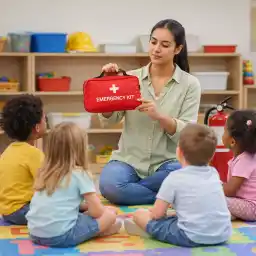
What Emergency Preparedness Does Every Child Care Program Need?
07/16/2026Every child care program needs a clear, written, and regularly practiced emergency plan that protects children during both everyday incidents and major disasters. Effective #emergency #preparedness includes procedures for evacuation, shelter-in-place, lockdowns, severe weather, medical emergencies, ... What Emergency Preparedness Does Every Child Care Program Need?

How can child care programs support immigrant and multilingual families?
07/16/2026Supporting #immigrant and #multilingual #families is essential to creating welcoming, equitable, and effective early learning environments. Child care directors and providers can strengthen these partnerships by respecting home languages, using translated materials and visual supports, learning abou... How can child care programs support immigrant and multilingual families?

How can child care programs best support children facing big life changes?
07/16/2026Young children may not have the language to explain how major life changes affect them, so their feelings often appear through behavior, play, sleep, eating patterns, relationships, and learning. Events such as moving, divorce, the death of a loved one, a new caregiver, family illness, or financial ... How can child care programs best support children facing big life changes?
