A cracked or unusually hot classroom toy needs prompt attention, especially when it contains a rechargeable battery. Use the Daily Toy Inspection Checklist for Child Care Buy Now $1.49 to document concerns and track follow-up, alongside your program’s procedures and the manufacturer’s instructions for damaged battery-powered products. For deeper professional learning on identifying classroom hazards and preventing injuries, explore ChildCareEd’s Building and Physical Premises Safety  Buy Now $10.00 course. Read on for a clear approach to protecting children, communicating with staff, and addressing the damaged toy before it returns to classroom use.
Why does a damaged rechargeable toy need prompt attention?
Rechargeable toys often contain lithium-ion batteries. Physical damage, crushing, punctures, or electrical faults can cause a battery to overheat or ignite. Serious incidents are uncommon, but a damaged battery may present fire, burn, and exposure risks. As the U.S. Department of Transportation explains, lithium batteries can have chemical and electrical hazards and may undergo thermal runaway, a chain reaction that releases heat and flammable gas.
For child care teams, the practical concern is that damage may be subtle. A toy may still power on while its casing is cracked, battery compartment loose, or charger frayed. Children may mouth, pull, drop, or share materials, so a defect can quickly become accessible to multiple children. A reliable response is not an overreaction; it is part of maintaining a safe, welcoming space for play.
Programs can treat battery-powered materials as part of the regular #classroom inspection. Include toys, charging cords, adapters, and storage locations in routine checks. Staff should know who receives safety reports and where questionable items go, so no one has to improvise while supervising children.
As a preventive step, review how toys are chosen and placed in the room. ChildCareEd’s Using Toys to Support Learning Buy Now $16.00 course focuses on selecting age-appropriate materials that support children’s development.
What warning signs should staff recognize?
Stop using a toy if it has visible damage or behaves unusually. Warning signs can include a swollen or misshapen case, cracks, leaking, burn marks, discoloration, a chemical or sweet electrical odor, unusual hissing or popping, smoke, or excessive heat. A device that stops working, behaves erratically, or becomes hot during ordinary use also deserves caution. These signs are consistent with battery-safety guidance from ESFI and other safety authorities.
Do not open the toy, press a swollen area, puncture the casing, or test whether it still charges. Staff are not expected to diagnose battery condition. If there is any doubt, remove the toy from children’s access and notify the designated lead. Photograph the item only if doing so can be done safely and without delaying immediate action.
- Stop play and calmly move children away from the toy.
- Do not plug it in, recharge it, or use a different charger to test it.
- Report what was observed, including when and where it occurred.
- Keep children from handling loose pieces or any exposed battery.
- Record the brand and model if they are safely visible for later manufacturer or recall checks.
Visible smoke, fire, popping, or signs of an imminent battery incident require an emergency response—not routine maintenance. Follow your program’s emergency plan, evacuate the area, alert others, and call 911. ESFI warns that damaged batteries may emit hazardous gases that are not visible; do not ask staff to approach a smoking or burning device.
How should a provider isolate the toy and protect children?
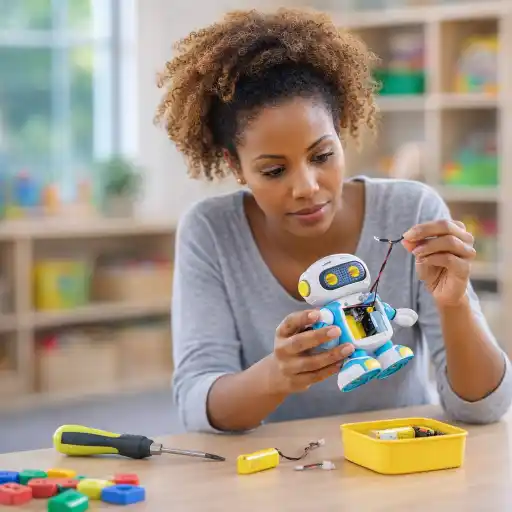
First prioritize people, not property. Move children and other staff away from the item and maintain supervision while a colleague alerts the director or safety lead. If the toy is simply damaged with no heat, odor, smoke, leaking, or other urgent warning signs, prevent access to it and place it in a clearly marked, staff-only quarantine area away from children and routine play materials. Do not put it in a classroom cubby where a child or another staff member could handle it.
Do not remove a built-in battery or manipulate a damaged battery unless the manufacturer’s instructions and an appropriately qualified person specifically direct that action. Not all batteries are removable or user-serviceable, and handling a damaged one can increase risk. The EPA advises contacting the battery or device manufacturer for instructions on a damaged battery or device. Follow your program’s written policy and any local fire-safety direction for temporary isolation.
If the toy is hot, swollen, leaking, smoking, or making unusual sounds, do not carry it through the classroom or attempt to seal it in an improvised container. Move people away and follow the emergency plan; call 911 if there is smoke, fire, or an imminent threat. Never improvise a cleanup of leaking material. Keep other combustible items away only when this can be done without approaching a dangerous device.
Use a short, consistent handoff: identify the item, state the observed concern, record who removed it, and tell the director where it is isolated. This helps prevent an accidentally returned toy and keeps responsibility clear across shifts.
How should the program document, repair, or replace the item?
Document the observation and response while details are fresh. A useful record includes the date and time, classroom, item description, observed damage or behavior, whether a battery or charger was involved, actions taken, staff notified, and the item’s final disposition. Be objective: “green interactive puppy; casing cracked at charging port; removed from toddler room and placed in staff-only quarantine” is more helpful than “toy unsafe.”
Do not tape, glue, or otherwise repair a damaged battery casing or electrical component for classroom reuse. Contact the manufacturer or retailer for a safe next step, warranty direction, or replacement. If the product is subject to a recall, follow the official recall instructions rather than attempting an independent repair. Check CPSC recall information and retain identifying details such as the brand, model, and date code when available.
When a toy or battery reaches the end of its useful life, disposal matters. EPA guidance says lithium-ion batteries and devices containing them should not go in household garbage or municipal recycling bins; use an appropriate battery recycling or household hazardous-waste collection program. Damaged batteries may require special acceptance and handling, so call the program or recycler first and follow its instructions. Do not transport or ship a damaged battery casually: DOT rules may apply to transportation in commerce, and damaged or defective batteries can pose greater shipping risks.
Programs are businesses, and EPA notes that commercial establishments have responsibilities for determining how discarded lithium-ion batteries are managed. Ask your waste-management contact or state environmental agency about the rules that apply to your operation. State requirements vary - check your state licensing agency.
How can directors prevent similar problems and support staff?
Prevention works best when it is built into familiar routines. Include rechargeable toys in daily visual checks and more detailed periodic inspections. Look over the body, charging port, cords, adapter, battery compartment, and any detachable covers. Remove items with loose parts, cracks, exposed wires, or compromised covers before children encounter them. Keep product instructions and purchase information accessible to staff.
Establish a program rule that charging happens only in a designated staff-controlled area, following the product manufacturer’s instructions and using the specified charger. Do not charge a toy near combustible materials, in children’s play or sleep areas, or unattended if your policy or manufacturer advises against it. Store devices away from extreme heat, direct sun, moisture, and places where they can be crushed or dropped. Make charging cords inaccessible to children.
Brief staff on the warning signs and the reporting pathway at orientation and refresher meetings. A simple written procedure should specify who removes an item, where it is kept, who contacts the manufacturer, how incidents are recorded, and who approves a return to use. ChildCareEd’s 1,2,3, Eyes on Me: Classroom Safety Buy Now $32.00$24.00 course can complement this work with strategies for maintaining a safe environment and effective supervision. For broader emergency planning, see Responding to Emergencies Buy Now $16.00; the Handling and Storage of Hazardous Materials Buy Now $10.00 course offers related training on safe management procedures.
Finally, reassure staff that reporting damage is responsible practice, not blame. Invite them to flag concerns promptly, review patterns in inspection logs, and replace unsafe materials with suitable alternatives. A calm, prepared team helps preserve children’s access to engaging play while taking battery risks seriously.
Conclusion: What is the safest response to a damaged rechargeable toy?
When a rechargeable classroom toy is damaged, stop its use, protect children from access, and notify the responsible lead. Treat heat, swelling, odor, leakage, unusual sounds, smoke, or fire as serious warning signs; move people away and use the emergency plan, calling 911 for smoke, fire, or imminent danger. Do not charge, open, or attempt an unapproved repair.
Record what happened, follow manufacturer and recall guidance, and arrange appropriate recycling or hazardous-waste handling rather than placing a lithium-ion device in ordinary trash or curbside recycling. Directors can reduce confusion with regular inspections, clear charging practices, staff training, and a documented quarantine-and-disposition process. These steps answer the central question simply: remove the risk from children’s reach, escalate urgent signs, and manage the toy through a safe, documented route.
- Bienvenido! Welcoming All Families
- Moving About the Classroom: Effective Transitions for Everyday
- Using Toys to Support Learning
- Pediatric RSV First Aid & CPR/AED
- 45 Hour School Age Methods and Materials
- Texas Director Credential
- Anxiety: Signs & Strategies
- Matchmaking for Mentors
- Moving About the Classroom: Effective Transitions for Everyday
- 💛🧩 ¿Cómo puedo hacer que mi enseñanza sea inclusiva para los niños con autismo?
- 😫🧸 ¿Qué hacer cuando un bebé no quiere dormir la siesta en el aula?
- 👧 ¿Cómo iniciar y abrir una guardería en Texas? Lo que necesitas saber
- 🚨 Reporte Obligatorio en Nevada
- Qué capacitación se requiere para ser director de cuidado infantil en Texas?
- Recursos en Español sobre el Sueño Seguro del Bebé
- Que es Título 22 en California?
- Capacitación en Salud y Seguridad Preventiva en Línea para Proveedores de Cuidado Infantil
- Regulaciones de Licenciamiento de Cuidado Infantil en California para Centros y Hogares de Cuidado Infantil Familiar
- Lista para Guardería en Casa en California: Cómo Iniciar una Guardería en el Hogar
- Lista para Guardería en Casa en Texas: Cómo Iniciar una Guardería en el Hogar
- Retraso del Habla en la Guardería: Cómo Pueden Ayudar los Proveedores
- Cómo Ser Maestra de Preescolar en Dakota del Norte
- Cómo Ser Maestra de Preescolar en Wisconsin
- Capacitación Previa al Servicio para Proveedores de Cuidado Infantil en Dakota del Norte
- Celebrando la amistad en el cuidado infantil durante el Día de los Mejores Amigos
- How Can You Choose Toys That Make the Play You Want Possible?
- How Can Providers Safely Explore Objects That Roll and Slide with Toddlers?
- What Should You Do When a Rechargeable Classroom Toy Is Damaged?
