Are your classroom toys truly ready for safe, joyful play each morning? A consistent inspection routine helps providers catch choking hazards, broken components, contamination, recalls, and age-inappropriate materials before children encounter them. For broader strategies on routines, hygiene, and healthy environments, explore Everyday Safety: Creating Healthy Environments  Buy Now $55.00, which can strengthen daily practices and support ongoing professional learning.
Why does a daily toy inspection matter?
Toys invite children to investigate through grasping, mouthing, pulling, dropping, and sharing. Those ordinary behaviors can reveal hazards that were not visible during yesterday’s cleanup. A cracked vehicle may release a small wheel; a stuffed animal may expose filling through a torn seam; a puzzle piece may be too small for a toddler room. A brief, purposeful check reduces preventable risk while preserving children’s opportunity for meaningful exploration.
Daily inspections also create a shared professional responsibility. When every staff member knows what to look for and what to do with an unsafe item, the program is less dependent on one person’s memory. The Daily Toy Inspection Checklist for Child Care Buy Now $1.49 can support this routine by providing space for the date, staff name, inspection status, notes, and follow-up actions.
Inspection is not meant to make classrooms feel restrictive. It is a strengths-based way to maintain an environment where children can experiment confidently and adults can respond proactively. State requirements vary - check your state licensing agency.
What should you check for choking and ingestion hazards?
Begin with the children’s age group and the way each item could be used. For children under three, the U.S. Consumer Product Safety Commission (CPSC) identifies a small part as an object that fits entirely inside the prescribed small-parts cylinder. The CPSC explains the small-parts ban and labeling requirements in its small-parts guidance.
Use a commercially manufactured small-parts tester when your program has one. A toilet-paper roll can serve as a preliminary classroom screen, but it is not a complete safety test. Examine detachable wheels, eyes, buttons, beads, knobs, puzzle pieces, magnets, and battery covers. Pull gently on attached components and inspect toys after heavy use, cleaning, or classroom transitions.
- Remove coins, marbles, button batteries, loose magnets, and small detachable parts from infant and toddler areas.
- Keep uninflated or broken balloons away from young children.
- Check that battery compartments are closed securely and that no battery is exposed.
- Do not rely on an age label alone; consider mouthing, impulsivity, developmental differences, and mixed-age access.
When an item is questionable, place it in a designated quarantine container rather than returning it to the shelf. Document the concern and notify the director or assigned safety lead.
How can you identify broken or structurally unsafe toys?
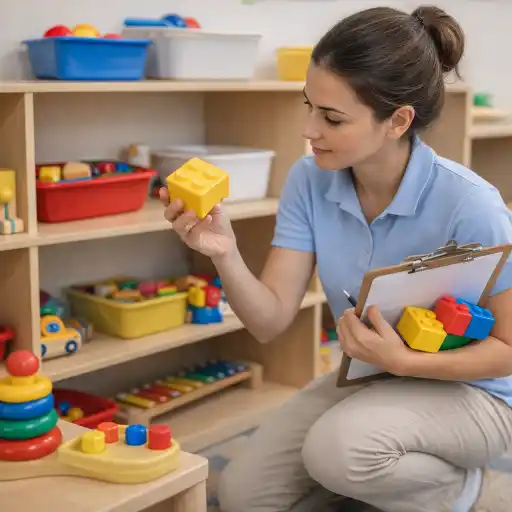
Move beyond a quick visual glance. Handle frequently used toys and assess whether they remain durable under predictable classroom use. Look for cracks, sharp points, splinters, exposed screws, loose handles, peeling paint, broken seams, missing pieces, and unstable parts. Run a clean finger along plastic and wooden edges; any sharp catch or rough projection warrants removal.
Fabric materials deserve special attention. Inspect stuffed animals, dress-up clothing, puppets, and soft blocks for torn seams, accessible stuffing, loose eyes, and moisture damage. Porous items that cannot be thoroughly cleaned should not remain in circulation. Water-damaged foam or fabric may retain contamination even when the surface appears dry.
Large toys and riding equipment also belong in the daily review. Check tricycles, push toys, climbing materials, play kitchens, and dramatic-play furniture for loose hardware, cracked frames, tipping risks, and entrapment concerns. Keep pathways clear so toys do not create trip hazards.
- 🔍 Inspect the toy’s edges, seams, attachments, and moving parts.
- Apply gentle pressure where children commonly pull, twist, chew, or lean.
- Remove and tag any item that cannot be repaired promptly and safely.
- Never return a recalled product to use unless the official recall instructions authorize a remedy.
A toy does not need to be visibly destroyed to be unsafe. If its condition is uncertain, temporary removal is the prudent choice.
How should you evaluate sanitation and cleanability?
Safety includes both physical condition and hygienic condition. Toys move between hands, mouths, floors, tables, and storage bins, making them high-touch materials. The CDC recommends cleaning visibly dirty surfaces and sanitizing objects that infants or children may use, including toys. Its guidance on cleaning and disinfecting early care settings emphasizes following product labels, cleaning before sanitizing, observing contact times, and storing chemicals away from children.
During the inspection, separate visibly soiled or mouthed toys from clean materials. Use a clearly labeled “soiled toy” container so staff do not accidentally return an item to play. Check whether the material can be cleaned according to your program’s written procedure. Toys with deep crevices, peeling surfaces, absorbent materials, or inaccessible interiors may be impossible to sanitize reliably.
- Remove toys that are visibly dirty, wet, contaminated, or strongly soiled.
- Sanitize mouthed toys before reuse according to program policy and applicable regulations.
- Launder washable fabric materials and discard items that cannot be cleaned adequately.
- Allow sanitized items to dry completely before returning them to children.
- Never mix cleaning products, and keep all chemicals inaccessible during and after cleaning.
Sanitation should not replace inspection. A clean toy with a cracked edge remains hazardous, just as an intact toy that cannot be cleaned remains unsuitable.
How do age labels, recalls, and documentation guide your response?
Age appropriateness is a central part of toy selection. Sort materials by the ages for which they are designed, but also consider the actual children in the room. A preschooler may be ready for small construction pieces, while an infant or younger sibling may gain access during a transition. In mixed-age programs, use labeled containers, defined play zones, and a reliable cleanup check.
Recall monitoring should be part of the program’s safety system. Search the CPSC recall database at CPSC.gov or use official recall alerts. Pay particular attention to donated, secondhand, imported, or older toys whose history may be difficult to verify. Record the brand, product name, model or identifying information, date checked, and outcome.
When removing an item, document:
- Date and time of removal
- Room, shelf, bin, or play area
- Specific item description and brand, when available
- Reason for removal, such as broken part, choking concern, contamination, or recall
- Staff member responsible
- Disposition: quarantine, repair, return, discard, or manufacturer remedy
- Follow-up date and verification before return to service
Specific notes are more useful than entries such as “unsafe toy.” Write, for example, “blue dump truck: rear wheel detached during inspection; placed in locked repair bin.” The checklist becomes evidence of an active process rather than a signature exercise.
How can directors make daily inspections consistent?
Consistency improves when the routine is short, assigned, and visible. Place the checklist near the classroom entrance or toy-storage area. Assign responsibility by room or zone, identify a backup staff member, and review the process during orientation and staff meetings. A director can periodically compare the checklist with actual classroom conditions to ensure the form reflects practice.
Use the following sequence:
- Scan the room before children begin play.
- Check high-use and mouthed materials first.
- Test detachable parts, edges, seams, cords, batteries, and moving components.
- Separate dirty, damaged, recalled, or questionable items immediately.
- Record findings and communicate urgent concerns before the shift continues.
- Verify repair, replacement, or disposal before an item returns to circulation.
Common mistakes include signing without inspecting, checking only new toys, leaving removed items in an accessible “temporary” location, and writing vague notes. Correct these by using a quarantine bin, requiring specific observations, and reviewing records weekly. For additional learning about age-appropriate material selection, consider Using Toys to Support Learning Buy Now $16.00. To strengthen supervision practices that complement environmental checks, Effective Supervision in Child Care Buy Now $25.00 offers focused training.
Other relevant options include Creating Safe & Healthy Child Care Environments Buy Now $55.00 and 1,2,3, Eyes on Me: Classroom Safety Buy Now $32.00$24.00. Course availability, hours, and state acceptance should be confirmed with the provider and your licensing agency.
Conclusion: What should you check during a daily child care toy inspection?
A daily toy inspection should examine five connected areas: choking and ingestion hazards, structural condition, sanitation, age appropriateness, and recalls. Providers should remove questionable items immediately, document the reason and disposition, and communicate follow-up responsibilities. The most effective system is not complicated; it is repeatable, specific, and shared by the whole team.
Using the Daily Toy Inspection Checklist for Child Care Buy Now $1.49 can make this routine easier to implement and review. When paired with intentional supervision and relevant professional learning, a few focused minutes each day can help protect children, support licensing readiness, and preserve the rich play experiences that make early learning meaningful.
- 45 Hour Child Growth and Development
- 45 Hour Preschool Methods and Materials
- CDA Family Child Care Credential
- 45 Hour School Age Methods and Materials
- 24 Hour Texas Pre-Service
- Family Child Care Health Essentials
- Texas Director Credential
- Everyday Safety: Creating Healthy Environments
- Family Child Care: Building, Premises, and Outdoor Safety
- 😫🧸 ¿Qué hacer cuando un bebé no quiere dormir la siesta en el aula?
- 👧 ¿Cómo iniciar y abrir una guardería en Texas? Lo que necesitas saber
- 🚨 Reporte Obligatorio en Nevada
- ¿Cómo pueden los equipos de cuidado infantil practicar habilidades rápidas de primeros auxilios en situaciones reales?
- Capacitación en Salud y Seguridad Preventiva en Línea para Proveedores de Cuidado Infantil
- Regulaciones de Licenciamiento de Cuidado Infantil en California para Centros y Hogares de Cuidado Infantil Familiar
- Proporciones de Cuidado Infantil y Tamaños de Grupo por Edad en Maryland (Guía Rápida para Centros y Hogares)
- Lista para Guardería en Casa en California: Cómo Iniciar una Guardería en el Hogar
- Consejos de Supervisión Activa para Salones de Preescolar y el Juego al Aire Libre
- Cómo Ser Maestra de Preescolar en Dakota del Norte
- Capacitación Previa al Servicio para Proveedores de Cuidado Infantil en Dakota del Norte
- Celebrando la amistad en el cuidado infantil durante el Día de los Mejores Amigos
- California Home Daycare Licensing Standards
- How can I create a safe childcare environment for every age group?
- How can child care programs prevent seasonal safety hazards like heat, cold, allergies, holiday risks, and outdoor play dangers?
- How Do You Test Whether a Toy Is Too Small? A Choking Hazard Size Guide by Age
- What Should You Check During a Daily Child Care Toy Inspection?
- How Can Providers Safely Explore Objects That Roll and Slide with Toddlers?
- AI Toys in Child Care: What Should Providers Check Before Accepting One?
- What Should You Do When a Rechargeable Classroom Toy Is Damaged?
