What toddlers can see, reach, and recognize strongly influences how they move, choose, communicate, and participate. Thoughtful eye-level design can make your room more independent, welcoming, and easier to supervise; for deeper guidance, explore Playful Spaces for Infants & Toddlers  Buy Now $24.00, which can help you select developmentally appropriate materials and create inclusive spaces that support exploration.
Why does eye-level design matter for toddlers?
Toddlers experience the classroom from a low physical vantage point. Displays placed above adult eye level may be attractive to visitors, but they are often invisible or difficult to interpret for the children who use the room. At toddler height, photographs, labels, books, mirrors, and materials become invitations to participate rather than background decoration.
Eye-level design also communicates belonging. The Virtual Lab School recommends displaying children’s photographs, family images, and artwork where young children can see them, including on low shelves or even near the floor for mobile infants. These choices tell children, “You are a valued member of this classroom.”
The goal is not to place everything low. The goal is to distinguish between materials children may independently access and items adults must control. A strong room balances #independence with safety, supervision, and developmental appropriateness.
- Make meaningful images visible from a toddler’s standing or seated position.
- Place frequently used materials on low, stable shelves.
- Keep unsafe, fragile, or adult-only supplies out of reach.
- Preserve open sight lines so educators can supervise consistently.
Which materials belong at a toddler’s eye level?
Begin with materials that help toddlers understand the room and make purposeful choices. Picture labels, family photographs, mirrors, books, and simple visual schedules are especially useful. Labels should show the actual object whenever possible: a photo of blocks near the block basket is more meaningful than a word alone.
Open-ended materials can also be displayed at eye level or within easy reach. Examples include large blocks, board books, chunky puzzles, dramatic-play utensils, dolls, vehicles, and baskets of natural objects. The Virtual Lab School emphasizes that materials should be authentic, developmentally appropriate, connected to children’s interests, and reflective of their families and communities.
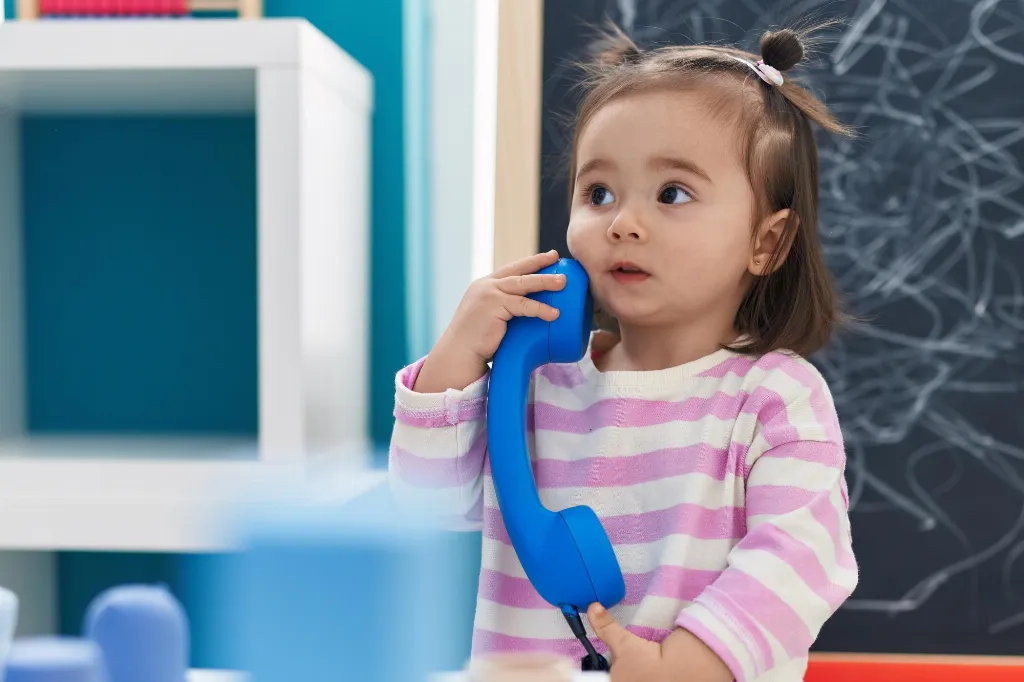
Use a “less is more” approach. Too many choices can overwhelm toddlers and make clean-up difficult. Display a small number of complete invitations, then rotate materials as interests and skills change.
- 📚 Create a low book display with covers facing outward.
- 🪞 Add an unbreakable mirror near a cozy or movement area.
- 🧺 Use labeled baskets that contain one type of material.
- 👨👩👧 Display family photographs and culturally meaningful images.
- 🧩 Offer duplicates of especially popular toys when possible.
How can displays support language, identity, and learning?
Eye-level displays should do more than fill wall space. They can support language development when adults and toddlers use them together. A photograph of children washing hands can prompt words such as “water,” “soap,” “rub,” and “clean.” Pictures of family members can invite conversations about names, relationships, home languages, and daily experiences.
Use real photographs and authentic images whenever possible. A display showing the children’s actual classroom routines is more understandable than a generic poster. Add words in the languages represented by the children and families, asking caregivers to help with accurate translations.
Children’s work should also be visible at their level. For toddlers, this may include scribbles, paintings, photographs of block structures, or short teacher transcriptions of children’s words. Displaying process—not only polished products—shows that exploration and effort matter.
Review displays through a lens of #inclusion. Do children see different family structures, abilities, cultures, skin tones, and ways of communicating? If not, invite families to contribute photographs, objects, songs, or words. Representation is most meaningful when it is connected to genuine relationships rather than occasional themed decorations.
How do you balance accessibility with safety and supervision?
Accessibility does not mean unrestricted access to every item. Before lowering a shelf or display, examine the material’s size, condition, stability, and intended use. Toddlers need opportunities to choose and return materials, but educators remain responsible for active supervision and hazard prevention.
Anchor shelving, secure wall displays, cover electrical cords, and use only age-appropriate materials. Avoid small loose parts that may create choking risks. Keep cleaning products, medications, sharp tools, staff records, and other hazardous materials in secured adult storage. Mirrors and frames should be designed for early childhood settings and checked regularly for damage.
Eye-level placement must also support supervision. Low shelves can define centers without blocking sight lines; tall furniture should not create hidden corners. Head Start guidance emphasizes safe traffic patterns, manageable noise, cozy spaces that remain observable, and layouts that support positive interactions among children and adults.
State requirements vary - check your state licensing agency before making changes involving furniture anchoring, exits, sleep areas, ratios, or required safety equipment.
What common mistakes should providers avoid?
One common mistake is designing for adult aesthetics rather than children’s experiences. A room may look polished while its books, labels, and displays remain too high for toddlers to use. Get down on the floor, sit in a child-sized chair, and view the room from several developmental positions.
Another mistake is covering every available surface. Research summarized by the Association for Psychological Science found that heavily decorated classrooms can increase distraction and reduce learning during instruction. This does not mean classrooms should be bare; it means displays should be intentional, relevant, and visually calm.
- Mistake: Placing all artwork above adult shoulder height.
Try: Display selected pieces at toddler height and rotate them. - Mistake: Using labels that rely only on print.
Try: Pair photographs, simple words, and home-language labels. - Mistake: Making every material accessible at once.
Try: Offer a limited selection and store extras securely. - Mistake: Lowering furniture without checking hazards.
Try: Inspect stability, choking risks, and supervision routes.
Invite staff and families to observe how toddlers respond. Are children choosing materials, noticing photographs, initiating conversations, and returning items? Their behavior provides valuable evidence about whether the design is working.
Conclusion: What should be at a toddler’s eye level?
A toddler’s eye-level environment should include meaningful images, family representation, children’s work, visual cues, books, mirrors, and a carefully selected range of safe, developmentally appropriate materials. These elements should be visible, reachable when appropriate, culturally responsive, and arranged so adults can supervise effectively.
The most useful test is simple: get down to the child’s level and ask what the room communicates. Does it say, “You belong here, you can make choices, and adults will help keep you safe”? If not, begin with one low shelf, one family display, or one picture label. Small, thoughtful changes can transform the classroom into a more responsive partner in toddlers’ learning.
Five practical courses for continued professional learning
- Playful Spaces for Infants & Toddlers Buy Now $24.00
- Classroom Setup for Child Care Buy Now $24.00
- CDA Infants/Toddlers: Classroom Setup Buy Now $24.00
- Spaces that Support Discovery Buy Now $24.00
- CDA: Curriculum Alignment & Materials Buy Now $16.00
Frequently asked questions
Should every toy be at eye level?
No. Place safe, frequently used materials within reach, while securing hazardous, fragile, or adult-only items.
How high should displays be?
There is no single measurement for every room. Place important images where toddlers can see them while standing, sitting, or moving across the space.
How often should materials rotate?
Rotate when children’s interests, skills, or engagement change. A smaller, purposeful selection is usually more effective than constant abundance.
Can visual displays overstimulate toddlers?
Yes. Use visual breathing room, calm backgrounds, and a limited number of relevant displays.
How can directors support staff with this work?
Provide a shared checklist, invite staff to photograph the room from toddler height, and discuss observations during planning meetings.
- 45 Hour Child Growth and Development
- Bienvenido! Welcoming All Families
- 1,2,3, Eyes on Me: Classroom Safety
- 45 Hour Infant and Toddler Methods and Materials
- Pediatric RSV First Aid & CPR/AED
- CDA Bridge Bundle: Infant/Toddler without Portfolio Review
- CDA Bridge Bundle: Infant/Toddler
- 45-Hour Infant and Toddler Curriculum
- Texas Director Credential
- CDA Certification en Español: Recursos y Consejos para Educadores Bilingües
- 😫🧸 ¿Qué hacer cuando un bebé no quiere dormir la siesta en el aula?
- Recursos en Español sobre el Sueño Seguro del Bebé
- 10 Ejemplos de Cómo la Cultura Influye en el Desarrollo Infantil
- Retraso del Habla en la Guardería: Cómo Pueden Ayudar los Proveedores
- How can New York childcare providers build self-confidence in toddlers?
- What Is Visual Learning and How Can New York Child Care Providers Use It With Toddlers?
- Celebrando la amistad en el cuidado infantil durante el Día de los Mejores Amigos
- How can New York providers bridge the summer gap with year-round learning?
- What Toddler Daily Schedule Ideas Work Best in Child Care?
- Toddler Classroom Management: Routines, Behavior, and Big Feelings
- What Small Teacher Habits Do Children Notice the Most?
- 1 2 3 Eyes on Me: What to Do When This Attention Getter Stops Working
- Toddler Classroom Ideas: What Should Be at a Child’s Eye Level?
- How Can Child Care Providers Help Children Understand Classroom Expectations?
- How Can Child Care Providers Set Clear Classroom Rules and Expectations?
- How Can Child Care Providers Support Infant and Toddler Development?
- How Can You Create a “Yes Space” Where Infants and Toddlers Explore Safely?
- How Can Printable Routines Turn Morning Chaos into Classroom Calm?
- Keep It Simple: Introducing Classroom Rules Preschoolers Can Remember
