High-quality child care is more than a safe place for children to spend the day: it is a responsive community where they can build skills, relationships, and confidence. Strengthen your everyday practice with ChildCareEd’s Early Childhood Education course  Buy Now
 $99.00$84.00, which covers relationships, curriculum, learning environments, observation, and family partnerships. Read on to see how these elements work together—and where your program can take its next practical step.
Why does program quality matter beyond meeting basic requirements?
Licensing establishes a necessary foundation for children’s protection, but quality also concerns what children experience throughout the day: how adults respond, how play is supported, and whether the environment invites exploration. Research summarized by the Administration for Children and Families associates high-quality early care with stronger foundational skills in areas such as language, early mathematics, self-regulation, and relationships. Benefits can extend to diverse groups of children, including dual language learners and children with disabilities, when programs are responsive and inclusive.
Quality is not a single score or a collection of attractive materials. It is the interaction of structural conditions—such as staffing, training, and safe spaces—with process quality: the daily exchanges between adults and children. A well-resourced room cannot replace a caring educator; warm intentions alone cannot compensate for unsafe practices or inadequate planning.
NAEYC’s standards illustrate this broad view by connecting relationships, curriculum, teaching, assessment, health, staff support, family and community partnerships, the physical environment, and leadership. These dimensions reinforce one another. For example, a predictable routine supports emotional security, while observation helps educators adjust activities to children’s interests and developmental needs. Quality is therefore best understood as an ongoing commitment to improvement, not a finish line.
How do relationships and teaching practices shape children’s daily experiences?
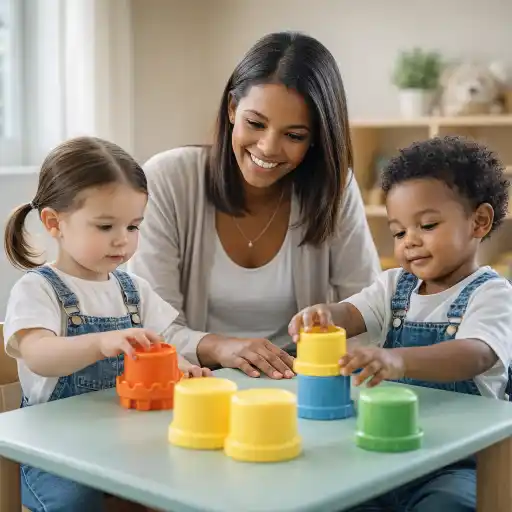
Children learn through relationships. When educators greet children warmly, listen carefully, respond to cues, and offer respectful guidance, children are more likely to feel that they belong and can take manageable learning risks. Positive relationships also create a foundation for peer cooperation and for helping children recognize feelings, solve conflicts, and build self-regulation.
Effective teaching is intentional without turning every moment into a formal lesson. Educators notice what children are trying to understand, add language or materials that extend their play, and make space for choice. A child building a block tower might be invited to compare heights, describe a plan, or work with a peer. The adult’s role is to enrich curiosity rather than take over the activity.
- Observe before intervening; use children’s words, actions, and interests to guide your response.
- Offer open-ended questions and materials with more than one possible use.
- Use positive, developmentally appropriate guidance instead of shame, threats, or physical punishment.
- Adapt communication and materials so children with different abilities, languages, and experiences can participate.
NAEYC’s standards emphasize developmentally, culturally, and linguistically appropriate teaching. In practice, this means holding high expectations while adapting support: children do not need identical experiences to have meaningful opportunities to learn.
What should a high-quality learning environment provide?
A strong learning environment is safe, healthy, welcoming, and arranged to help children use materials with growing independence. It includes inviting spaces for active play, books, art, quiet moments, and imaginative exploration, with materials that reflect children’s lives and introduce them to the wider world. The arrangement should be flexible enough to support different ages, abilities, and activity levels.
Safety and health practices are part of the environment, not separate administrative tasks. Clear supervision plans, clean and well-maintained equipment, handwashing routines, safe food practices, and appropriate rest procedures protect children while enabling exploration. Staff should know how to identify hazards and follow program procedures consistently. The Child Care Technical Assistance Network’s guidance on ratios and group sizes is a useful reminder that supervision conditions are central to care; always consult local rules for applicable limits.
Use a brief environment walk-through to consider:
- Can children and adults move through the room safely and see the areas they supervise?
- Are materials accessible, age-appropriate, clean, and in usable condition?
- Do children have both active spaces and opportunities for quiet or privacy?
- Are children’s cultures, families, home languages, and abilities represented respectfully?
- Do daily routines support health, comfort, and manageable transitions?
The Early Childhood Environment Rating Scale provides one example of a structured way to examine space, care routines, language and literacy, learning activities, interactions, and program structure. An assessment tool can prompt reflection, but its greatest value comes when findings lead to practical changes in children’s actual experiences.
How can programs partner with families and use assessment well?
Families are children’s first and enduring teachers, and their knowledge helps educators understand each child’s strengths, interests, language, routines, and needs. Strong partnerships are reciprocal: programs share useful observations and invite family perspectives rather than limiting communication to announcements or concerns. Respect for different family structures, cultures, and communication preferences helps create trust.
Assessment supports this partnership when it is purposeful and respectful. Educators can collect observations during ordinary play and routines, describe what they see objectively, and use that information to plan relevant next steps. Instead of labeling a child as “not interested,” record observable evidence—for example, “chose the puzzles twice this week and stayed for about five minutes.” Share appropriate examples with families, invite their interpretation, and agree on goals together when helpful.
- Offer more than one way to communicate, such as brief conversations, translated notes, or scheduled meetings.
- Share strengths and progress alongside questions or concerns.
- Use multiple sources of information and remain mindful of cultural or linguistic bias.
- Protect children’s privacy and follow consent and documentation policies.
Assessment should inform teaching and program decisions, not rank children or substitute for professional evaluation. When concerns arise, communicate respectfully, follow program procedures, and collaborate with families about appropriate next steps and referrals. These habits connect individual planning with a broader culture of inclusion and continuous learning.
How can directors and educators improve quality over time?
Quality improvement is most sustainable when it is shared, manageable, and supported by leadership. Directors can set a clear purpose, invite staff to identify strengths and pain points, and protect time for reflection, planning, and professional learning. Staff knowledge grows when training connects directly to classroom practice and educators have opportunities to try strategies, discuss what happened, and refine their approach.
Start with a focused improvement cycle rather than trying to change everything at once:
- Choose one meaningful goal, such as smoother transitions or richer child-adult conversations.
- Describe what success would look like in observable terms.
- Try a small change in one classroom or routine and gather simple evidence.
- Review what children and staff experienced; adjust the plan and recognize progress.
Observation tools, family feedback, staff reflections, and child progress documentation can all inform this process. Measures are useful when they guide support and improvement, not when they become paperwork disconnected from practice. National and state quality systems differ, and accreditation is one possible structured pathway rather than the only definition of a strong program.
Common pitfalls include overloading staff with forms, treating assessment as a one-time inspection, and introducing changes without staff input. Keep documentation purposeful, make time for coaching or peer collaboration where possible, and communicate the reason for each change. State requirements vary - check your state licensing agency for current rules on training, ratios, health, and safety.
Conclusion: What are the essential signs of a high-quality child care program?
A high-quality child care program combines warm, responsive relationships; purposeful, developmentally appropriate learning; safe and inviting environments; meaningful family partnerships; and thoughtful assessment. Strong leadership and supported, knowledgeable staff help these practices remain consistent and improve over time. No single checklist captures the full experience children have, but clear standards and observation can help teams notice what is working and what deserves attention.
For providers and directors, the most useful next step is often small: select one part of the day, listen to children and families, observe what happens, and make a thoughtful adjustment. Quality is built in repeated everyday interactions, not only during formal reviews. When programs keep learning together, children are more likely to experience belonging, safety, curiosity, and opportunities to grow.
Explore five relevant ChildCareEd courses
- Early Childhood Education Buy Now
$99.00$84.00 — build a foundation in curriculum, relationships, environments, observation, and family partnerships. - Child Care Administration Buy Now
$99.00$84.00 — explore program planning, budgeting, staffing, and monitoring for directors. - Family Voices Matter: Tools for Meaningful Collaboration Buy Now $55.00 — strengthen culturally and linguistically responsive family collaboration.
- Safe and Sound: Creating Healthy Environments for Every Child Buy Now $55.00 — deepen practical understanding of safe, healthy settings and wellness practices.
- Tracking Progress, Shaping Futures: Observation & Assessment Skills Buy Now $55.00 — practice objective observation and using assessment to guide learning goals.
- Teach with Respect ONLINE
- Professional Presence in Early Childhood
- CDA Subject Area 6
- CDA Family Child Care Credential
- Bienvenido! Welcoming All Families
- Family Voices Matter: Tools for Meaningful Collaboration
- Pediatric RSV First Aid & CPR/AED
- The Balancing Act for Administrators: Managing Responsibilities
- Texas Director Credential
- CDA Certification en Español: Recursos y Consejos para Educadores Bilingües
- Lead the Way: How to Become an Early Childhood Director in Alabama
- Guiding the Future: Directors and Administrators Are the Heart of ECE in Pennsylvania
- 🌱Raising the Bar: What Makes a Daycare Provide High-Quality Care?
- 📊¿Cómo puedo hacer un seguimiento de la capacitación de mi personal en GAPDS como proveedor?✨
- Requisitos Para Ser Maestra Principal En Un Daycare: Lo Que Necesitas Para Empezar
- How do I earn a CDA in Texas: steps, costs, and requirements?
- Air Quality and Child Care in Maryland: Outdoor Play Safety Tips
- How can we improve child care program quality?
- Why Does Child Care Cost So Much in Michigan — and How Can Providers Explain Value to Families?
- Why Does Child Care Cost So Much in New York — And How Can Providers Talk to Families About Value?
- How do I document staff credentials in MiRegistry for Great Start to Quality?
- What are Minnesota's safe temperature rules for daycare and how do we follow them?
- What are Michigan's child care credentialing levels and how do they work?
- Daycare Temperature Regulations in Oregon: What Providers Should Know
- How can child care programs prevent heat-related illness during outdoor play?
- What Do Great Child Care Providers Do Differently to Build Long-Term Success?
- How to Plan Safe Outdoor Activities During Hot Weather and Poor Air Quality
- Childcare Weather and Air Quality Chart: Keeping Outdoor Play Safe
