Thinking about earning a Child Development Associate? In Florida a CDA can help your #career, give your team confidence, and open doors for better jobs. This article explains why the CDA matters, the steps to get it in Florida, how ChildCareEd courses help, common mistakes to avoid, and the new opportunities you can expect. You’ll also find helpful links to ChildCareEd resources to guide your journey.
Why it matters
How can a CDA help my career in Florida?
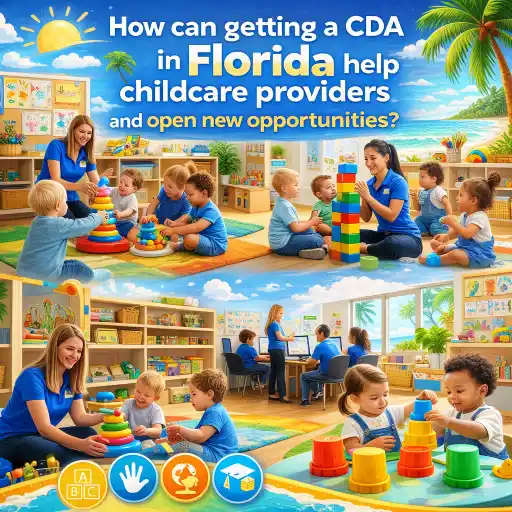
Getting a CDA can help in many simple ways. It shows you know how to help young children learn and stay safe. In Florida the CDA is often accepted as the Florida Child Care Professional Credential (FCCPC) or helps when a center needs qualified staff. For more detail see CDA Courses in Florida and our guide CDA Certification in Florida: Your Step-by-Step Guide.
Benefits (numbered so you can scan):
- 📈 Better job chances: Many centers prefer or require a CDA for lead roles.
- 💰 Potential pay increase: Certified staff often earn more or move up faster.
- 🤝 More trust from families and employers: A CDA is a known, respected credential.
- 🎓 Path to more education: Some community colleges accept CDA training for credits (see programs like Broward College).
- 🏆 Supports center quality goals: A CDA helps centers meet staff qualification rules and quality programs.
Remember: state requirements vary - check your state licensing agency. The CDA is national, but local rules in Florida may affect which courses or credentials count. For a state-to-state comparison of how a CDA can benefit providers and how implementation varies, see The Advantages of Child Care Providers in Alabama Earning their CDA Credential.
What steps do I need to earn my CDA in Florida?
- 📘 Meet basic education: You need a high school diploma or GED (or be in a high school ECE program).
- 🕒 Complete 120 hours of training: You must finish 120 hours of CDA-focused coursework. ChildCareEd offers self-paced 120-hour trainings (CDA training).
- 👶 Gain 480 hours of experience: Work with children in your chosen age group (within 3 years of application).
- 🗂️ Build a portfolio: Collect lesson plans, family questionnaires, and reflective statements. Use the CDA Portfolio Handbook Buy Now $0.00.
- 🧾 Apply and schedule testing: Apply through the Council for Professional Recognition. After approval you schedule the exam at Pearson VUE (Pearson VUE CDA exam).
- 🔍 Verification visit: A PD Specialist will observe you and review your portfolio. Read tips about the observation visit at The CDA Observation Visit.
Tips to stay on track:
- ✅ Track hours weekly.
- ✅ Keep digital copies of certificates.
- ✅ Start your portfolio early using the templates at CDA resources.
Note: state requirements vary - check your state licensing agency.
How can ChildCareEd courses make the CDA journey easier?
ChildCareEd offers many resources that fit busy schedules. Their courses are self-paced, clear, and built to match CDA rules. See the main CDA page Child Development Associate Credential and the Florida course list CDA Courses in Florida. If you're a childcare provider in Germantown, check our CDA training for Germantown providers for schedules and local support tailored to your area.
Ways ChildCareEd helps (enumerated):
- 🖥️ Flexible online classes: Learn at home, at night, or on weekends. The 120-hour trainings match CDA requirements.
- 📂 Portfolio templates and handbooks: Use the Creating the CDA Portfolio Handbook Buy Now $0.00 and sample portfolios.
- 🧭 Step-by-step checklists: Follow guides like A Complete Resource Guide and the Birth to Five CDA resources.
- 📘 Free intro course: Try the free CDA Introduction to see the flow before you buy full training (CDA Introduction).
- 👩🏫 Community support: Access tips, sample exam questions, and advice about the observation visit (The CDA Observation Visit). You can also join ChildCareEd's CDA Club for peer support, connections with PD specialists, and ongoing resources tailored to help you complete the CDA process.
Extra help you can use:
- 📝 Exam practice and sample questions from ChildCareEd resources.
- 📋 Checklists that help you organize required documents and hours.
- 💬 Guidance on finding and working with a PD Specialist in the Birth to Five resources.
What opportunities open after a CDA and how do I avoid common mistakes?
After earning your CDA you may see new jobs and pathways. Here are common opportunities and how to avoid pitfalls.
Opportunities (numbered):
- 🏫 Lead teacher or classroom lead roles in centers and preschools.
- 📋 Supervisor or assistant director roles over time, especially if you add more training.
- 🎓 College credit or stepping stone to an associate degree (see college programs).
- 💼 More employers and programs (Head Start, VPK) prefer or require CDA-trained staff.
- 🌟 Professional pride and family trust that you provide quality care.
Common mistakes and how to avoid them:
- 😬 Waiting to start the portfolio late — Start early and use templates like the CDA Portfolio Handbook Buy Now $0.00.
- 📉 Not tracking hours — Log hours weekly and keep a simple spreadsheet or use the ChildCareEd checklists.
- ⚠️ Missing required subject hours — Make sure your 120 training hours cover all eight CDA subject areas (ChildCareEd courses map to these areas).
- 🙋♀️ Picking a PD Specialist too late — Find one early and ask for feedback before your verification visit (How to Find and Work with a PD Specialist).
- 🔁 Forgetting renewal — CDAs expire; plan continuing education and renewal steps ahead of time using renewal courses on ChildCareEd.
FAQ (quick answers):
- Q: How long does it take? A: Often 3–6 months, depending on your schedule. See Your CDA Journey: Timeline.
- Q: Where do I take the exam? A: Pearson VUE testing centers (Pearson VUE).
- Q: Is it required in Florida? A: Many programs require the FCCPC or CDA for certain roles. Check local rules and see CDA Courses in Florida.
Final encouragement: Earning a CDA is a big step, but ChildCareEd has clear courses, templates, and supports that make the process doable. Start with a free intro, plan your hours, and use the portfolio templates. Your children, families, and team will notice the difference.
Conclusion
1) A CDA helps your #career and builds trust. 2) ChildCareEd provides training, portfolio help, and resources to make the steps clear (see CDA training). 3) Plan, track, and ask for help — and remember state requirements vary - check your state licensing agency. Take one small step today: try the free CDA introduction at ChildCareEd CDA.
1) Children do better when teachers learn more. Getting a CDA helps you use stronger teaching ideas in your classroom. 2) Programs and families trust staff with a CDA because it shows real training and practice. 3) Centers often ask for a CDA when hiring or when trying to reach quality ratings in Florida. See why Florida values the CDA in Why Florida Loves CDA.Here are the main steps you will take. Each step is simple when you break it into parts. ChildCareEd has many courses and checklists to help at every step like What is a CDA? and the Florida step-by-step guide.- Easy Steps to Resume and Interview Success
- CDA Family Child Care Credential
- Open Ears: Listening in Child Care
- Unlocking Support for Florida Childcare
- Birth to Five CDA Credential with Portfolio Review
- CDA Bridge Bundle: Family Child Care without Portfolio Review
- CDA Bridge Bundle: Infant/Toddler without Portfolio Review
- CDA Bridge Bundle: Preschool without Portfolio Review
- Creating Environments that Nurture Growth and Community
- Texas Director Credential
- Services at ChildCareEd
- ChildCareEd Bringing High-Quality Training to Providers Across the Globe
- CDA Certification en Español: Recursos y Consejos para Educadores Bilingües
- Fast-Track Your Childcare Career with a CDA Certification and its Benefits
- Why Florida Loves CDA: The Value of Certification in a Growing Field
- Cómo Abrir Una Quardería En Casa Sin Dinero?
- ¿Cómo empiezo mi certificación CDA en Florida en línea?
- CDA Certification Florida Online: Steps, Costs, and FAQs
- Lista para Abrir una Guardería en Casa en Dakota del Norte: Cómo Empezar
- Cómo Trabajar en el Cuidado Infantil en Carolina del Norte: Requisitos y Pasos
- Capacitación Previa al Servicio para Proveedores de Cuidado Infantil en Dakota del Norte
- How can earning a CDA in New York help child care providers and open new opportunities?
- How can getting a CDA in Florida help childcare providers and open new opportunities?
- How can getting a CDA in DC help child care providers and open new opportunities?
- How can grants and vouchers in Florida help child care providers?
- How do I earn a CDA Credential as an Early Childhood Educator?
- Can the CDA help Florida child care providers—and is it on sale now?
