A classroom can be welcoming and still feel overwhelming when noise, light, clutter, or unpredictable transitions exceed a child’s capacity to participate. Thoughtful, low-cost design choices can improve comfort, engagement, and inclusion; for a structured starting point, explore Classroom Setup for Child Care  Buy Now $24.00 to strengthen your understanding of intentional layouts and earn applicable professional training. Continue reading for practical ways to observe needs, adjust the environment, and build a plan your whole team can use.
Why does a sensory-friendly classroom matter?
Young children receive information through sight, hearing, touch, taste, smell, movement, body awareness, and internal body signals. These systems do not process information identically. A song that energizes one child may distress another; a crowded transition may be exciting for one child and disorganizing for another. When sensory input becomes overwhelming, children may withdraw, run, cry, become unusually active, or have difficulty communicating and learning.
A sensory-friendly environment is therefore an inclusion strategy, not a specialized arrangement reserved for children with a diagnosis. Predictable routines, flexible seating, movement opportunities, accessible materials, and quiet choices can support #children with autism, ADHD, developmental differences, anxiety, language differences, or temporary stress. They also benefit children who simply need a different pathway into an activity.
The goal is not to remove all sensory experiences. Rich early learning depends on exploration. Instead, providers balance stimulation, offer choices, introduce materials gradually, and preserve children’s dignity. When adults interpret behavior as communication and adjust the context, children have more opportunities to succeed rather than being defined by a challenging moment.
For additional professional learning, Effective Approaches for Autism and Inclusion Buy Now $55.00 connects sensory sensitivities with communication, adaptations, family partnership, and inclusive practice.
How can providers observe sensory needs without labeling children?
Begin with curiosity rather than conclusions. Sensory-related behavior may also reflect fatigue, hunger, pain, communication frustration, developmental variation, or changes at home. One reaction does not establish a diagnosis. Careful observation helps the team identify patterns and select low-risk supports.
- Record the date, time, routine, location, people present, and environmental conditions.
- Describe observable actions: “covered ears and moved beneath the table” is more useful than “was disruptive.”
- Note possible triggers, including sudden noise, messy textures, crowded spaces, bright light, strong odors, or transitions.
- Document the adult response and the child’s outcome.
- Record strengths, preferences, successful supports, and situations in which participation increases.
A two-week observation period may reveal whether a pattern occurs during meals, group activities, outdoor play, or transitions. Share observations respectfully with families and ask what they notice at home. If concerns persist across settings, significantly interfere with learning or safety, or involve regression, discuss referrals with the family. State requirements vary - check your state licensing agency.
Which physical changes make the greatest difference?
Start with the classroom’s basic sensory load. Reduce visual clutter by rotating materials, organizing shelves, and keeping pathways clear. Use bins labeled with pictures and words so children can locate and return materials independently. Clearly defined centers help children anticipate what will happen in each area.
- 💡 Lighting: Use natural or adjustable light when possible, reduce glare, and avoid unnecessary flicker.
- Sound: Separate loud and quiet centers; add rugs, curtains, cushions, or other soft furnishings to absorb sound.
- Layout: Maintain clear routes, stable furniture, child-height access, and visible adult sightlines.
- Comfort: Offer safe seating choices, such as chairs, floor mats, cushions, or standing options.
- Calm area: Provide a small, supervised space with reduced visual and auditory stimulation—not a punishment area.
A calm area might include soft seating, a feelings chart, books, breathing visuals, a sensory bottle, or noise-reduction headphones according to program policy and individual need. Avoid filling it with too many tools. A small, organized kit is easier for children and adults to use intentionally.
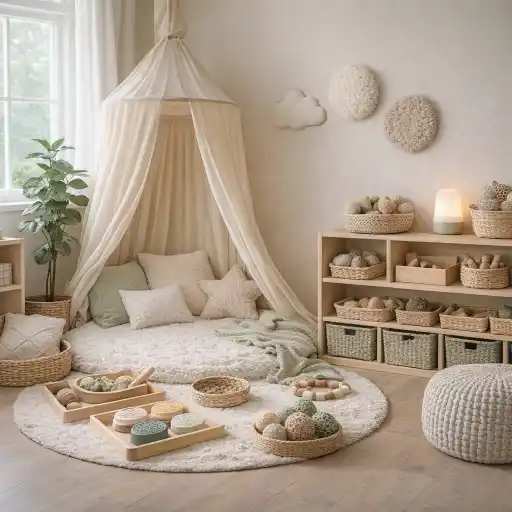 Design should also reflect cultural and developmental relevance. Select materials that represent children and families, ensure pathways accommodate mobility needs, and consider whether strong cleaning products, food smells, or electronic toys add unnecessary stimulation.
How do routines and teaching practices support regulation?
The most effective support is often a predictable day. Post a picture schedule at children’s eye level and refer to it before transitions. Give advance warnings with a timer, song, gesture, or “first/then” language. When plans change, show the change visually and explain it with concise, concrete words.
Plan a rhythm that alternates active and quieter experiences. Movement may prepare some children for focused work, while others need a calm pause before joining a group. Offer brief, predictable sensory breaks before dysregulation rather than waiting until a child is overwhelmed.
- Offer choices: “Do you want the rug or the chair?”
- Give directions in small steps and model what to do.
- Provide multiple ways to participate: speaking, pointing, building, drawing, moving, or using pictures.
- Teach tools during calm moments and practice entry and exit routines.
- Use descriptive encouragement: “You used your headphones and came back when your body felt ready.”
Possible breaks include animal walks, carrying books, stretching, wall pushes, dancing, breathing, or looking at a book. Keep them brief—often 30 seconds to five minutes—and observe whether the activity helps the child return to participation. These practices support #regulation without requiring children to suppress communication or movement. They also clarify expectations for dual language learners and children who benefit from visual information.
How can programs balance individualization, safety, and inclusion?
Individualization should increase participation with peers, not isolate a child from the community. Normalize supports by making many options available to any child who can use them safely. A visual schedule, flexible seat, quiet choice, or movement break can be part of universal design rather than a visible sign that one child is different.
Safety remains essential. Inspect materials regularly, follow age-appropriate supervision practices, check choking hazards and allergies, and obtain family or program approval before using food-based fillers or specialized equipment. Weighted items, headphones, climbing materials, and other tools should be used only when appropriate for the child and setting. Maintain adult sightlines, and never use a sensory space as confinement.
Directors can support consistency with a brief team plan:
- Identify one or two participation goals.
- Select a small number of environmental supports.
- Define how staff will introduce, supervise, and document them.
- Review observations weekly and adjust based on the child’s response.
- Invite family and specialist input when relevant.
Common mistakes include introducing tools only during a crisis, offering too many choices, assuming one support works all day, or treating sensory behavior as defiance. A strengths-based question is: “What is this child communicating, and what change might make participation easier?”
How can families and specialists become partners in the plan?
Families bring essential knowledge about a child’s preferences, communication, routines, culture, and successful coping strategies. Begin with strengths: describe what the child enjoys, when participation is strongest, and what helps the child recover. Then share objective observations and invite the family’s interpretation rather than presenting a conclusion.
With family permission, collaborate with early intervention professionals, occupational therapists, speech-language pathologists, or other specialists. Classroom staff should not diagnose sensory processing conditions or prescribe therapeutic programs. Instead, they can implement practical, agreed-upon accommodations within daily routines and report what they observe.
- Use shared language for supports, such as “quiet choice,” “movement break,” or “visual steps.”
- Send brief updates describing what helped and what the child communicated.
- Align classroom and home visuals when feasible.
- Track one measurable outcome, such as transition duration or opportunities to join peer play.
- Review the plan when interests, developmental needs, or classroom context changes.
Additional ChildCareEd learning options include Coaching for Success: Inclusive Strategies to Support Children with Autism Buy Now $55.00$45.00, which emphasizes individualized scaffolding, routines, family collaboration, and classroom coaching; Play with Purpose: Supporting Children with Autism Buy Now $55.00$40.00, which connects play, choice, communication, and sensory regulation; and CDA: Curriculum Alignment & Materials Buy Now $16.00, which supports thoughtful selection of equipment and materials for diverse learners.
What should a sensory-friendly classroom checklist include?
- Are active and quiet areas clearly separated?
- Can children predict the daily sequence and upcoming transitions?
- Are lighting, sound, odors, and visual displays intentionally managed?
- Can every child access materials, seating, and participation choices?
- Is the calm area voluntary, supervised, and free from punishment associations?
- Are sensory tools introduced during calm moments and used according to safety guidance?
- Does documentation focus on observable behavior, strengths, triggers, supports, and outcomes?
- Are families invited to contribute knowledge and review progress?
Choose one change first—for example, dim one bank of lights, add a visual schedule, or separate blocks from the book area. Observe for one to two weeks, discuss the results with staff and families, and then decide what to retain or revise. This gradual approach is more sustainable than an expensive redesign that has not been evaluated.
Conclusion: How can thoughtful design help every child participate?
Creating a sensory-friendly classroom means designing for comfort, predictability, choice, and belonging. The strongest approach combines environmental adjustments—such as softer lighting, sound absorption, clear pathways, and manageable materials—with taught routines, movement opportunities, respectful observation, and consistent team responses.
Start small, measure what changes, and remain open to individual preferences. A calm corner may help one child while another prefers movement; headphones may support participation for one child but feel uncomfortable for another. When providers partner with families and specialists, prioritize safety, and view behavior as communication, the classroom becomes more accessible without becoming less joyful. These intentional choices help children feel safer, develop #independence, and engage more fully in play and learning.
- Teacher-Child Interactions for Stronger CLASS® Outcomes
- Building Equity: Inclusionary Practices in Preschool
- Bienvenido! Welcoming All Families
- Engaging Parents in the Montessori Toddler Classroom
- Inclusive Lessons for Preschoolers
- Effective Approaches for Autism and Inclusion
- Texas Director Credential
- Environments That Inspire Independence and Exploration
- Every Moment Matters: Schedules and Transitions
- The Prepared Environment: Montessori Class Design
- Nature’s Classroom: Why Fall Is the Best Season for Sensory Learning Outdoors
- Proporciones de Cuidado Infantil y Tamaños de Grupo por Edad en Maryland (Guía Rápida para Centros y Hogares)
- Proporciones de Cuidado Infantil y Tamaños de Grupo por Edad en Virginia (Guía Rápida para Centros y Hogares)
- How to Help Children Feel Safe and Welcome in Child Care
- How Can Texas Early Childhood Educators Build Strong Communication with Children with Special Needs?
- How can childcare programs make inclusion work for every child?
- How Do Art Activities Support Cognitive Growth in North Dakota Preschoolers?
- Canciones, juegos y preguntas de círculo para niños
- How Can Family Child Care Homes in Michigan Join the PreK for All Home-Based Pilot?
- How can Michigan providers support children with special needs over the summer?
- How can I create engaging learning centers for preschoolers?
- How Can Thoughtful Design Create Calm Classrooms?
- How can you design childcare spaces for flexible learning?
- No Playground Today! Rainy Day Activities for Kids All Ages.
- How Can Child Care Providers Create Sensory-Friendly Learning Spaces for All Children?
- How Can Providers Create a Calm-Down Corner That Actually Works?
- How Can Child Care Programs Make Nature-Based Learning Meaningful, Inclusive, and Safe?
- How Can Child Care Providers Create Effective Learning Centers in Small Spaces?
- What Does a Neurodiversity-Affirming Classroom Look Like?
- How Can Halloween Fine-Motor Activities Be Fun Without Being Scary?
