Young children are natural explorers. This article gives simple, low-prep ideas and steps you can use in your #preschool program to bring #STEM learning into everyday play. You will find quick activity ideas, ways to set up a safe area, how to guide children without taking over, and how to avoid common mistakes. These tips are for providers and directors who want real, practical next steps. State requirements vary - check your state licensing agency.
What simple STEM activities can I try tomorrow?
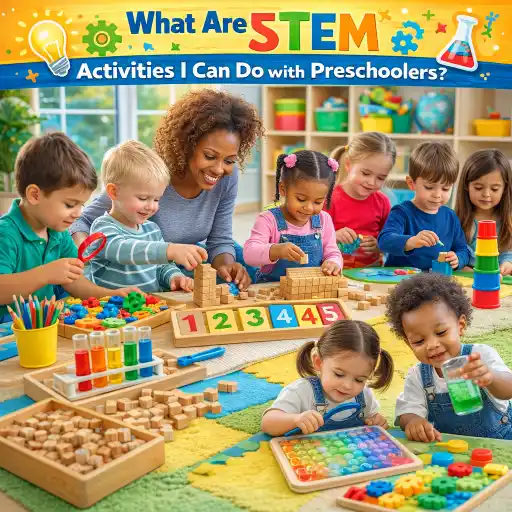
Start small. Try numbered invitations that fit into your daily routine. Below are 8 easy activities you can do with items you already have. For more activity ideas and step-by-step examples, see Spark Young Minds: Playful Scientists and the Fun Preschool STEM Activities for Hands-On Learning.
- 🔬 Color-mixing water: clear cups, water, food coloring, droppers. Ask: “What new color will we make?” (See the Water Drop STEM Activity Buy Now $0.00 for a printable idea.)
- 🌊 Sink or float: a bin of water and 6–10 safe objects. Have children predict, test, and sort.
- 🧱 Build bridges and towers: use blocks, cardboard, or recycled boxes. Challenge children to hold a toy car.
- 🌱 Seed planting: clear cups with paper towel and seeds. Observe roots and shoots over days.
- 🚗 Ramp races: cardboard ramps and toy cars. Change ramp height and compare results.
- 🧊 Frozen treasure: freeze small toys in colored ice. Let children free them with warm water and droppers (adult-guided).
- 🪄 Shadow play: flashlight and toys in a dim space to explore light and shapes.
- 🧲 Magnetic exploration: magnets and mixed objects to test what sticks.
Why these work: each activity invites children to ask questions, make a guess, test an idea, and talk about results — simple steps of scientific thinking. For more ready-to-use invitations and teacher prompts, check ChildCareED’s activity pages above.
How do I set up a safe, low-prep STEM area?
- 🧺 Choose a small, visible area: a table with trays or a low shelf works well. Keep materials limited to 3–6 choices so children are not overwhelmed.
- 🧰 Prep materials in bins: label each bin and include a simple photo for non-readers. Example bins: water play, loose parts for building, seed planting, magnet play.
- 🛡️ Set clear rules: material stay on the tray, no tasting, wash hands after experiments. Post a short visual list near the station. State requirements vary - check your state licensing agency.
- 📋 Add documentation tools: clipboards, crayons, a camera, or a simple chart to record predictions and results. For ideas on documentation and low-prep invites, see Fun Preschool STEM Activities.
- 🔁 Rotate materials weekly: new loose parts or a fresh science prompt keeps curiosity alive and gives staff time to plan extensions.
Safety tips:
- Remove choking hazards for children under 3 and check materials each day.
- Use trays and smocks for messy work to simplify cleanup.
- Always supervise water play and small part activities closely.
These easy steps give you a stable, inviting place for #play and #science every day.
How can I guide children during STEM without taking over?
- 👂 Observe first: watch what the child tries for 30–60 seconds before stepping in. This gives you a clear idea of their thinking.
- ❓Ask open questions: “What do you notice?” “What do you think will happen?” “How could we test that?”
- ✏️ Encourage recording: invite a child to draw, put a sticker, or help you take a photo to show what they predicted and what happened.
- 🔁 Prompt one change at a time: suggest changing only height, material, or amount so children can compare results.
- 📣 Use language that names thinking: “You tried a new ramp. You tested and watched the car go faster — great experiment!”
Tips for busy rooms:
- Share facilitator roles: one adult supports the STEM table while another documents or reads the group.
- Use short, simple prompts and wait—children need time to answer.
- Invite families to try short extensions at home and share photos; this strengthens learning and family partnerships.
These moves help children build confidence and problem-solving skills while you keep the experience child-led and joyful. Consider professional learning to deepen skills — see courses like Enhancing STEM Education for Infants and Toddlers  Buy Now $16.00 and other ChildCareED trainings.
What common mistakes should I avoid and what questions do providers often ask?
Knowing common pitfalls helps you design better invitations. Below are mistakes and simple fixes, followed by a short FAQ for quick guidance.
Common mistakes (and how to avoid them):
- ❗ Too much adult instruction — Fix: ask a question and give children time to try before explaining.
- 🧩 Overcomplicated materials — Fix: use 3–5 items; fewer helps deep focus.
- 🔇 Skipping documentation — Fix: take one photo or jot one sentence; it makes learning visible.
- 🧼 Avoiding any mess — Fix: plan for cleanup (trays, smocks) instead of skipping hands-on fun.
- ⏱️ Rushing transitions — Fix: schedule short blocks (10–20 minutes) and leave time for cleanup and discussion.
FAQ (quick answers for busy providers):
- Q: How long should an activity run? A: 10–20 minutes for focused invitations; longer for plant growth or multi-day projects.
- Q: Do I need special kits? A: No. Everyday items work well—see ChildCareED activity pages for low-prep ideas.
- Q: What if a child loses interest? A: Offer a choice, reduce materials, or invite a friend to re-engage them.
- Q: How do I include dual-language learners? A: Use gestures, label materials, and accept answers in any language the child uses.
- Q: How do we know children are learning? A: Look for curiosity, new vocabulary, new questions, repeated trials, and ability to explain results.
Why it matters: Early #science and #math experiences build thinking skills that last. Hands-on STEM in preschool helps children learn to ask questions, test ideas, and solve problems. These are skills for school and life.
Conclusion
Start with one small station next week: pick one activity, gather materials in a tray, ask one open question, and take one photo. Repeat and tweak. Use documentation to celebrate thinking and share with families. For more activities and printable resources, visit ChildCareED’s activity pages like 10 STEM Ideas for Preschoolers. You are helping children become curious, confident thinkers—well done!
A calm, organized space helps children focus and helps staff manage materials. Use the numbered plan below to create a rotating STEM station in your classroom or outdoor area. For ideas on using outdoor environments and long-term studies to extend investigations, see Science is All Around You. Our best role is to be a curious partner — not the answer-giver. Use these numbered teacher moves to support thinking while children lead the work. For more on teacher prompts and moves, review resources at ChildCareED like STEM in the Kitchen.- CDA Home Visitor Subject Area 3 Part 3 Birth to 5
- CDA Preschool Credential with Portfolio Review
- CDA Bridge Bundle: Preschool
- Pediatric RSV First Aid & CPR/AED
- CDA Bridge Bundle: Family Child Care without Portfolio Review
- CDA Bridge Bundle: Infant/Toddler without Portfolio Review
- CDA Bridge Bundle: Preschool without Portfolio Review
- Texas Director Credential
- Wellness in Action: Teaching Healthy Habits to Children
- 🎉STEM-sational Fun: How Can You Spark Preschoolers’ Curiosity with Engaging STEM Activities? 🔬🧪🔢
- Easy Ways to Add STEM to Your Preschool Classroom
- How can I use STEM activities in my Preschool and Pre-K classroom?
- How Do Art Activities Support Cognitive Growth in North Dakota Preschoolers?
- Autumn Activities for Toddlers and Preschoolers
- What are easy STEM activities I can do with preschoolers?
- Pumpkin, Leaves, and Apples: Fall Activities for Preschoolers
- Calabazas, hojas y manzanas: actividades de otoño para preescolares
- How can child care providers use simple STEM activities with early learners?
- How can we help children reach new heights—from the Space Needle to the preschool classroom?
- What Can the Golden Gate Bridge Teach Preschoolers About Connection?
- What toddler development activities can I use in my child care room?
- How can New York providers bridge the summer gap with year-round learning?
- How can leaf-themed art and science activities deepen learning in my child care program?
- How can we encourage scientific thinking through hands-on exploration?
- How can blocks, water play, cooking, and outdoor exploration introduce STEM to young children?
- STEM for Preschoolers: Fun Activities That Encourage Curiosity
- Can You Build a Leaf Bridge? Fall STEM Challenges for Pre-K
- How Can STEM Activities Turn Everyday Preschool Play Into Powerful Learning?
