Inclusive practice becomes manageable when providers translate big values into small, repeatable choices. Start with Building Equity: Inclusionary Practices in Preschool  Buy Now $10.00 to strengthen classroom strategies and apply them with greater confidence; then use the ideas below as a practical implementation guide. You may also benefit from Inclusive Lessons for Preschoolers Buy Now $16.00, which focuses on adapting activities so more children can participate meaningfully.
Why do small inclusive changes matter?
Inclusion is not simply placing children with different abilities, languages, cultures, or family experiences in the same room. It means intentionally removing barriers to access, participation, and belonging. NAEYC describes individuality as a core consideration in developmentally appropriate practice: educators respond to each child’s strengths, interests, experiences, and needs while considering family and cultural context.
Small environmental and instructional changes can benefit the entire group. A picture schedule may support a child with a developmental delay, a dual language learner, and a child who feels anxious about transitions. Flexible seating may help a child with sensory differences while also giving every child a more comfortable way to engage. Research and professional guidance emphasize that inclusive implementation requires planning, intentionality, and collaboration.
Use this list as a starting point—not a rigid checklist. Observe what helps, invite family knowledge, and adjust with humility. State requirements vary - check your state licensing agency.
How can visual routines help children participate more independently?
1. Post a visual daily schedule. Place photographs, drawings, or simple symbols at children’s eye level for arrival, meals, play, outdoor time, and rest. Refer to it before transitions and allow children to move or remove a marker as activities finish.
2. Add transition warnings. Give a consistent two-minute warning, show the next activity, and use the same song, timer, or phrase each day. Predictability reduces the cognitive load of figuring out what will happen next.
3. Teach routines explicitly. Demonstrate handwashing, cleanup, lining up, or choosing a center in short sequences. Practice when children are calm rather than waiting for a difficult moment.
- 🟢 Use one to three steps at a time.
- Keep visuals simple and consistent.
- Pair spoken directions with gestures or objects.
- Celebrate attempts, not just finished performance.
These supports promote independence rather than dependence on adult reminders. They are especially helpful for children who are learning English, processing language differently, or experiencing anxiety. Watch whether children begin checking the schedule, anticipating transitions, or completing more routine steps without prompting. Those observations can guide your next adaptation.
How can room arrangement remove barriers to play?
4. Open pathways and clarify centers. Arrange shelves, tables, and rugs so children can move safely and reach materials. Consider mobility devices, children who need extra personal space, and the traffic created during arrival or cleanup. Label centers with words and pictures, and keep frequently used materials on accessible shelves.
5. Separate active and quiet areas. Place blocks, dramatic play, and music away from books, puzzles, or rest spaces when possible. A calm corner should be a supportive option—not a punishment or place of exclusion. Include soft seating, reduced visual stimulation, and a small number of calming tools.
6. Offer flexible seating. Provide chairs with back support, floor cushions, standing options, carpet squares, or a defined space near the group. Children can remain connected to the activity while meeting movement, attention, or sensory needs.
A thoughtful room communicates belonging before an adult gives an instruction. Conduct a weekly walk-through from a child’s perspective:
- Can every child reach, see, and use the materials?
- Are pathways clear and easy to understand?
- Can children find a quieter place without leaving the community?
- Do books, dolls, images, and labels reflect the children and families served?
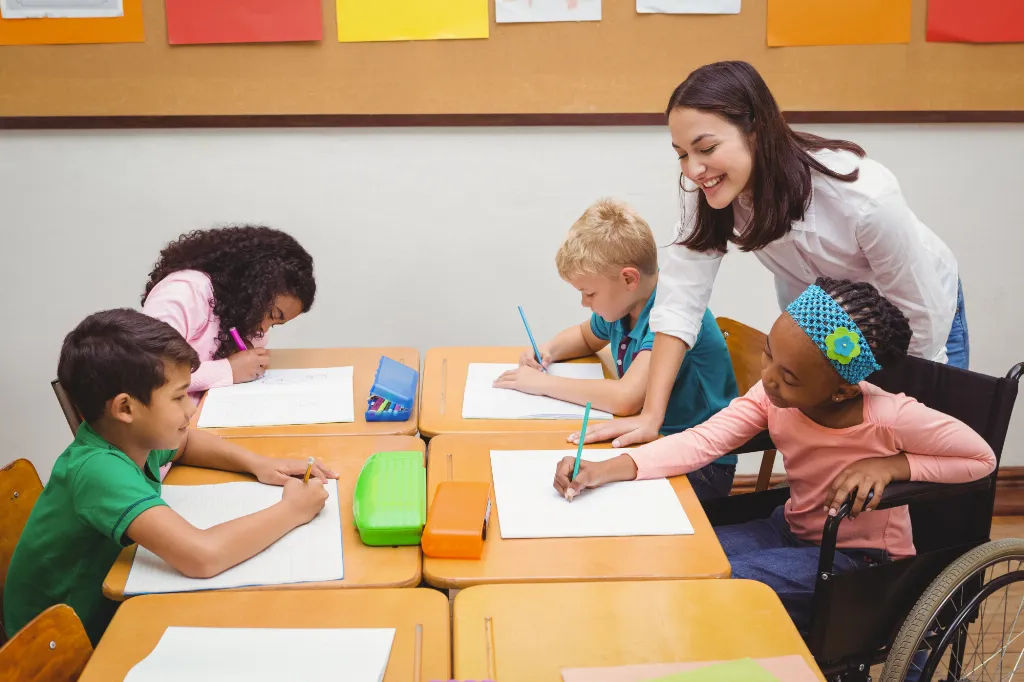
How can simple adaptations make the same activity accessible?
7. Provide multiple tools and response options. During drawing, offer thick crayons, pencil grips, chalk, paintbrushes, or tactile materials. During stories, allow children to listen, point to pictures, use puppets, act out a scene, or communicate with a picture board. The goal is not to create a separate activity but to offer different ways into the shared experience.
8. Break tasks into manageable steps. Use a small picture checklist for building a structure, completing a collage, or washing hands. Offer the least intrusive prompt first: wait, then provide a verbal cue, gesture, model, or physical assistance only if necessary. This approach preserves agency and gives children opportunities to practice.
Universal Design for Learning (UDL) provides a useful planning lens: vary how children engage, how information is presented, and how they demonstrate learning. Before an activity, ask:
- What might make participation difficult?
- Can I offer two ways to join?
- Can children show understanding by talking, moving, drawing, building, pointing, or choosing?
- Which supports can be available to everyone without singling out one child?
Document which adaptations increase engagement. Share successful strategies with colleagues and families so children experience continuity across settings.
How can providers honor language, culture, and identity?
9. Make representation authentic and ongoing. Include books, music, photographs, dramatic-play materials, and family structures that reflect the community. Avoid presenting culture only through occasional celebrations or stereotypes. Invite families to recommend songs, names, stories, foods, greetings, and meaningful objects.
10. Make communication multilingual and respectful. Learn to pronounce each child’s name correctly. Add pictures to labels, use gestures and real objects, and teach peers simple phrases such as “play,” “help,” and “my turn” in children’s home languages. Provide translated communication or interpretation when needed so families can participate as equal partners.
Culturally responsive practice also requires reflection. Consider whether expectations, behavior interpretations, classroom displays, and family communication reflect unexamined assumptions. Ask families what comfort strategies work at home and what goals matter most to them. Their knowledge can prevent misunderstandings and make adaptations more relevant.
Belonging is strengthened when children see their identities represented naturally throughout the year. It is also strengthened when educators communicate that differences are expected, valued, and worthy of curiosity rather than correction.
How can positive guidance and teamwork sustain inclusion?
When challenging behavior occurs, begin with curiosity. Behavior may communicate “this is too hard,” “I do not know what comes next,” “I need a break,” or “I need help.” Observe what happens before and after the behavior, then teach a replacement skill such as pointing to a help card, requesting a break, or waiting with a visual cue.
Use brief, consistent responses across staff. Praise specific participation: “You showed me the help picture,” or “You waited while your friend finished.” Avoid removing children from learning as the primary response when the environment or task can be adjusted.
Collaboration makes inclusion more sustainable:
- Share one strength and one observation with families regularly.
- Review IFSP or IEP strategies with the appropriate team members.
- Invite specialists to model supports in everyday routines when possible.
- Record what was tried, what changed, and what to adjust next.
The CDC offers free milestone-monitoring resources that can support conversations with families, but developmental monitoring does not replace formal screening. Providers should share observations without diagnosing and connect families with appropriate local resources when concerns arise.
What common mistakes should programs avoid?
Even caring educators can unintentionally create barriers. Three common pitfalls deserve attention.
- Expecting the child to fit a rigid activity: Change the materials, timing, grouping, or response method before assuming the child is unwilling.
- Overloading the environment with supports: Too many visuals, choices, or sensory tools can become distracting. Introduce one or two supports and observe.
- Planning without family input: Ask what works at home, honor cultural and linguistic preferences, and explain classroom goals in accessible language.
- Confusing accommodation with lowered expectations: Adapt access while maintaining meaningful participation and high expectations for growth.
A practical improvement cycle is simple: identify a barrier, try one change, observe participation for one to two weeks, consult families or colleagues, and revise. Measure outcomes that matter, such as time engaged, number of peer interactions, independent routine steps, or successful transitions.
Summary: What should you change first?
What are 10 small changes that help more children join in? Use visual routines, predictable transitions, accessible room design, flexible seating, adapted tools, task breakdowns, authentic representation, multilingual communication, positive guidance, and collaborative reflection. Together, these choices transform inclusion from an abstract goal into daily practice.
Choose one to three changes this week. For example, add a picture schedule, open a pathway, and offer two ways to participate in circle time. Invite staff and families to notice what improves access and belonging. Then build from that success.
Additional professional learning can deepen implementation:
- Coaching for Success: Inclusive Strategies to Support Children with Autism Buy Now $55.00
- Diversity, Equity, and Inclusion in Education Buy Now $25.00
- Building Bridges for Dual Language Learners Buy Now $16.00
Inclusion does not require a perfect classroom. It requires a responsive one—where adults notice barriers, value strengths, and keep making room for every child to belong.
Frequently asked questions
Where should a program begin?
Start with one predictable routine, such as arrival or cleanup, and add a simple visual schedule.
Do adaptations need to be expensive?
No. Photos, recycled containers, thick crayons, gestures, floor cushions, and homemade choice cards can be effective.
How can I avoid singling out a child?
Offer supports as normal classroom choices whenever appropriate, while following individualized plans for specialized services.
What if a child’s behavior continues?
Observe patterns, identify possible barriers, teach a replacement communication or self-regulation skill, and seek team or specialist support.
How do I know whether a change worked?
Track a simple indicator, such as participation time, independent steps, peer exchanges, or smoother transitions, and review it with families and staff.
- Professional Presence in Early Childhood
- Diversity, Equity, and Inclusion in Education: For Workforce Solutions
- Building Equity: Inclusionary Practices in Preschool
- Family Connections: Creating Inclusive Relationships
- Equity in Action with Head Start
- Creating Environments that Nurture Growth and Community
- Diversity, Equity, and Inclusion in Education
- Every Moment Matters: Schedules and Transitions
- Supporting Families and Caregivers in Language and Literacy
- Rooted in History: Early Childhood
- Bright Futures: Why CDA Certification is the Career Glow-Up You Need in 2025
- CDA Certification en Español: Recursos y Consejos para Educadores Bilingües
- How can we make early education truly inclusive for children with diverse needs?
- What's the latest news for child care providers in Alabama?
- How can childcare programs use inclusive practices every day?
- How Can Child Care Providers Support Children With Special Needs?
- How can I support children with special needs in my child care program?
- How Can Oklahoma Early Educators Help Every Child Join In?
- How can DC classrooms welcome every child and make inclusion real?
- Starting an Inclusive Daycare for Children with Speech Delays
- What can the National Mall teach us about building a classroom where every child has a voice?
- What Did Washington’s Early Childhood Conference Teach About Building Inclusive Classrooms?
- How can Michigan PreK classrooms support inclusion and children with special needs?
- How can I make my early childhood classroom truly inclusive?
- How can child care programs create inclusive classrooms for children of all abilities?
- What Makes a Great Home Daycare? 10 Things Parents Notice First
- Inclusive Practices in Early Childhood Education: 10 Small Changes That Help More Children Join In
- How Can Child Care Providers Create Sensory-Friendly Learning Spaces for All Children?
- How Can Child Care Providers Make Fall Activities Inclusive for Every Child?
