Worksheets are a hot topic in early childhood. Some families ask for them. Some classrooms use them every day. But what is the real value of worksheets for young children? This article helps directors and child care providers think clearly about worksheets, play, and strong early learning. You will read: why it matters, when worksheets help, how to use them the right way, and how to avoid common mistakes.
Why this matters: Preschool years shape how children feel about learning. When we choose activities, we are teaching more than letters or numbers — we are teaching curiosity, confidence, and how to solve problems. Research and practice show that #play b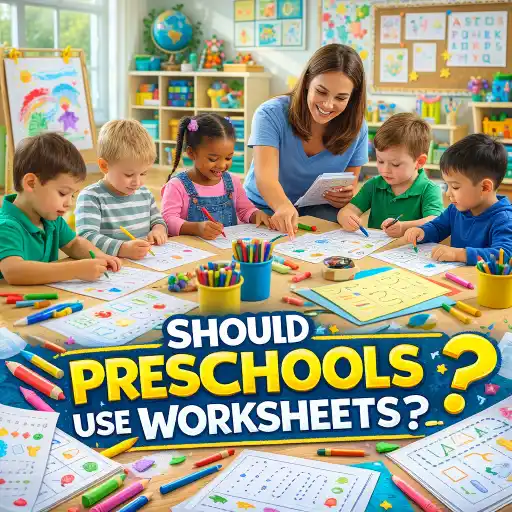
uilds many skills and that thoughtful, short practice can also help with #learning. For a clear review of play research, see What Does Research Really Say About the Power of Play?.
Five key words to remember in this article: #worksheets #play #learning #preschoolers #teachers
1) What do worksheets really teach in preschool?
2. Worksheets do not teach deep thinking by themselves. Long, repeated worksheets can make children passive. Experts encourage activities that spark questioning, hands-on exploration, and social play. Big learning in early math and science happens when children explore, experiment, and talk about what they notice — for more on math in play see Math in Early Childhood and research on guided play.
3. Worksheets can be part of play-based learning. When we pair a short worksheet with a hands-on center (like a block or sensory table), children use different ways to learn the same idea. That mix is powerful. The Project Approach and STEM in early years also show how guided exploration builds lasting understanding; see a summary on STEM in the early years at the University of Illinois STEM in the Early Years.
2) When are worksheets helpful and when do they hurt?
- Purpose: Does the worksheet support a real skill or idea? If yes, it can help.
- Time: Is it brief (5–10 minutes) and followed by play? Short is better.
- Choice: Do children have other hands-on options too? They should.
- Fit: Is it developmentally appropriate for this child’s age and ability?
Helpful examples:
- 😊 A 5-minute page to practice tracing a straight line before building a tower to measure height.
- 😊 A one-page counting activity that follows a group cooking project where kids counted spoons.
Harmful examples:
- ⚠️ Long stacks of worksheets used every day instead of free play.
- ⚠️ Worksheets given as the main way to learn new concepts instead of hands-on exploration.
Research shows that early academic drills can help some skills, but quality matters. Programs that mix strong instruction with play and rich environments give children lasting benefits; see a practical guide on the power of play at ChildCareEd and an article about balancing practice and play from Tennessee education leaders Play or Practice: Which Matters Most.
3) How can teachers use worksheets the right way in a preschool program?
- Plan with goals: Use lesson planning that links a short worksheet to a play experience. See Lesson Planning for Preschoolers
 Buy Now $24.00 for tools and sample plans. For targeted early math strategies and teacher training, see Making Math Count.
 - Keep it short: Limit worksheets to quick practice (5–10 minutes). Then move to centers or project work.
- Make it meaningful: Match sheets to real classroom projects — counting after a baking activity, or tracing after a painting session.
- Offer choices: Provide the worksheet as one of several ways to practice (drawing, building, acting out, or a short page).
- Document and reflect: Take notes and photos of children using both play and worksheets. Use documentation to plan next steps — see project ideas at Project Approach with Toddlers.
Small routines work: for example, a quick morning fine-motor page, then 45–60 minutes of free play and guided play centers. Training staff matters—check courses like the 45-Hour Preschool Curriculum Buy Now $399.00$275.00 to support your team.
4) How do we explain our worksheet choices to families and staff?
Clear communication builds trust. Use these steps when talking with families or new team members:
- Start with the why: Explain that play builds language, thinking, and social skills, and that short practice helps some skills too. Share the ChildCareEd play summary: What Does Research Really Say About the Power of Play?.
- Share examples: Show a photo of a child doing a hands-on counting activity, then the matching one-page worksheet that followed.
- Use a FAQ list (quick answers):
- 😀 Q: Do worksheets prepare kids for kindergarten? A: Short, developmentally appropriate practice can help, but play builds deeper skills.
- 😀 Q: How often do you use worksheets? A: Only as quick practice and paired with play and projects.
- Invite feedback: Ask families what skills children practice at home and suggest playful alternatives to worksheets, like sound games from Play or Practice.
State rules: state requirements vary - check your state licensing agency for rules about materials, documentation, and staff training.
Conclusion: What should a preschool director decide?
1. Balance is the key. Worksheets are tools — not the whole program.
2. Use worksheets for short, clear practice that supports a hands-on activity. Pair them with play, projects, and group conversations.
3. Train staff so worksheets are used thoughtfully. Use lesson planning courses like Lesson Planning for Preschoolers Buy Now $24.00 and curriculum courses to guide choices.
Common mistakes and how to avoid them:
- ❌ Mistake: Using worksheets as the main teaching method. Fix: Replace many worksheets with centers, guided play, and one short practice sheet.
- ❌ Mistake: Handing worksheets without clear purpose. Fix: Always tie the sheet to a play experience or a project question.
- ❌ Mistake: Not training staff. Fix: Offer short in-house workshops and share evidence from ChildCareEd on play and guided learning.
Final thought: When used carefully and briefly, worksheets can support learning. But they should never replace play, strong teacher interaction, and hands-on exploration. For more classroom resources and ready activity sheets, visit ChildCareEd's lesson and activity pages like Water Drop STEM Activity Buy Now $0.00 and many printable worksheets on their site.
1. Worksheets can teach small skills. Young children practice matching shapes, tracing lines, or counting stickers. These are simple, focused tasks that support early fine motor and attention skills when used briefly. For example, ChildCareEd has shape and pizza shape activity sheets that show simple ways to practice shapes and counting Shape Matching Activity Worksheet Buy Now $0.00 and Pizza Shape Activity Worksheet Buy Now $0.00.Use this short checklist to decide:Try these practical steps. Use numbering to make the plan clear:- 45 Hour Child Growth and Development
- CDA Home Visitor Subject Area 3 Part 3 Birth to 5
- 45 Hour Preschool Methods and Materials
- 24 Hour Texas Pre-Service
- CDA Bridge Bundle: Family Child Care without Portfolio Review
- CDA Bridge Bundle: Infant/Toddler without Portfolio Review
- CDA Bridge Bundle: Preschool without Portfolio Review
- Emergent Learning & Development
- Texas Director Credential
- Supporting Child Development Through Individualized learning.
- Child Care Professionals
- 😫🧸 ¿Qué hacer cuando un bebé no quiere dormir la siesta en el aula?
- 🚨 Reporte Obligatorio en Nevada
- Recursos en Español sobre el Sueño Seguro del Bebé
- ¿Cómo pueden los equipos de cuidado infantil practicar habilidades rápidas de primeros auxilios en situaciones reales?
- Lista para Guardería en Casa en California: Cómo Iniciar una Guardería en el Hogar
- Retraso del Habla en la Guardería: Cómo Pueden Ayudar los Proveedores
- How can child care programs build prewriting skills without worksheets?
- How can I bring a Forest Preschool (nature-based learning) to my program?
- What Is the Difference Between Early Childhood Education and Child Development?
- How Can Child Care Providers Build Strong Early Math Skills Every Day?
- How Much Structured Learning Do Preschoolers Really Need?
- How Can Child Care Providers Support Early Writing Without Using Worksheets?
- What Is Purposeful Play—and Why Is It Replacing Worksheets?
- What Is Purposeful Play—and Why Is It Replacing Worksheets?
- How Can Child Care Providers Teach Less-Frequent Letters Without Relying on Worksheets Alone?
