This short guide is for child care directors and providers who want clear steps for the new #Florida VPK rules in 2026. It covers the new accountability system, how the #FAST test fits into VPK, and practical ideas to show strong #assessment and #curriculum work in your classroom. Use the links below to read more from trusted sources. Remember: state requirements vary - check your state licensing agency.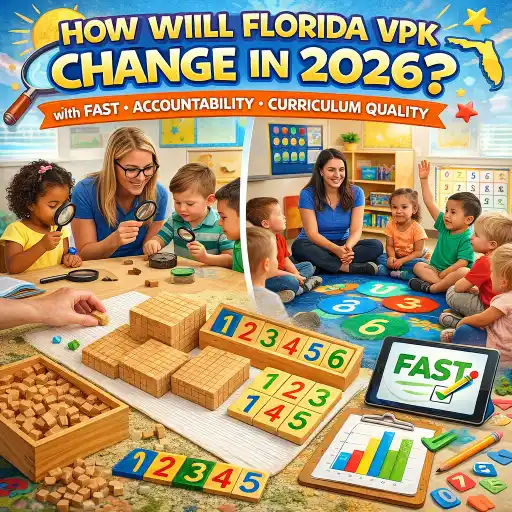
Why does the 2026 VPK update matter to my program?
1. The state now rates VPK programs using multiple pieces of information. Half of a program’s score focuses on teacher-child interactions and classroom instruction quality, and the rest looks at achievement and learning gains. For a clear summary, see a helpful overview for providers on ChildCareEd and reporting notes in local news updates like Islander News.
2. Why it matters:
- 📚 Children: Better early teaching supports reading and math growth before kindergarten.
- 🤝 Families: Parents want to see clear results and steady progress.
- 🏫 Programs: Good scores help programs win trust and keep VPK seats.
3. How the state shows results:
- Quality (teacher-child interactions) = big part of the score.
- Learning gains and achievement (literacy, math) = other parts.
- Reports will be shared with families and on public sites like the state report cards.
4. Quick takeaways:
- Start documenting classroom interactions and plans now.
- Use short, clear notes on child progress every month.
- Train staff so interactions are consistent and strong.
What is FAST and how should VPK teachers use it?
1. FAST (Florida’s Assessment of Student Thinking) is the progress-monitoring system that now includes early literacy checks for VPK. The state uses short tests during the year so teachers see progress in real time. For practical steps on using FAST with VPK, read the ChildCareEd FAST guide at ChildCareEd and official family info at FLFAST Families.
2. What teachers need to do:
- 🧑🏫 Get trained. Only trained staff should give FAST.
- 📅 Use the testing windows set by the state (three checks: early, mid, late).
- 🔋 Check devices, practice with children, and keep sessions short and calm.
3. How to use results:
- 🔍 Read the report and find the top 2 skills each child needs.
- 👥 Make small groups for targeted teaching (3–6 children).
- 📈 Track progress across the three FAST windows and celebrate gains.
4. Common FAST tips:
- ✅ Do a quick practice so children know the routine.
- ✅ Use FAST data plus classroom observation — don’t rely on the test alone.
- ✅ Send a short family note that explains one strength and one way families can help at home.
How can programs show strong curriculum quality and stand out?
1. Programs need clear ways to show learning. Use a curriculum that links daily play and activities to state early learning goals. ChildCareEd and other curriculum guides can help you align plans: see Building Quality and fun literacy moves at ChildCareEd literacy. You can also review the Language and Literacy Preschool Curriculum as a concrete example of an OWL-based preschool curriculum that links classroom play and daily activities to early literacy goals.
2. Practical steps to prove curriculum quality:
- 📋 Keep short lesson notes that link each activity to one or two learning goals.
- 📸 Use photos and child work samples in a one-page portfolio for each child.
- 🧾 Make a one-page class data chart that shows growth in key skills over time.
- 🧑🏫 Support staff with state-approved training (see ChildCareEd trainings).
3. Curriculum quality checks to keep handy:
- Is the plan tied to state standards? (Yes = better alignment.)
- Are interactions high quality during learning time? (Observe and note.)
- Do families get regular updates and simple ways to help at home?
How should directors prepare, avoid mistakes, and answer common questions?
1. Daily leadership moves:
- 📁 Keep one organized digital folder for staff training certificates and FAST records.
- 🕒 Hold weekly 10–15 minute coaching huddles to review observation notes.
- 🤝 Connect with your local Early Learning Coalition for coaching and funds.
2. Common mistakes and how to avoid them:
- ⚠️ Mistake: Waiting until review time to organize records. Fix: Keep records updated monthly.
- ⚠️ Mistake: Using FAST scores alone. Fix: Combine FAST data with teacher notes and child portfolios.
- ⚠️ Mistake: No family communication. Fix: Share simple updates and one tip families can use at home.
3. Quick FAQ:
- Q: Will the FAST data affect VPK ratings? A: Yes — FAST helps show learning gains that feed into ratings.
- Q: Can online trainings count? A: Many state-approved online courses do; check the Florida DCF registry and ChildCareEd courses.
- Q: What if our staff needs help? A: Use short coaching sessions and apply for local scholarships and coaching from Early Learning Coalitions.
4. Final steps to start today:
- 📌 Create one folder for training and FAST files.
- 📌 Start simple child progress notes tied to VPK goals.
- 📌 Schedule weekly teacher coaching huddles.
- 📌 Reach out to your local coalition and look at ChildCareEd resources for training and curriculum help.
For more on standing out under the new rules, see ChildCareEd’s guide and for FAST tips see ChildCareEd FASTs. Good luck—small steady changes will make a big difference for children and families.
- CDA Certification en Español: Recursos y Consejos para Educadores Bilingües
- Completé Mi CDA Y Ahora Qué Sigue?
- Cómo Abrir Una Quardería En Casa Sin Dinero?
- 45 horas para infantes y niños pequeños: cómo certificarse en línea
- ¿Cuáles son los pasos, requisitos y opciones en línea para la certificación de 90 horas en cuidado de Infantes/Toddlers en Maryland?
- ¿Cómo empiezo mi certificación CDA en Florida en línea?
- ¿Cómo afecta la dopamina a los niños: señales, efectos e influencias diarias?
- Actividades de Fiesta para Niños de Preescolar y Primaria
- Lista para Guardería en Casa en Illinois: Cómo Iniciar una Guardería en el Hogar
- Apoyo en Preescolar para Retrasos del Habla: Estrategias Simples que Ayudan
- Retraso del Habla en la Guardería: Cómo Pueden Ayudar los Proveedores
- Cómo Ser Maestra de Preescolar en Wisconsin
- Capacitación Previa al Servicio para Proveedores de Cuidado Infantil en Texas
- What new child care news in Florida should providers know and how can ChildCareEd help?
- How Can Florida VPK Providers Stand Out Under the New 2026 Accountability System?
- What new child care news in Florida should providers know and how can training help?
- How will Florida VPK change in 2026 with FAST, accountability, and curriculum quality?
- Celebrando la amistad en el cuidado infantil durante el Día de los Mejores Amigos
- How can Florida providers connect early learning, health, and family support in 2026?
- VPK Victory: Why Does Florida’s Push for Stronger Pre-K Funding Matter to Providers and Families?
