Moving furniture can turn an ordinary classroom into an inviting space for active play, but even a small change can create a trip hazard, blind spot, or unstable setup. Use the 5-Minute Classroom Reset Checklist Buy Now $0.49 as a starting point for reviewing the room, then check furniture stability, clear pathways, and supervision sightlines before children begin moving. For practical strategies on planning engaging movement experiences with your classroom’s materials and space, explore ChildCareEd’s Balancing Active Play in Child Care  Buy Now $16.00. Read on for a consistent approach to checking the new arrangement and preparing for active play.
Why does a furniture move call for a fresh safety check?
Classroom layouts are part of the safety system. When furniture shifts, the paths children use, the places adults can see, and the way equipment is approached all change. A shelf moved to create an open dance area might block a doorway, conceal a child from view, or sit too close to a climbing structure. A rug that was secure in one location may curl or slide on a different floor surface.
This matters because young children move quickly and may not notice new obstacles while they are excited about a game. They may also use furniture in unexpected ways—pulling up on a shelf, climbing a chair, or cutting across a pathway. Thoughtful movement planning does not mean eliminating active play. It means arranging the environment so children can explore with room to move and adults can supervise effectively.
Use the change as a prompt to review the entire activity area, not just the furniture that was moved. Safety checklists from the Virtual Lab School call attention to unstable furniture, sharp or damaged surfaces, obstructed supervision, collision-prone layouts, and nearby hazards. A fresh scan helps your team notice risks that were not present yesterday and make corrections before children begin.
- Check the whole route children will use, including entry and exit points.
- Look for hazards at child height as well as from the adult supervision position.
- Keep active play engaging while making the space accessible and predictable.
What should you inspect immediately after moving furniture?
Start with a slow walk around the new arrangement before children enter the area. Check that each piece is stable, appropriate for the children who use it, and in good repair. A piece that wobbles, tips when lightly pulled, has a sharp edge, or shows splinters or loose hardware should be taken out of use until it can be addressed. Secure tall or top-heavy furniture according to the manufacturer’s instructions and program procedures.
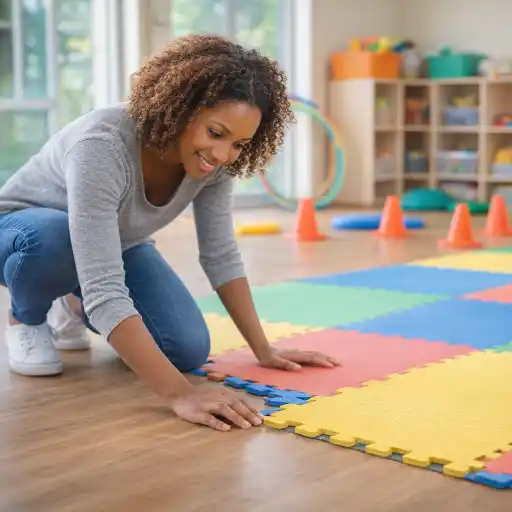
Next, examine the floor and surrounding space. Look for cords, toys, loose parts, wet spots, curled rug edges, and gaps that could catch a foot or hand. Make sure mats lie flat and do not slide during energetic movement. Keep furniture out of the fall zone around climbing equipment, and avoid arrangements that create narrow passages or encourage children to sprint between pieces.
Use a child’s-eye view: crouch, crawl, or look from the height of the children in your group. This can reveal a sharp corner, hidden small object, or tempting climb that is easy to miss while standing. Virtual Lab School checklists recommend considering how children at different developmental stages see and interact with their environment.
- 🪑 Test furniture for wobbling, tipping, sharp points, splinters, and loose parts.
- Check rugs, floor mats, cords, and surfaces for slip and trip risks.
- Remove heavy items from high shelves and keep hazardous materials inaccessible.
- Confirm that doors, exits, and emergency routes remain clear.
How can you make pathways and movement zones safer?
Define the purpose of the movement area before arranging furniture. Decide where children will start, travel, turn, and stop. Keep a clear route between activity zones and leave adequate space for children to move without bumping into furniture or one another. Avoid creating a runway that invites fast running through areas where other children are working or playing.
Separate high-energy movement from quiet or focused activities when possible. Low shelves can help signal a boundary, but they should not block adults’ view or create hidden pockets. Place furniture so staff can see the movement area and reach children promptly. The Texas Education Agency’s guidance on classroom arrangement emphasizes traffic flow, accessibility, appropriately sized furniture, and unobstructed supervision—principles that remain useful when rearranging a room for active play.
Consider children’s ages, abilities, and mobility. A route that works for confident preschool walkers may not suit toddlers, children who use mobility devices, or children who need more time to change direction. Provide accessible paths and flexible options rather than expecting every child to use the space in the same way. If children repeatedly crowd one spot, adjust the layout, reduce the group size for that activity, or offer another movement choice.
- Keep pathways wide, visible, and free of stored items.
- Position furniture to define zones without hiding children from view.
- Offer options that support varied abilities and movement needs.
- Keep active play away from doors, glass, heaters, and other hazards.
How should supervision and activity rules adapt to the new layout?
A safe setup still needs active supervision. Before the activity begins, identify who is supervising each area and where staff should stand to maintain clear sight and sound access. Once children start moving, adults should scan continuously, listen for changes, and reposition as the play shifts. Head Start guidance describes active supervision as an intentional process that includes observing, listening, anticipating, and responding—not simply being present in the room.
Introduce the new arrangement calmly. Show children the open route, explain simple boundaries, and model how to move around the furniture. Short, concrete cues work well: “Walk around the table,” “Keep the path clear,” or “When the music stops, freeze where you are.” For younger children, demonstrate the action and repeat the same few expectations rather than relying on lengthy explanations.
Adapt the activity if children begin to collide, climb on furniture, or enter a staff member’s blind spot. Pause the game, restore coverage, and make a quick layout adjustment. Supervision plans should account for children who need closer proximity, as well as transitions when a staff member must assist one child. State requirements vary - check your state licensing agency for applicable space, supervision, and equipment rules.
- Review staff positions and coverage before children enter the area.
- Use brief demonstrations and consistent movement cues.
- Pause and revise the setup if crowding or unsafe use emerges.
What common post-move mistakes should providers avoid?
One common pitfall is checking only whether the furniture looks tidy. Appearance is not the same as safety: a neat layout may still have a blocked exit, a loose rug, or an obstructed sightline. Another is assuming heavy furniture cannot tip. Children may pull, climb, or lean on shelves, so stability and appropriate anchoring matter even when a piece feels substantial.
It is also easy to focus on the main movement activity and overlook the edges of the space. A chair left beside the route, a bin behind a divider, or a cord across the floor can become an unexpected obstacle once children are moving. Avoid asking children to test the new arrangement before adults have inspected it. Likewise, do not leave a known hazard in place while waiting for a future maintenance visit; block access or remove the item from use according to program procedures.
Finally, do not let a checklist replace ongoing supervision. A checklist supports consistency, but children’s play changes from moment to moment. Observe how they actually use the revised room, then make adjustments. Treat repeated crowding or near-collisions as helpful feedback about the environment—not as a reason to blame children or staff.
- Do not overlook exits, edges, cords, rugs, and small objects.
- Do not assume furniture is stable because it is heavy or looks sturdy.
- Do not leave damaged or questionable equipment available for play.
- Do not rely on the initial inspection alone; monitor and refine the setup.
Conclusion: How can you keep indoor movement both active and safe?
After moving furniture, take time to inspect the whole room, test stability, clear pathways, protect sightlines, and check the floor for slips and trips. Then review staff coverage, introduce simple movement expectations, and observe how children use the new layout. These practical steps help preserve the joy and developmental value of active play while reducing preventable risks.
A reliable post-move routine can be as straightforward as: scan the room at child height, walk the activity route, check furniture and floor surfaces, verify supervision positions, and correct or report anything unsafe before play begins. Build this check into your classroom practice so every rearrangement supports safe, inclusive #movement and engaged #children. With clear pathways, stable #furniture, attentive #supervision, and planned #safety checks, you can make a changed room feel ready for play.
For a fuller look at balancing activity and quieter periods, consider the ChildCareEd course Balancing Active Play in Child Care Buy Now $16.00. Other relevant English courses include Engaging Indoor Activities for Inclement Weather Buy Now $24.00, Classroom Setup for Child Care Buy Now $24.00, Active Supervision: A Strategy That Works Buy Now $35.00, and 1,2,3, Eyes on Me: Classroom Safety Buy Now $32.00$24.00.
- 45 Hour Child Growth and Development
- CDA Home Visitor Subject Area 5 Part 3 Birth to 5
- Moving About the Classroom: Effective Transitions for Everyday
- Engaging Indoor Activities for Inclement Weather
- Art from the Heart for Preschoolers: Open Ended Art Projects that Build Self-Esteem
- Classroom Setup for Child Care
- Texas Director Credential
- Children at the Wheel ONLINE
- Moving About the Classroom: Effective Transitions for Everyday
- 💛🧩 ¿Cómo puedo hacer que mi enseñanza sea inclusiva para los niños con autismo?
- ❄️ ¿Qué actividades al aire libre funcionan bien para los niños de Illinois en cada estación? 🌷🍂
- ¿Cuáles son las mejores actividades del Día de la Tierra para niños en casa o en el aula?
- Actividades de Motricidad Gruesa que Desarrollan el Equilibrio, la Coordinación y la Fuerza
- 10 Ejemplos de Cómo la Cultura Influye en el Desarrollo Infantil
- Capacitación en Salud y Seguridad Preventiva en Línea para Proveedores de Cuidado Infantil
- Proporciones de Cuidado Infantil y Tamaños de Grupo por Edad en Maryland (Guía Rápida para Centros y Hogares)
- Proporciones de Cuidado Infantil y Tamaños de Grupo por Edad en Nueva Jersey (Guía Rápida para Centros y Hogares)
- Proporciones de Cuidado Infantil y Tamaños de Grupo por Edad en Virginia (Guía Rápida para Centros y Hogares)
- Celebrando la amistad en el cuidado infantil durante el Día de los Mejores Amigos
- How can you design childcare spaces for flexible learning?
- Home Daycare Ideas That Make Your Space Feel Safe, Fun, and Professional
- Can You See the Wind? 8 Outdoor Spring Activities That Help Children Explore It
- How Can You Create a “Yes Space” Where Infants and Toddlers Explore Safely?
- How Can Child Care Providers Help Children Explore Weather Indoors and Outdoors?
- Does an Empty Classroom Space Need to Stay Empty?
- How Can One Floor Mat Offer Two Experiences for Crawlers and Walkers?
- How Can You Safely Check a Classroom After Moving Furniture for Indoor Movement Activities?
- How Can You Maintain Active Supervision During Indoor Play?
- Screen-Free Activities for Short Gaps in the Preschool Day: What Works?
