When winter keeps children indoors, stale air and chilly drafts can feel like competing problems—but you do not have to choose between fresh air and comfort. The Creating Safe & Healthy Child Care Environments  Buy Now $55.00 course can help you strengthen practical health and environmental-safety practices, while the Prevention and Control of Infectious Diseases Buy Now $16.00 course adds focused guidance on reducing illness spread in group care. Explore these trainings as a next step, then use the strategies below to make your winter classroom healthier and more comfortable.
Why does winter air quality deserve attention?
Cold weather often means closed windows, more time indoors, and busy rooms where children share the same air. Ventilation helps dilute indoor pollutants and airborne particles; filtration captures some particles that would otherwise remain in circulation. Together, these measures contribute to a healthier indoor environment and can complement other illness-prevention practices.
Air quality is also a comfort issue. A room that feels too cold, too dry, stuffy, or full of strong odors can make it harder for children and staff to feel at ease. Children with asthma, allergies, or other respiratory needs may be especially sensitive. The EPA notes that indoor air quality involves pollutant control, adequate outdoor air, and acceptable temperature and humidity—not ventilation alone.
The goal is not to create a draft or keep windows open all day. Instead, use safe, measured steps: maintain heating and ventilation equipment, address pollutant sources, and add outdoor air or filtration as conditions allow. The CDC emphasizes that ventilation strategies should never create safety risks or expose children to extreme temperatures or air that could trigger symptoms.
Think of winter air management as a practical layer in your overall care plan: protect #children, maintain #comfort, and make healthier #airquality part of daily #safety routines through thoughtful #ventilation.
How can you add fresh air without creating cold drafts?
Fresh outdoor air can help reduce the concentration of airborne particles, but the amount and timing should fit the building, weather, and children’s needs. Start with the controls you can manage safely, rather than leaving windows wide open during occupied hours.
- Ask facilities staff or a qualified HVAC professional to check that the system is operating and bringing in outdoor air as designed. Avoid making major system changes without expert input.
- Where safe and appropriate, briefly crack a window or door during a transition, when children are away from the immediate area. Close it before children return if the room becomes uncomfortably cold.
- Use cross-ventilation only when conditions permit, and keep openings inaccessible to children or protected with approved guards. Never compromise fall prevention or supervision.
- Check the outdoor air quality before bringing in more outside air. Smoke, pollution, or nearby spraying may make outdoor air unsuitable.
- Keep supply and return vents clear of furniture, curtains, and storage so heated air can circulate as intended.
Comfort is not just the thermostat reading: children’s clothing, activity, location in the room, and individual health needs can influence how warm or cool they feel. Observe children, respond to discomfort, and adjust the timing or duration of ventilation rather than relying on a one-size-fits-all routine. The CDC’s ventilation guidance for schools and childcare programs advises bringing in outdoor air when it is safe, while avoiding openings that cause extreme-temperature exposure or other health risks.
What can HVAC checks and filtration accomplish?
In winter, a well-maintained HVAC system is often the most practical way to support air circulation while keeping the room warm. Directors can coordinate routine checks with building maintenance staff and ask a qualified professional whether settings are appropriate for the room’s occupancy and system design.
- Inspect filters on a schedule and replace them according to the manufacturer’s instructions. Confirm the filter fits correctly and is installed in the intended direction.
- Ask an HVAC professional whether a higher-efficiency filter is compatible with the system. A filter that restricts airflow can undermine system performance.
- Confirm that kitchen and restroom exhaust fans operate properly and vent outdoors; these systems help remove odors and moisture at their source.
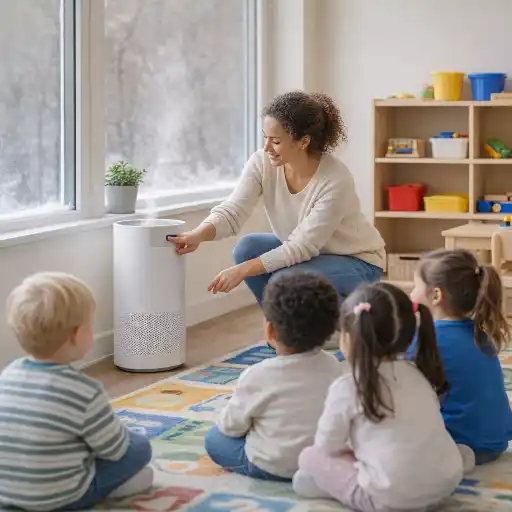
- Consider a portable mechanical HEPA air cleaner in a suitable room, especially where ventilation is limited. Select a unit sized for the space, follow its operating instructions, and place it where children cannot reach it.
Filtration complements ventilation; it does not replace needed outdoor air or equipment maintenance. Avoid ozone-generating air cleaners and do not assume that a device’s marketing claims mean it is suitable for a childcare classroom. The Head Start indoor air quality and ventilation guidance also recommends safe placement of fans and cleaners, routine HVAC care, and attention to filter specifications. Keep a simple record of filter changes, service visits, and any equipment concerns so staff know what has been checked and when.
How do you balance humidity, moisture, and thermal comfort?
Dry winter air can feel irritating, while excessive moisture can encourage mold and dust mites. No single humidity target guarantees comfort for everyone or applies to every building, but government guidance commonly points providers toward moderate indoor humidity and prompt attention to dampness. The Illinois Department of Public Health describes 30–60% relative humidity as an acceptable range in its voluntary guidance; EPA winter information cites 30–50% as a useful target. Follow applicable local guidance and the building’s conditions rather than treating one number as universal.
Use a hygrometer if helpful, and look for practical warning signs: persistent condensation on windows, musty odors, damp materials, visible staining, or recurring leaks. Address the source of moisture promptly. Keep humidifiers clean and maintained according to their instructions; poorly maintained equipment can introduce additional problems. Use kitchen and bathroom exhaust where available, and avoid placing humidifiers where children can touch hot water, cords, or moving parts.
Thermal comfort is individual. Children who are sitting quietly may feel different from children engaged in active play, and a cold draft near a window may be uncomfortable even when the room thermometer seems acceptable. Check room temperature in the occupied area, consider how air moves through the room, and adjust routines or seating when needed. If families or staff report symptoms or discomfort, document the pattern and investigate possible causes instead of dismissing the concern as simply “winter air.”
Which everyday practices help keep indoor air cleaner?
Ventilation and filtration work best when programs also reduce pollutants at their source. Small, consistent habits can make air management easier without interrupting children’s routines. Choose low-odor products where feasible, use cleaning products according to label instructions, and keep chemicals secured and away from occupied areas during use.
- Keep classrooms free of unnecessary fragrance sprays, air fresheners, and scented products that may irritate sensitive children or staff.
- Clean up spills promptly and report leaks, water damage, or visible mold to the director or facilities contact.
- Use exhaust ventilation during cooking or other activities that create moisture or odors, where the building has appropriate equipment.
- Schedule dust-generating maintenance or renovations for times when children are not present, and follow professional guidance for isolating work areas.
- Ask staff to report recurring odors, unusual dust, or symptoms linked to a particular room or time of day.
Cleaning remains important, but it is not a substitute for addressing ventilation, filtration, or moisture problems. Use products as directed, avoid mixing chemicals, and follow your program’s health and safety procedures. The EPA’s Reference Guide for Indoor Air Quality in Schools recommends a planned approach that includes identifying potential sources, communicating clearly, and seeking specialized assistance when a problem exceeds routine maintenance. This approach helps staff focus on the cause—not just the odor or visible symptom.
How can a program make a winter air-quality plan workable?
A short, shared plan makes consistent action more likely, especially when directors, teaching staff, and facilities personnel each have different responsibilities. Use a classroom walkthrough to identify ventilation controls, vents, windows, portable cleaners, moisture concerns, and any recurring comfort complaints. Assign a person to coordinate technical questions with maintenance staff or an HVAC professional.
Build the plan around actions staff can observe and document:
- Record filter checks, service requests, and any changes made by qualified facilities personnel.
- Set a safe procedure for brief window opening, including who checks outdoor conditions and who supervises children.
- Identify who will inspect for leaks, condensation, musty odors, and blocked vents, and how concerns are escalated.
- Explain the approach to families and staff, including how you will respond when a child has a respiratory sensitivity or reports discomfort.
- Review the plan after a change in building use, weather patterns, equipment, or children’s needs.
Avoid common pitfalls: do not seal a room against fresh air without understanding the ventilation system; do not raise filtration efficiency without checking system compatibility; and do not place fans or air cleaners where cords, blades, or access create hazards. State requirements vary—check your state licensing agency and local public-health guidance. For a practical next step, ChildCareEd’s Building and Physical Premises Safety Buy Now $10.00 course can reinforce hazard recognition and safer facility routines. Other related training includes Health and Nutrition Buy Now $24.00, Engaging Indoor Activities for Inclement Weather Buy Now $24.00, and Healthy Starts: Safety, Nutrition, and Wellness in Child Care Buy Now $55.00.
Conclusion: What should you remember about winter classroom air?
Improving classroom air quality in winter does not require children to sit in cold drafts. Combine safe, appropriately timed outdoor-air exchange with maintained HVAC equipment and compatible filtration. Reduce pollutant sources, manage moisture, and pay attention to children’s comfort and individual health needs.
Begin with a simple walkthrough, clear staff responsibilities, and a maintenance log. Involve a qualified HVAC professional when system adjustments or filter upgrades are being considered, and use local licensing and public-health guidance to shape your program’s procedures. A measured, layered plan supports cleaner indoor air while keeping the classroom warm, supervised, and welcoming throughout the winter.
Five useful next-step courses:
- CDA Preschool Credential with Portfolio Review
- CDA Family Child Care Credential with Portfolio Review
- CDA Bridge Bundle: Preschool
- CDA Bridge Bundle: Family Child Care
- CDA Bridge Bundle: Family Child Care without Portfolio Review
- Classroom Setup for Child Care
- CDA Bridge Bundle: Infant/Toddler
- CDA Infant/Toddler Credential with Portfolio Review
- Texas Director Credential
- Winter Weather and Indoor Air Quality Tips
- Tips for Child Care Professionals: Adapting to Seasonal Changes
- Mental Health for Tiny Elves: Supporting Kids Through Winter Blues
- CDA Certification en Español: Recursos y Consejos para Educadores Bilingües
- 💛🧩 ¿Cómo puedo hacer que mi enseñanza sea inclusiva para los niños con autismo?
- How can child care programs use outdoor learning ideas for all seasons?
- 10 Ejemplos de Cómo la Cultura Influye en el Desarrollo Infantil
- Proporciones de Cuidado Infantil y Tamaños de Grupo por Edad en Maryland (Guía Rápida para Centros y Hogares)
- Proporciones de Cuidado Infantil y Tamaños de Grupo por Edad en Nueva Jersey (Guía Rápida para Centros y Hogares)
- Proporciones de Cuidado Infantil y Tamaños de Grupo por Edad en Virginia (Guía Rápida para Centros y Hogares)
- Retraso del Habla en la Guardería: Cómo Pueden Ayudar los Proveedores
- Celebrando la amistad en el cuidado infantil durante el Día de los Mejores Amigos
- Daycare Temperature Regulations in Oregon: What Providers Should Know
- How can child care programs prevent seasonal safety hazards like heat, cold, allergies, holiday risks, and outdoor play dangers?
- Childcare Weather and Air Quality Chart: Keeping Outdoor Play Safe
- How Can You Improve Classroom Air Quality in Winter Without Making Children Uncomfortable?
- How Can Child Care Providers Manage Dry Skin, Chapped Lips, and Eczema in Winter?
- How Can Child Care Providers Help Children with Asthma Stay Safe During Winter?
- How Can Child Care Providers Keep Children Hydrated During Winter?
