How can child care providers protect children in cold weather?
Winter weather requires deliberate supervision, environmental controls, and clear protocols. This brief guide gives practical, regulatory-minded actions you can apply in center and family-care settings. Consider professional training such as the ChildCareEd course Healthy Starts: Safety, Nutrition, and Wellness in Child Care and the course Building and Physical Premises Safety to refresh health, supervision, and premises-check competencies.
For in-depth training linked on ChildCareEd, consider Prevention and Control of Infectious Diseases  Buy Now $16.00 and Health and Nutrition Buy Now $24.00; for infant-specific practice, see Prevention of Sudden Infant Death Syndrome and Safe Sleep Practices Buy Now $8.00. For quick, practical guidance on dressing, monitoring, and adapting routines specifically for infants and toddlers in cold weather, see the ChildCareEd article Infant & Toddler Health Tips for the Chilly Season.
What are the primary cold-weather risks for young children?
Cold stress, hypothermia, frostnip, slips, and increased respiratory exposures are the most immediate concerns when supervising infants, toddlers, and preschoolers outdoors. Risk increases when clothing is wet, when wind chill is significant, and when supervision is intermittent. Providers should use a predictable decision rule for outdoor play that incorporates air temperature, wind chill, precipitation, and the functional needs of the youngest children.
How should children be dressed for outdoor winter play?
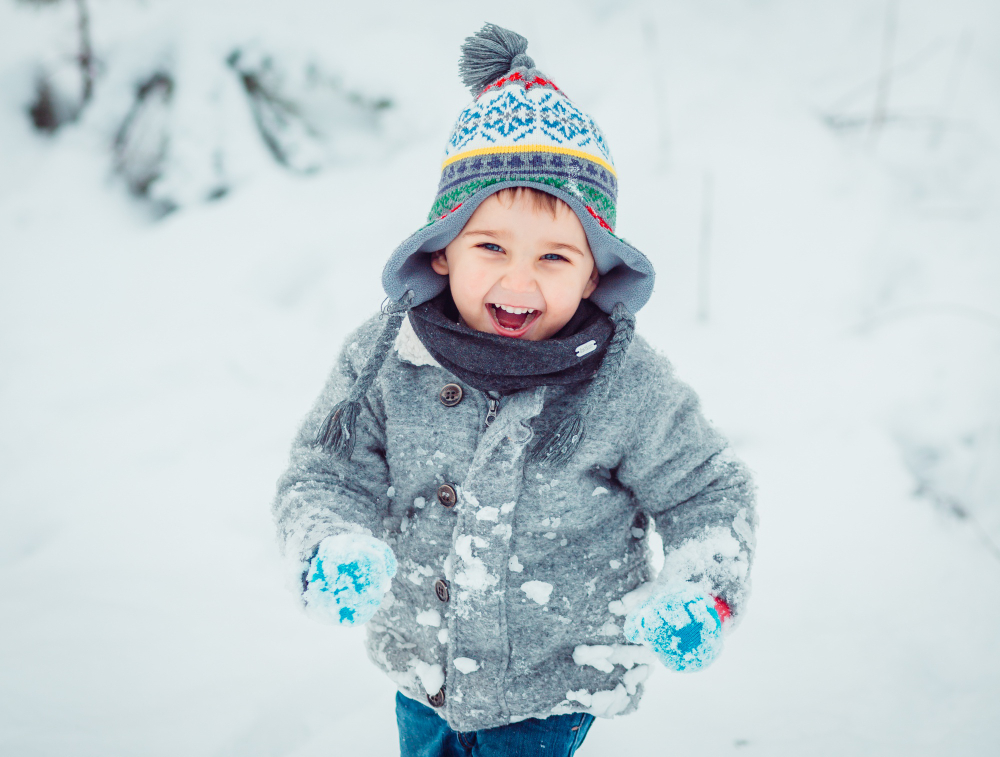
Dress children in multiple layers to trap warm air and allow removal if they warm during activity. Practical expectations include:
- Base layer: moisture-wicking fabric that keeps skin dry;
- Insulating layer: fleece or thermal mid-layer;
- Outer layer: tightly woven, water- and wind-resistant coat;
- Head and neck protection: hats that cover the ears; scarves or neck gaiters for older children when appropriate;
- Hand protection: gloves or mittens that are snug at the wrist to prevent cold ingress;
- Footwear: insulated, water-resistant boots and warm socks; remove wet socks promptly.
Supervision protocol: actively check exposed skin (fingers, toes, nose, ears) and overall comfort at least every 15 minutes for infants and toddlers, and frequently for older preschoolers during heavy activity or precipitation. When in doubt, shorten outdoor periods and prioritize sheltered, active games.
For broader seasonal guidance and program planning, consult these ChildCareEd articles: How can child care programs prevent seasonal safety hazards like heat, cold, allergies, holiday risks, and outdoor play dangers?, How Can Child Care Programs Keep Children Safe in Different Weather?, and Weather Safety in Child Care: Cold Weather, Summer Heat, and Outdoor Play.
Other useful articles: Winter Safety: Hypothermia, Slips, and Indoor Play Injuries, Frosty Fun in the Classroom: Winter Activities That Teach, and Illinois Weather & Outdoor Time at Daycare.
How can providers maintain healthy indoor air quality during winter?
Weatherization and reduced ventilation in winter can concentrate indoor contaminants. Prioritize the hierarchy of controls: source control, ventilation, and filtration. Practical actions for center managers and home-based providers include the following.
- Inspect and follow manufacturer guidance for forced-air filters and replace or clean them on a regular schedule (often every 1–3 months, depending on occupancy and system load).
- Maintain indoor relative humidity between approximately 30–50% to reduce respiratory irritation and discourage both excessive dryness and condensation-driven mold growth.
- Use local exhaust (for example, range hoods when cooking) and consider increasing ventilation with controlled outdoor air where feasible and safe; make ventilation adjustments when spaces have been recently weatherized or sealed.
- When vacuuming, use vacuums equipped with HEPA filtration or central systems vented outdoors to reduce resuspension of particulates.
- Document maintenance schedules for filters, humidifiers, and ventilation so staff can demonstrate routine environmental management during licensing reviews or parent inquiries.
These recommendations align with government guidance emphasizing ventilation, filtration, and humidity control as foundational elements of indoor-air management. For practical technical details, consult the public guidance summarized below.
Training that supports implementation: consider the ChildCareEd course Prevention and Control of Infectious Diseases and Health and Safety Orientation to strengthen program policies and staff procedures around ventilation, cleaning, and illness prevention.
References: see Health Canada and university adaptation guidance cited below for ventilation, humidity targets, and filter recommendations.
Summary: What actions should I take now?
- Create and post a cold-weather decision rule that defines temperature/wind-chill cutoffs and required clothing for each age group.
- Update supervision checklists to include extremity checks every 15 minutes and require staff to document outdoor-period start and end times.
- Schedule and record HVAC filter inspections and replacements; stabilize indoor humidity in the 30–50% range and document methods used (humidifiers, exhaust, or mechanical ventilation adjustments).
- Equip classrooms with spare weather-appropriate clothing, and require parent communication about outdoor gear expectations.
- Offer staff refresher training: Health and Safety Orientation, Prevention and Control of Infectious Diseases, and Building and Physical Premises Safety.
- Share program policies and the reasoning behind them with families so they understand when children will remain indoors and how indoor activities are selected.
Related ChildCareEd articles that expand on these topics include seasonal safety planning, weather-specific supervision practices, indoor activity ideas for cold days, and state-level guidance on outdoor time. See links throughout this article for direct resources.
These steps support #safety, #airquality, #supervision, #health, and #winterplay in your program.
- How To Keep A Healthy Class: Six Tips for Germ Control
- CDA Preschool Credential with Portfolio Review
- Safe and Sound: Creating Healthy Environments for Every Child
- CDA Family Child Care Credential
- CDA Family Child Care Credential with Portfolio Review
- Engaging Indoor Activities for Inclement Weather
- Pediatric RSV First Aid & CPR/AED
- Family Child Care Health Essentials
- Texas Director Credential
- Winter Weather and Indoor Air Quality Tips
- Mental Health for Tiny Elves: Supporting Kids Through Winter Blues
- ❄️ What Outdoor Activities Work Well for Illinois Kids in Every Season? 🌷🍂
- ❄️ ¿Qué actividades al aire libre funcionan bien para los niños de Illinois en cada estación? 🌷🍂
- Illinois Weather & Outdoor Time at Daycare
- ☃️ Frosty Fun in the Classroom: Winter Activities That Teach
- Weather Safety in Child Care: Cold Weather, Summer Heat, and Outdoor Play
- How Can Child Care Programs Keep Children Safe in Different Weather?
- Consejos de Supervisión Activa para Salones de Preescolar y el Juego al Aire Libre
- Las Mejores Ideas de Excursiones para Guarderías en Texas
- How Do Minnesota Winters Affect Young Children's Mental Health?
- Air Quality and Child Care in Texas: Outdoor Play Safety Tips
- Air Quality and Child Care in Nevada: Outdoor Play Safety Tips
- Air Quality and Child Care in Illinois: Outdoor Play Safety Tips
- How can Minnesota child care programs prepare for severe weather and poor air quality?
- How can Washington providers keep children safe and learning when wildfire smoke forces us indoors?
- Daycare Temperature Regulations in Oregon: What Providers Should Know
- How can child care programs prevent seasonal safety hazards like heat, cold, allergies, holiday risks, and outdoor play dangers?
- Cómo Planificar Actividades al Aire Libre Seguras Durante el Calor y la Mala Calidad del Aire
