Winter outdoor play can offer children movement, discovery, and fresh air—but deciding when the cold becomes unsafe takes more than checking a thermometer. Strengthen your weather checks and outdoor hazard practices with Family Child Care: Building, Premises, and Outdoor Safety  Buy Now $16.00, a two-hour course covering weather-related hazards, outdoor checks, and active supervision. If conditions require an indoor day, Engaging Indoor Activities for Inclement Weather Buy Now $24.00 can help you plan meaningful movement and learning while children stay warm and safe.
Why does winter outdoor play deserve thoughtful planning?
There is no single temperature that determines whether every child care group can safely go outside. Wind, damp clothing, precipitation, icy surfaces, the children’s ages and health needs, and the staff’s ability to supervise all shape the decision. A written routine helps providers make fair, consistent choices instead of relying on guesswork or different standards in each classroom.
Outdoor play supports physical activity, exploration, and social learning. Cold weather does not automatically mean children must stay inside; instead, adults need to weigh the benefits against conditions and each child’s comfort. Children can lose heat faster than adults and may be so engaged in play that they do not notice or communicate that they are getting too cold. Infants, toddlers, children with medical needs, and children who are less active may need closer observation or a more cautious plan.
Head Start guidance recommends warm layers, periodic checks, and sound judgment rather than one universal safe duration. Build those ideas into a predictable process: check the weather, inspect the play space, verify clothing, assign supervision, and decide whether to go, adjust, or stay indoors. State requirements vary - check your state licensing agency when creating or updating program procedures.
Which conditions should staff check before going outside?
Temperature is only one part of the picture. Wind chill indicates how cold the air may feel on exposed skin, while wet clothing, slush, or freezing rain can increase heat loss. Play surfaces matter too: icy paths and equipment can create fall hazards even when the air temperature seems manageable. Before every outdoor period, consult a reliable local forecast and inspect the area children will use.
- Check air temperature, wind chill, precipitation, and any local weather alerts.
- Look for icy paths, steps, gates, playground surfaces, and equipment; block off hazards that cannot be made safe.
- Notice wet snow, slush, rain, and damp mittens or socks, and keep dry replacement items available when possible.
- Consider each child’s age, health, mobility, activity level, clothing, and ability to tell an adult about discomfort.
- Reassess if weather changes during the day or if visibility and supervision become difficult.
Published recommendations differ because climates, program policies, and local rules differ. The American Academy of Pediatrics advises avoiding outdoor play at temperatures or wind chills below -15°F, while Head Start emphasizes judgment and bringing children in when the cold becomes unpleasant. These references can inform a policy, but they do not replace local licensing requirements or a child’s individual needs. A posted decision guide should help staff respond consistently without treating one number as a guarantee of safety.
How can programs decide whether to go, adjust, or stay inside?
A simple “go, adjust, stay inside” framework can make decisions clear while preserving professional judgment. Assign a staff member to check conditions before each outdoor block and to share the decision with the team. Include the weather source, relevant wind-chill information, grounds inspection, clothing check, and the person responsible for authorizing a change in the written procedure.
- Go: Conditions meet program policy, play surfaces are safe, children have appropriate gear, and staff can maintain effective supervision.
- Adjust: Shorten the outing, schedule warm-up breaks, choose active but manageable play, or use a sheltered area when conditions are less comfortable but still acceptable under policy.
- Stay inside: Follow program thresholds and local guidance when extreme cold, unsafe ice, severe weather, poor visibility, wet conditions, or limited supervision capacity makes outdoor play inappropriate.
There is no universal safe amount of time outdoors in cold weather. Exposure depends on temperature, wind, wetness, clothing, activity, and how children respond. Rather than promising a fixed duration, plan to check children frequently and bring them in sooner when needed. Record the conditions and the decision briefly; logs can reveal recurring issues such as icy entrances, missing gear, or weather patterns that require a policy adjustment.
Make the check part of the transition routine. A quick staff huddle can confirm supervision zones, head-count responsibilities, the signal to return indoors, and the warm-up plan. If conditions become unsafe or a child shows signs of cold stress, end outdoor play promptly even if the initial forecast looked acceptable.
What clothing and supervision help children stay warm and safe?
Warm, dry layers support comfort and allow children to move. The American Academy of Pediatrics recommends several thin layers, along with a hat, mittens or gloves, and warm boots; a common rule of thumb for young children is one more layer than an adult would wear in the same conditions. Families and staff can work together to prepare gear without blame—winter clothing needs can be challenging, and a classroom supply of spare items can help.
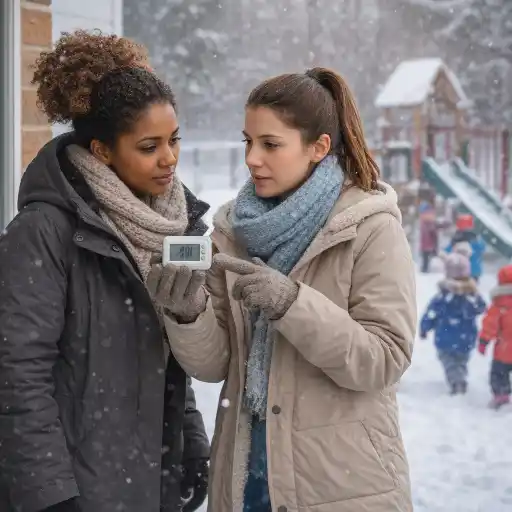
- Ask families to provide layers, a hat covering the ears, mittens, warm socks, and weather-appropriate boots.
- Keep dry spare socks and mittens accessible when possible; replace wet clothing promptly.
- Check hands, feet, ears, cheeks, and noses during play, especially for children who cannot clearly describe discomfort.
- Choose developmentally appropriate activities that keep children moving while maintaining safe boundaries and sightlines.
- Use active #supervision: staff should scan, listen, position themselves purposefully, and remain ready to respond.
👀 Observe for shivering, unusual quietness, numbness, tingling, or a child who seems uncomfortable, and bring them indoors promptly.
Wet gear and unsafe surfaces can undermine otherwise good clothing preparation. Inspect routes and equipment before play, and do not use icy structures or areas that cannot be made safe. Loose scarves or trailing items can catch on equipment; follow program clothing procedures and choose safer alternatives. Children may not reliably recognize or report early cold stress, so adult observation remains essential. A quick clothing check before leaving the classroom and regular checks outside make it easier to notice trouble early.
What signs of cold injury require a prompt response?
Stop play and move a child to a warm place if they show concerning signs. Frostbite most often affects exposed areas such as fingers, toes, ears, nose, and cheeks. Early signs may include numbness or tingling; skin that looks pale, grayish, or waxy and feels unusually firm needs particular attention. Do not rub or massage a possibly frostbitten area, and do not apply direct heat. Follow your program’s first-aid procedures and seek medical guidance.
Hypothermia is a medical emergency. Signs can include shivering followed by unusual tiredness, clumsiness, poor coordination, confusion, or slurred speech. If you suspect hypothermia, call emergency services, move the child indoors, remove wet clothing, and cover the child with warm, dry layers while help is on the way. Follow your training and the child’s health plan; do not delay emergency care.
- End exposure to cold and notify the director or designated lead.
- Remove wet items and warm the child gradually with dry clothing or blankets.
- Do not rub frostbitten skin or use a heater or other direct high heat on affected areas.
- Call emergency services for suspected hypothermia or other urgent symptoms, and notify the family according to program policy.
- Document the event and review whether weather decisions, gear preparation, or supervision routines should change.
Staff do not need to diagnose an injury; they need to notice potential warning signs and act promptly. Public medical guidance is not a substitute for individualized care, so contact emergency services or the child’s health professional as appropriate.
How can directors prevent common winter-play mistakes?
Winter safety problems often arise from inconsistent routines rather than a lack of care. Staff may check the thermometer but overlook wind chill, assume children will speak up when they feel cold, or inspect equipment while missing an icy walkway. A short written procedure, shared with every staff member—including substitutes—can close these gaps.
- Mistake: Using temperature alone. Better practice: Consider wind chill, wetness, surfaces, and the individual child.
- Mistake: Relying on children to report discomfort. Better practice: Observe frequently and ask how children feel, while watching their behavior and appearance.
- Mistake: Sending children onto icy equipment because the air feels tolerable. Better practice: Inspect the grounds and close unsafe areas.
- Mistake: Cancelling outdoor play without an alternative. Better practice: Prepare indoor movement and exploration activities in advance.
- Mistake: Applying different rules from room to room. Better practice: Post a shared decision guide and clarify who makes the call.
Communicate gear expectations with families early and compassionately. Explain what the program can provide when spare clothing is available, and invite families to discuss barriers without judgment. Review your plan at the start of winter and after incidents or near-misses. A practical next step is to explore Family Child Care: Building, Premises, and Outdoor Safety Buy Now $16.00 for focused learning on outdoor hazards and supervision. For days that must move indoors, Engaging Indoor Activities for Inclement Weather Buy Now $24.00 offers ideas for keeping children engaged. State requirements vary - check your state licensing agency.
Conclusion: How can providers make safer winter-play decisions?
Is it too cold to play outside? The safest answer depends on more than the thermometer. Check wind chill, wetness, surfaces, clothing, children’s individual needs, and the team’s ability to supervise. Use a written “go, adjust, or stay inside” routine, inspect the play area, and monitor children throughout the outing.
Warm, dry layers and frequent observation help children participate more comfortably, while quick action at the first sign of cold stress protects their health. When conditions are unsafe, indoor play can still offer movement, connection, and discovery. With clear procedures, family partnership, and consistent supervision, providers can preserve winter’s learning opportunities without ignoring real risks. Follow local rules and remember: state requirements vary - check your state licensing agency.
Courses for continued learning
- Family Child Care: Building, Premises, and Outdoor Safety Buy Now $16.00 — two-hour training on outdoor hazards, weather risks, safety checks, and active supervision.
- Engaging Indoor Activities for Inclement Weather Buy Now $24.00 — three-hour training on planning meaningful activities when outdoor time is not appropriate.
- Creating the Natural Outdoor Classroom Buy Now $16.00 — strategies for supporting children’s exploration and learning outdoors.
- Active Supervision: A Strategy That Works Buy Now $35.00 — practical supervision strategies for preventing injuries in child care.
- Building and Physical Premises Safety Buy Now $10.00 — training on identifying and preventing hazards in child care settings.
- 45 Hour Child Growth and Development
- What Makes Me Special: An Overview of Autism and ADHD
- 45 Hours Director-Administration ONLINE
- 45 Hour School Age Methods and Materials
- Administering Basic Health and Safety Overview
- Texas Director Credential
- 45-Hour Infant and Toddler Curriculum
- Family Child Care: Building, Premises, and Outdoor Safety
- CDA Certification en Español: Recursos y Consejos para Educadores Bilingües
- 10 Ejemplos de Cómo la Cultura Influye en el Desarrollo Infantil
- Capacitación en Salud y Seguridad Preventiva en Línea para Proveedores de Cuidado Infantil
- ¿Cómo solicito la licencia para una guardería en California?
- Regulaciones de Licenciamiento de Cuidado Infantil en California para Centros y Hogares de Cuidado Infantil Familiar
- Proporciones de Cuidado Infantil y Tamaños de Grupo por Edad en Maryland (Guía Rápida para Centros y Hogares)
- Proporciones de Cuidado Infantil y Tamaños de Grupo por Edad en Virginia (Guía Rápida para Centros y Hogares)
- Cómo Trabajar en el Cuidado Infantil en California: Requisitos y Pasos
- Celebrando la amistad en el cuidado infantil durante el Día de los Mejores Amigos
- Canciones, juegos y preguntas de círculo para niños
- Cómo simplificar la capacitación para sus empleados de daycare
- Daycare Temperature Regulations in Alaska: How Cold Is Too Cold?
- How can child care programs prevent seasonal safety hazards like heat, cold, allergies, holiday risks, and outdoor play dangers?
- How Should Preschool Teachers Dress Children for Winter?
- How Can Child Care Programs Prevent Winter Playground Slips, Falls, and Cold-Weather Injuries?
- How Cold Is Too Cold for Preschoolers to Play Outdoors Safely?
- How Can Child Care Programs Make Safe Decisions About Outdoor Play in Snow, Ice, and Freezing Temperatures?
- How Can Child Care Providers Help Children with Asthma Stay Safe During Winter?
- Is It Too Cold to Play Outside? How Can Child Care Providers Make Safe Winter Decisions?
- How Can Michigan Child Care Programs Prepare for Winter Storms and Extreme Cold?
