Planning for toddlers does not require elaborate themes or hours of preparation; it requires a clear purpose, flexible routines, and responsive observation. Use the ideas below to create manageable daily experiences, and consider Meaningful Lesson Planning for Infants/Toddlers  Buy Now $24.00 to strengthen your planning skills and support professional learning hours with age-appropriate activities.
For providers who want an additional practical focus, Playing with a Purpose: Infant/Toddler Lesson Planning Buy Now $24.00 offers guidance for designing purposeful learning experiences from birth through age three.
Why do simple toddler lesson plans matter?
Toddlers learn through relationships, movement, repetition, language, and hands-on exploration. A short lesson plan helps adults intentionally arrange these experiences without turning the day into a rigid school-like schedule. It gives teachers a shared roadmap while preserving the flexibility toddlers need when their energy, interests, or emotional needs change.
Thoughtful planning also supports consistency across a teaching team. When materials, goals, and transition cues are visible, assistants and substitutes can participate more confidently. Families benefit as well because educators can explain what children explored and how the experience connected to development.
Effective planning is not measured by the number of activities completed. It is measured by the quality of interaction and the opportunities children receive to practice skills. A single sensory invitation may support language, fine-motor coordination, social participation, and self-regulation when an attentive adult observes and responds.
What should a daily toddler lesson plan include?
A practical plan can fit on one page. Use the same format each day so staff can scan it quickly:
- 📘 Goal: Write one observable intention, such as “Children will practice taking turns and counting to three.”
- 🧰 Materials: List three to six items and where they are stored.
- 🧩 Steps: Describe a brief opening, 10–15-minute activity, and closing song or cleanup.
- 📸 Observation: Note what one child did, communicated, or attempted.
Choose goals that are developmentally realistic and connected to what you already notice in the room. For example, if children are frequently carrying objects, plan a basket-sorting activity that builds vocabulary and coordination. If conflicts arise around popular toys, plan a puppet scenario about waiting and exchanging materials.
Keep the plan invitational rather than scripted. Toddlers may engage for two minutes or twenty; both responses provide useful information. State requirements vary - check your state licensing agency.
Which easy activities can you use from Monday through Friday?
A predictable weekly rhythm reduces preparation while giving children repeated practice. Offer one primary experience each day and maintain two or three choice areas such as books, blocks, dramatic play, or sensory materials. For another science-themed idea, explore these space exploration activities, adapting materials and steps to toddlers’ developmental abilities and safety needs.
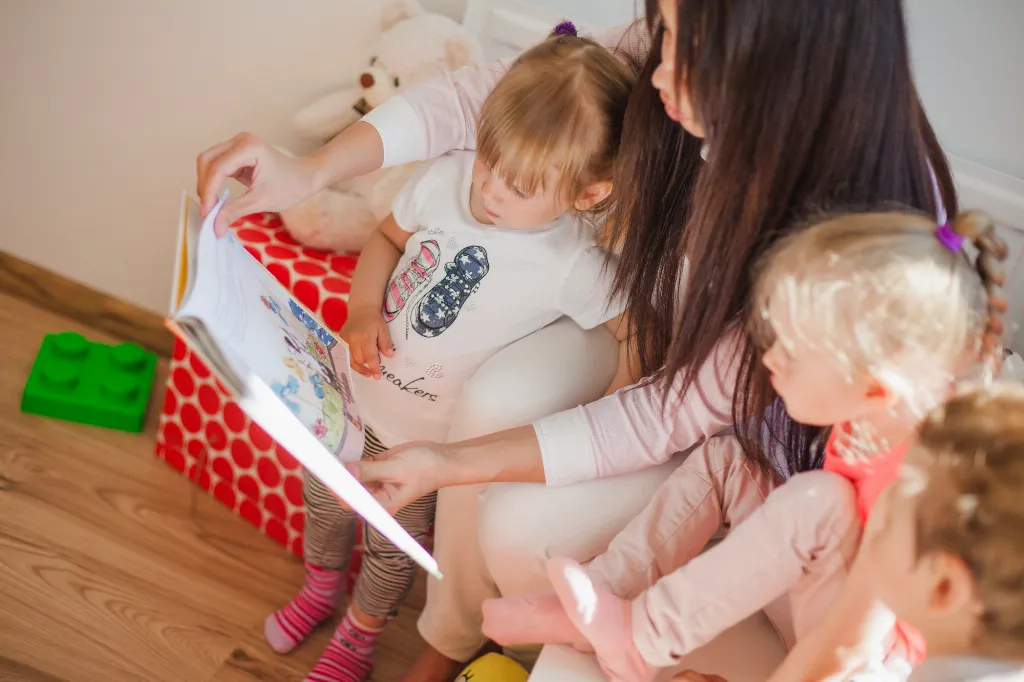
- Monday—Story and talk: Read a short book, name key objects, ask “What do you see?” and connect the story to a song.
- Tuesday—Process art: Provide large paper, washable paint, and broad tools. Emphasize exploration rather than a model product.
- Wednesday—Nature discovery: Walk outdoors to notice leaves, shadows, sounds, or textures. Count or describe what children find.
- Thursday—Sensory exploration: Offer water, large scoops, cups, or taste-safe materials when appropriate. Introduce words such as full, empty, wet, and dry.
- Friday—Social-emotional play: Use puppets, photographs, or simple feeling cards to practice greetings, turn-taking, and expressing needs.
Repeat favorite activities later in the week. Repetition is not lack of creativity; it allows toddlers to predict, experiment, and gradually attempt more independently. The CDC notes that toddlers benefit from opportunities to explore, imitate adults, use language, and build growing independence (CDC toddler guidance).
How can you adapt activities for mixed abilities and interests?
Begin with observation. Watch how each child approaches the materials, communicates, moves, and seeks help. Then layer the same activity so children can participate at different levels.
- Offer larger tools, fewer pieces, or a stable tray for children developing fine-motor control.
- Use picture cues, gestures, home-language words, or songs to support communication.
- Provide an easier entry point and one optional challenge, such as sorting by one color before sorting by two.
- Assign meaningful roles—book passer, basket helper, or song leader—to support participation.
- Allow additional processing time and avoid requiring every child to respond publicly.
Inclusion is often achieved through small adjustments rather than entirely separate activities. A child who avoids wet sensory play might use a scoop from the edge of the tray. A child who communicates without speech might choose between picture cards or demonstrate an action. Partner with families and specialists when an IFSP or other individualized guidance is present.
Outdoor activities also require intentional planning. The CDC recommends age-appropriate equipment, active supervision, shade, hydration, and attention to playground hazards (CDC outdoor play and safety guidance).
How do you assess learning without overburdening staff?
Toddler assessment should be brief, authentic, and connected to daily experiences. Instead of interrupting play with formal questioning, observe what children naturally do and document one meaningful piece of evidence.
After an activity, record a sentence using this pattern: Child + action + context + possible next step. For example: “Maya filled three cups during water play and said ‘more’; next, offer words for full and empty.” This note is more useful than a general statement such as “Maya enjoyed the activity.”
Use a five-minute reflection at the end of the day or week:
- What captured children’s attention?
- Which materials supported independent participation?
- Who needed additional modeling, time, or access?
- What should we repeat, simplify, or extend?
Common mistakes include planning too many goals, preparing excessive materials, ignoring transitions, and treating the plan as fixed. Correct these by selecting one goal, preparing a labeled weekly bin, using songs or visual cues, and allowing children’s responses to guide the next step.
How can directors help staff use plans consistently?
Directors can make planning sustainable by protecting preparation time, providing a shared template, and modeling reflective conversations. A one-page plan should be easy for every educator to complete and interpret. Store materials in labeled bins by developmental goal or activity type, not only by seasonal theme.
During team meetings, review one observation and ask how the environment or adult interaction could support the child’s next step. This turns lesson planning into collaborative professional practice rather than paperwork. Directors can also invite families to share children’s interests, cultural experiences, songs, and home-language vocabulary.
Post a flexible daily rhythm—arrival, choice time, guided invitation, meals, outdoor movement, rest, and departure—so children and adults know what comes next. Keep the sequence predictable while allowing the timing to change according to children’s cues.
Useful courses include Playful Learning: Infant & Toddler Activities Buy Now $25.00, Baby Play: Planning Infant and Toddler Activities Buy Now $16.00, and Individualized Learning and Inclusion Buy Now $16.00. Review course details and state requirements before enrolling.
Conclusion: What makes a toddler lesson plan effective?
Effective daycare lesson plans for toddlers are short, purposeful, playful, and flexible. Begin with one goal, gather a few accessible materials, describe a simple beginning-middle-end sequence, and record one observation. Use story talk, process art, nature walks, sensory exploration, movement, and social-emotional play throughout the week.
Most importantly, let children’s interests and responses shape the plan. Repeat experiences, adapt materials, include every child, and treat routines as learning opportunities. Your calm presence, thoughtful questions, and responsive interactions are the central teaching tools in the room. When planning supports rather than controls the day, toddlers gain meaningful opportunities to explore, connect, communicate, and grow.
Frequently asked questions
- How long should a toddler activity last?
- Many focused activities work well for approximately 10–15 minutes, although children may continue longer when deeply engaged.
- Do toddlers need a new activity every day?
- No. Repeating activities helps children build familiarity, confidence, and increasingly complex skills.
- Can one plan serve children with different abilities?
- Yes. Keep the core invitation and adjust tools, steps, language, roles, or expectations for individual access.
- What should documentation include?
- A concise observation describing what the child did, communicated, or attempted, along with a possible next step, is often a useful starting point.
- What if an activity does not work?
- Pause, simplify, change the materials, or follow the children’s interest. An unsuccessful activity still provides information for future planning.
- CDA Infants/Toddlers: Lesson Planning Made Easy
- 45 Hour Infant and Toddler Methods and Materials
- CDA Infant/Toddler Credential with Portfolio Review
- CDA Bridge Bundle: Infant/Toddler without Portfolio Review
- CDA Bridge Bundle: Infant/Toddler
- 45-Hour Infant and Toddler Curriculum
- Texas Director Credential
- Meaningful Lesson Planning for Infants/Toddlers
- Playing with a Purpose: Infant/Toddler Lesson Planning
- ¿Cuáles son las mejores actividades del Día de la Tierra para niños en casa o en el aula?
- Normas de Licenciamiento de Cuidado Infantil en Virginia para Centros Diurnos Infantiles y Hogares Diurnos Familiares
- Sweet National Ice Cream Day Activities Kids Will Love
- Can Toddlers Do STEM in the Sandbox at Minnesota Daycares?
- Lesson Plans for Toddlers: Simple Ideas for Early Learning
- A Simple Guide to Toddler and Preschool Lesson Plans
- How can I design age-appropriate lesson plans that really work?
- Calabazas, hojas y manzanas: actividades de otoño para preescolares
- Toddler Lesson Plans for Play, Learning, and Development
- How can I make easy, useful lesson plans for my childcare program?
- Toddler Lesson Plans for Play, Learning, and Development
- How can I make easy infant and toddler lesson plans that really work?
- What skills do preschoolers need to be ready for school?
- What School-Age Activities Best Keep Kids Engaged?
- What creative activities work best for school-age daycare programs?
- How can school-age daycare use outdoor activities to teach, play, and stay safe?
- How can I plan activities for school-age children in daycare?
- Free Infant Lesson Plans for Daycare and Early Learning
- Daycare Lesson Plans for Toddlers: Easy Activities for Every Day
