Children’s play is full of clues about what they understand, value, and are ready to explore next. Learn a practical way to turn those moments into responsive classroom activities, and consider Observing & Assessing in Child Care  Buy Now $16.00 to strengthen your observation skills and plan learning experiences that better reflect children’s development and interests.
Why do observations matter for planning classroom activities?
Observation turns everyday moments into useful information for teaching. When educators watch and listen intentionally, they learn what children can do, what captures their attention, how they approach challenges, and which supports help them participate. That information makes planning more responsive than selecting activities solely because they fit a calendar theme.
Thoughtful observation also keeps planning strengths-based. A child who repeatedly sorts stones outdoors may be exploring size, pattern, or classification; a toddler who watches ants may be building attention, language, and curiosity. These moments offer starting points for experiences that invite deeper investigation while honoring children’s ideas.
For providers and directors, the purpose is not to document every movement or create more paperwork. It is to gather enough meaningful evidence to decide what to offer next, how to scaffold learning, and whether the environment or teaching approach needs adjustment. A consistent observation-to-planning process supports individual children while helping a whole group engage in shared exploration.
- Notice strengths, interests, emerging skills, and questions.
- Use evidence to shape materials, interactions, and learning goals.
- Revisit plans as children’s ideas and abilities develop.
What should educators observe and document?
Begin with a genuine question. You might wonder how children use new materials, what strategies they try when a structure falls, or which parts of a story prompt conversation. A focused question makes it easier to notice relevant details without narrowing your view of the child.
Observe across everyday contexts: free play, small groups, outdoor time, routines, transitions, and conversations with peers. Children may demonstrate skills differently depending on the setting, language, materials, or people present. Consider interests, persistence, communication, social problem-solving, movement, and ways children approach new experiences. NAEYC’s developmentally appropriate assessment guidance emphasizes ongoing, purposeful assessment that is responsive to children’s development, cultures, and languages.
Document what you see and hear, not what you assume. Include the date, setting, activity, relevant context, and exact words or actions when possible. A short anecdotal note, photograph with a caption, work sample, checklist, or brief conversation record may be useful; select a method that fits your question and your classroom responsibilities.
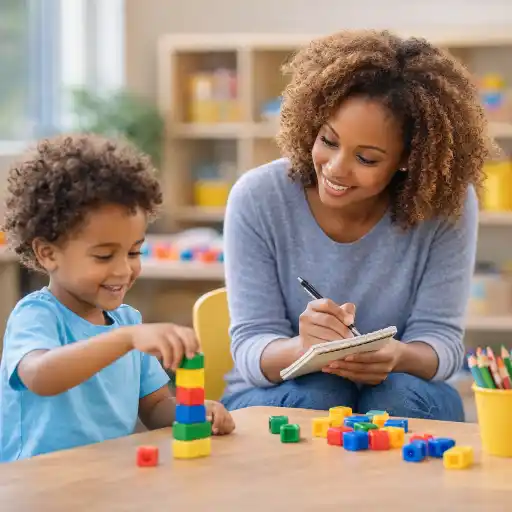
- Factual: “Kai stacked five blocks, watched the tower lean, and added a wide block underneath.”
- Interpretive: “Kai is a natural engineer.”
- Use the first as evidence; treat interpretations as possibilities to examine over time.
Balance documentation of strengths with observations that identify areas where children may benefit from additional support. Keep records secure and follow program procedures for photos and family information.
How can observation become a clear activity plan?
Use a simple cycle: observe, document, interpret, plan, and revisit. First, describe a specific moment. Next, consider what it may reveal about the child’s knowledge, interests, or strategies. Then choose a manageable learning intention and plan an experience that invites children to explore it. After implementation, observe again and adjust based on what happens.
For example, suppose children repeatedly try to build a tall tower, but it tips over. Record the materials they choose, how they respond when the tower falls, and what they say to one another. The next activity might offer blocks of varied sizes, cardboard tubes, photos of bridges, and a prompt such as, “What could make the bottom steadier?” The goal is not to deliver the answer; it is to create conditions for children to test ideas, collaborate, and explain their thinking.
Connect the activity to a developmentally appropriate goal, but allow play to remain open-ended. One experience can support several areas: language through discussion, early math through comparing sizes, physical development through manipulating materials, and social learning through negotiation. Palomar College’s overview of the observation and assessment planning cycle similarly links evidence and reflection to intentional next steps.
- 🧩 Identify a skill, question, or interest that emerged in the observation.
- Choose materials and a setting that give children room to explore.
- Plan a few prompts or supports, while staying open to unexpected directions.
- Decide what evidence would help you understand the next step.
How can activities reflect individual needs and group interests?
A responsive activity can offer one shared invitation with multiple ways to participate. If children are interested in insects, for instance, a classroom inquiry might include picture books, toy insects, drawing materials, magnifiers, and outdoor observation. Children can engage through looking, movement, talk, drawing, sorting, or pretend play; each route offers a meaningful entry point.
Use observations to adjust the level of challenge and adult support. A child who is beginning to use descriptive language may benefit from picture choices and a patient pause. Another child may be ready to compare insect features or dictate a group story. Adapt tools, space, timing, visual supports, or peer groupings so children can take part without being expected to learn in identical ways.
Family knowledge helps educators interpret interests and plan experiences that feel familiar and respectful. Ask what a child talks about at home, which words they use in their home language, or what experiences they have had with a topic.
Offer options without labeling children by a single observation. What looks like reluctance in one setting may reflect unfamiliar materials, a need for more time, or a preference for watching before joining. Reobserve across different situations and adapt with curiosity.
What common planning pitfalls should teams avoid?
One common pitfall is writing conclusions instead of evidence. Labels such as “not interested,” “behind,” or “disruptive” do not explain what happened or suggest a useful next step. Record the context and observable actions, then treat interpretation as a question to explore—not a fixed description of the child.
Another pitfall is planning an activity and then looking only for evidence that confirms the plan. Observation works best when educators remain open to what children actually do. If the activity takes an unexpected turn, that may be valuable information about children’s theories and interests, not a failure of the lesson.
Teams can also collect too much documentation without reviewing it. Keep the process manageable: rotate focus children, gather brief evidence during normal routines, and schedule short reflection conversations. Look for patterns across days and settings rather than drawing conclusions from one moment. The curriculum planning cycle in Minnesota State’s guide to meaningful curriculum likewise connects observation, documentation, interpretation, and reflection.
- Record both successes and moments when a child may need support.
- Use more than one observation before making significant planning decisions.
- Protect supervision and follow privacy and documentation policies.
- Share concrete examples with families and invite their perspectives.
State requirements vary - check your state licensing agency for applicable documentation, assessment, and record-retention rules. Screening and classroom observations can inform follow-up, but they do not by themselves diagnose a child.
How can educators keep the process practical and consistent?
A simple shared routine helps observation lead to action rather than overwhelm. At a weekly planning meeting, staff can select a few children or group interests to focus on, choose a context for noticing, and agree on a concise way to document. At the next meeting, review what the evidence suggests and decide whether to continue, adapt, or extend the experience.
A one-page planning note can include the observation, a tentative interpretation, a goal or question, planned materials and adult supports, and a date to revisit. This format keeps the link between what educators notice and what they offer visible to the whole team. Directors can support consistency by providing common templates, protecting time for reflection, and encouraging staff to share examples without judgment.
Family communication need not wait for formal conferences. A specific observation—“Leila tested three ways to make the ramp steeper and described what happened”—gives families a clear picture of learning and invites them to contribute related interests from home. Respect confidentiality and use approved communication channels.
For professional development, explore Tracking Progress, Shaping Futures: Observation & Assessment Skills Buy Now $55.00 for a deeper look at documentation, assessment methods, and translating evidence into goals. Planning-focused options include Observations And Goal Setting in Childcare Buy Now $24.00, Lesson Planning for Preschoolers Buy Now $24.00, and Children at the Wheel: Emergent Curriculum Buy Now $25.00. These English-language courses offer distinct ways to build observation and planning knowledge.
Conclusion: How do observations lead to better classroom activities?
Child observations support meaningful planning when educators notice children’s strengths, interests, strategies, and needs; record concrete evidence; and use it to design responsive experiences. The cycle is ongoing: observe, document, reflect, plan, implement, and observe again.
Start small. Choose one child or group interest, make a brief factual note, and plan one activity with flexible ways to participate. Review what children do and say, invite family insight, and adjust your next steps. This purposeful approach helps classroom activities feel connected to children’s real questions and helps educators make thoughtful decisions with confidence.
- Moving About the Classroom: Effective Transitions for Everyday
- Lesson Planning for Preschoolers
- CDA Home Visitor Subject Area 3 Part 3 Birth to 5
- CDA Home Visitor Subject Area 2 Part 3 Birth to 5
- From Tantrums to Triumphs: Equipping Preschoolers with Self-Regulation Skills
- The Best Promotion is Play
- Culture, Communication, and Collaboration in Assessment
- Texas Director Credential
- Mastering Observation Techniques in the Montessori Classroom
- Every Moment Matters: Schedules and Transitions
- 💛🧩 ¿Cómo puedo hacer que mi enseñanza sea inclusiva para los niños con autismo?
- Cómo Trabajar en el Cuidado Infantil en Carolina del Norte: Requisitos y Pasos
- Celebrando la amistad en el cuidado infantil durante el Día de los Mejores Amigos
- Canciones, juegos y preguntas de círculo para niños
- How can assessment results be used to plan meaningful activities in early childhood programs?
- Free Infant Lesson Plans for Daycare and Early Learning
- Building a Better Head Start Lesson Plan: 7 Things Every Teacher Should Include
- How to Write a Lesson Plan for Early Childhood Education: Start With the Skill, Not the Craft
- How Can Cut, Sort, and Glue Activities Strengthen Early Learners’ Development?
- Why Do Bilingual Classroom Activities Matter for Dual Language Learners?
- Early Intervention Strategies: What Can Teachers Do While a Child Is Waiting for Services?
- What Does a Neurodiversity-Affirming Classroom Look Like?
- How Do Classroom Jobs Build Responsibility and Confidence in Toddlers?
- How Can Child Care Providers Teach Children to Choose Clothing for Weather and Activities?
- How Can Infant Family Support Goals Become Part of Everyday Care?
- How Can Child Observations Help You Plan More Meaningful Classroom Activities?
- How Can You Plan Staff Training That Engages Experienced Child Care Teachers?
- How Can You Help an Infant Resume Exploring After Care Interrupts Play?
- How Can You Plan Inclusion Around a Child’s Interests?
