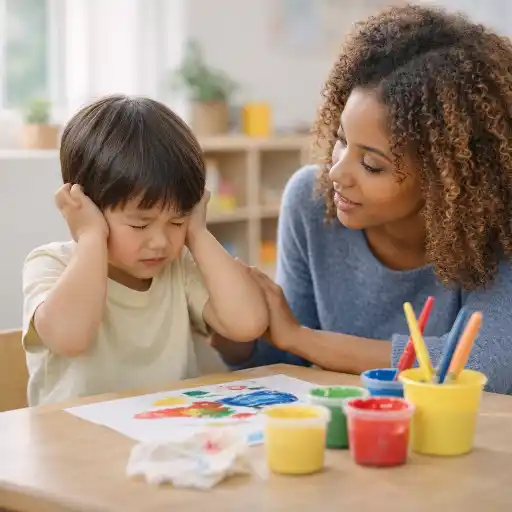
When a child recoils from finger paint or covers their ears during group music, the response may be communication—not defiance. Learn practical, respectful ways to make sensory experiences more accessible, and consider Effective Approaches for Autism and Inclusion  Buy Now $55.00 to deepen your understanding of sensory sensitivities, classroom adaptations, and family partnerships. For a complementary focus on how sensory differences can shape behavior, explore The ABCs of Behavior: Turning Challenges into Learning Opportunities Buy Now
 $55.00$45.00; both courses offer a more structured learning experience for strengthening inclusive classroom practice.
Why might a child avoid paint or cover their ears?
Children experience sensory input differently. Finger paint may feel sticky, cold, or unpredictable to one child, while a song that seems pleasant to adults may feel painfully loud to another. Covering ears, pulling away, refusing messy activities, or becoming distressed can be ways of coping with overwhelming input. A child might also seek sensory experiences, such as touching materials with tools or moving constantly, to meet a different sensory need.
Sensory processing involves receiving and organizing information from the environment and the body. A child’s responses can vary by sense and context: a child may be sensitive to sound but enjoy movement, or avoid paint yet willingly explore water with a scoop. These behaviors alone do not establish a diagnosis. Focus on what the child communicates and whether the pattern affects participation, comfort, or daily routines.
Seeing the behavior through this lens helps providers replace “won’t participate” with useful questions: What might feel uncomfortable? What choice could make participation easier? The goal is access, not compliance. Respecting a child’s cues protects dignity and builds trust, while flexible options help the child remain part of the group.
How can providers offer touch-based activities without pressure?
Invite participation in gradual, child-led steps. Present a simple activity, explain what will happen, and make it clear that the child can watch, use a tool, or take a break. For painting, begin with a long-handled brush, sponge, stamp, or sealed paint bag. Keep a damp cloth or handwashing option nearby so the child knows they can clean their hands when needed.
- Offer a choice between touching the material and using a tool.
- Start with a small amount of paint on a tray or a contained surface.
- Let the child observe a trusted adult or peer before deciding whether to join.
- Try dry, less sticky, or familiar materials before introducing a new texture.
- Accept watching or choosing another art method as meaningful participation.
A child who uses a brush today may choose a shorter tool another time; there is no need to set a timetable for touching paint. Avoid holding a child’s hand in a texture, coaxing repeatedly after a clear refusal, or making participation a condition for joining the group. Gentle invitation and genuine choice are more supportive than forced exposure. This child-led approach also fits thoughtfully planned sensory play experiences.
What can staff do when sounds feel overwhelming?
First, consider the soundscape: group singing, a hand dryer, chairs scraping, or several conversations at once may be difficult for some children. Observe when ear-covering happens and what follows. Give advance notice before predictable loud sounds, lower music volume when possible, and offer a quieter place within the classroom where the child remains supervised and connected.
Providers can also adjust routines without excluding the child. Offer a place farther from speakers, allow the child to listen from the edge of the group, or provide an alternative way to participate, such as holding a picture card or choosing the next song. If noise-reducing headphones are considered, follow program policy, ensure they are suitable for the child, and maintain supervision and awareness of safety cues.
- 📣 Give a brief warning before starting music or using noisy equipment.
- Move loud and quiet activities into separate areas when practical.
- Use soft furnishings or rugs where permitted to reduce echo.
- Offer a quiet break before distress escalates, with a supported route back to play.
Do not require a child to tolerate a sound to prove they are listening, and do not interpret ear-covering as misbehavior. A calm, predictable response can help the child feel safe enough to rejoin when ready.
How can observation and family partnership guide support?
Look for patterns rather than making conclusions from one difficult moment. Record the date, routine, setting, sound or texture present, what the child did, the support offered, and what happened next. Write observable descriptions such as “covered ears during the group song and moved to the book area,” rather than labels such as “difficult” or “overreacting.” Include strengths and successful conditions: perhaps the child painted with a sponge or stayed nearby when the music was quieter.
Share observations with families in a respectful, collaborative way. For example: “We noticed that the hand dryer is hard for Sam, and Sam returns to the sink area when we give a warning and offer space. Have you noticed similar reactions, or found anything that helps?” Ask what the family observes and what the child prefers. With family permission, coordinate with relevant professionals when appropriate.
If sensory responses persist and substantially interfere with safety, eating, sleep, relationships, or learning, discuss the pattern with the family and consider whether professional consultation may help. Child care providers do not diagnose sensory conditions or prescribe clinical programs. State requirements vary - check your state licensing agency.
What common pitfalls should providers avoid?
Well-meaning adults may unintentionally increase a child’s distress by insisting that every child touch, taste, listen, or participate in the same way. Avoid treating sensory discomfort as defiance, surprising a child with a texture or loud sound, or using a quiet area as punishment. Repeated pressure can undermine trust and make an activity feel less safe.
Also avoid assuming that a single strategy suits every child or every day. Sensory tolerance may shift with fatigue, illness, hunger, crowding, or changes in routine. Tools such as headphones, gloves, or sensory materials are not automatically appropriate; consider the child’s needs, supervision, allergies, program policy, and safety requirements before use.
- Do not force hands-on participation; provide accessible alternatives.
- Do not label one incident as a disorder or use a classroom observation as a diagnosis.
- Do not isolate a child when they need a quieter option; keep the child included and supervised.
- Do not overwhelm the classroom with many new sensory materials at once.
Instead, make one manageable adjustment, explain it to the team, and observe its effect. Consistent, compassionate responses give children opportunities to communicate preferences and participate in ways that work for them.
Conclusion: How can providers make sensory play more welcoming?
When a child avoids paint or covers their ears, start with curiosity: what might the child be experiencing, and what would make participation feel safer? Observe patterns, offer choices, adapt texture and sound, and let the child set the pace. Watching, using a tool, choosing a quieter location, or taking a short break can all be valid ways to stay connected to learning.
Work with families, document what helps, and consult appropriate professionals when persistent patterns substantially affect daily life. Avoid forced exposure and unsupported diagnosis; focus instead on access, dignity, and meaningful participation. Small, consistent adaptations can help a child feel understood and make the classroom more welcoming for everyone.
Providers seeking deeper preparation can explore Effective Approaches for Autism and Inclusion Buy Now $55.00 and The ABCs of Behavior Buy Now $55.00$45.00, along with these ChildCareEd resources: supporting children with sensory processing differences, recognizing early sensory signs, and making classrooms more sensory-friendly.
Additional English courses: Playful Spaces for Infants & Toddlers Buy Now $24.00, Play with Purpose: Supporting Children with Autism Buy Now $55.00$40.00, and Recognize, Respond, Respect: Supporting Diverse Learners Buy Now $55.00.
- Open Ears: Listening in Child Care
- CDA Bridge Bundle: Preschool
- Recognize, Respond, Respect: Supporting Diverse Learners
- 45 Hour School Age Methods and Materials
- CDA Bridge Bundle: Family Child Care
- CDA Bridge Bundle: Family Child Care without Portfolio Review
- CDA Bridge Bundle: Infant/Toddler without Portfolio Review
- CDA Bridge Bundle: Preschool without Portfolio Review
- Texas Director Credential
- First Aid for Frosty Fingers: Holiday Safety and CPR Tips Every Parent Should Know
- CDA Certification en Español: Recursos y Consejos para Educadores Bilingües
- 💛🧩 ¿Cómo puedo hacer que mi enseñanza sea inclusiva para los niños con autismo?
- Proporciones de Cuidado Infantil y Tamaños de Grupo por Edad en Virginia (Guía Rápida para Centros y Hogares)
- Respectful Indigenous Activities for Early Childhood Classrooms
- Why Should Children’s Artwork Not All Look the Same?
- Made by Me! Labor Day Crafts for Preschoolers That Celebrate Hard Work
- What Does Compassion Look Like in Child Care? 10 Everyday Moments That Matter
- How Can Child Care Providers Support Children with Sensory Processing Differences?
- How Can Daycare Providers Support Children with Sensory Processing Differences?
- How Can Child Care Providers Help Young Children Follow Directions?
- How Can You Help a Child Who Won’t Listen in the Classroom?
- How Can Providers Teach Children to Notice When a Friend Needs Space?
- How Can Providers Respond When Children Reject Unfamiliar Materials?
- How Can Child Care Providers Help Families See the Learning Hidden Inside Messy Play?
- How Can Preschool Teachers Recognize and Respond to Sensory Overload in the Classroom?
- How Can Child Care Providers Handle a Child Who Refuses to Follow Directions?
- How Can Child Care Providers Help Young Children Read Emotional Cues in Everyday Situations?
- How Can Providers Support Children Who Avoid Touching Paint or Cover Their Ears?
- How Can You Offer an Adapted Tool Without Making a Child Feel Singled Out?
