Young children are natural explorers. With a few safe materials and a curious prompt, you can turn play into real #preschool #STEM learning. This article gives easy steps, low-prep activities, and teacher moves you can use tomorrow to support thinking, language, and problem solving. You'll find 1) quick activities, 2) ways to guide without taking over, 3) setup and safety tips, and 4) ideas to share learning with families. For many classroom-ready activities and printables, see Spark Young Minds and the Water Drop STEM Activity Buy Now $0.00 from ChildCareEd.
What easy STEM activities can I try tomorrow?
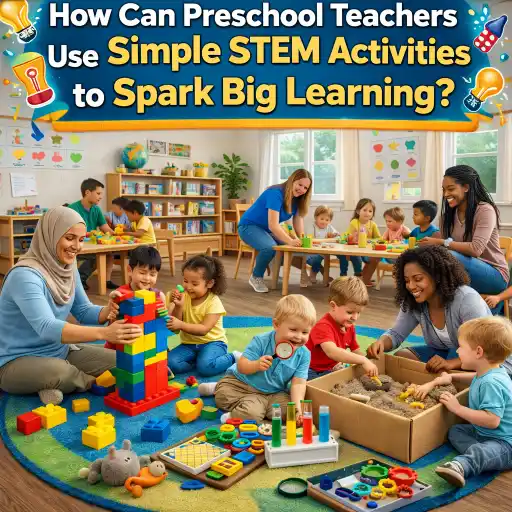
Here are numbered, low-prep invitations that work well for short morning centers or small groups. Use simple materials you already have. Each idea links to more ChildCareEd inspiration when helpful.
- 🔬 Color mixing with water: clear cups, food coloring, droppers. Ask: “What will happen if we mix blue and yellow?” Let children predict, test, and count drops. See ChildCareEd examples like the Spark Young Minds post for variations.
- 🌊 Sink or float test: a water bin and safe items (cork, coin, small toy). 1) Predict, 2) test, 3) sort into two piles. This builds early #math skills.
- 🧱 Build-and-test challenge: recycled boxes, tape, popsicle sticks. Ask children to design a bridge for a toy car and then test it. For recycled ideas, see ChildCareEd’s list of recycled materials.
- 🌱 Seed germination: clear cups, paper towels, seeds. Daily observations and simple drawings make great documentation.
- 🚗 Ramp races: cardboard ramps, toy cars. Change height or surface and compare results to explore motion.
Tips for success: 1) Keep activities 10–20 minutes for focused invitations; 2) repeat the activity with one change so children notice differences; 3) plan cleanup so mess doesn’t stop learning. For printable, teacher-friendly experiments try the Water Drop STEM Activity Buy Now $0.00.
How do I guide STEM play so children lead the learning?
Good guidance is short, curious, and strengths-based. Your role is to observe, ask one open question, and offer a tiny scaffold when needed. Why it matters: guided invitations help children practice making guesses, testing ideas, and using words to explain — skills that support later reading and math. Research and teacher guides (see Science in Early Childhood Classrooms) show that inquiry and talk are central to early science learning.
- 👂 Observe first: let children try their idea for a minute before stepping in.
- ❓ Ask one open question: e.g., “What do you notice?” or “What could we try next?”
- ✏️ Document: take a photo, draw the result, or make a simple tally. Documentation makes thinking visible and helps you plan next steps.
- 🔁 Encourage repeat testing: ask children to change one thing and compare results.
- 🧭 Offer words: name measurements or actions (push, heavier, faster) to grow vocabulary.
Common mistakes (and fixes):
- Too much adult instruction — fix: ask a question and wait.
- Focusing only on right answers — fix: praise attempts and process.
- Overloading materials — fix: offer 3–5 items to reduce overwhelm.
How can I set up a safe, low-prep STEM space in my classroom?
Design a simple, rotating area that invites choice and keeps cleanup easy. State requirements vary - check your state licensing agency. Below is a practical, numbered setup plan.
- 🔧 Choose one visible spot: place the STEM tray where adults can supervise easily.
- 📦 Use labeled bins: keep droppers, cups, loose parts, and measuring tools sorted so children can select independently.
- 🪣 Use trays or shower curtains: contain spills and make cleanup fast.
- ♻️ Rotate materials weekly: switch a few loose parts (bottle caps, fabric scraps, cardboard) to keep interest high. For ideas, see ChildCareEd’s recycled materials list here.
- 🛡️ Check safety: remove choking hazards, label scissors, and set clear rules (materials stay on the table, adults pour hot liquids).
Low-cost equipment ideas: magnifying glasses, measuring cups, droppers, small funnels, magnets, and a tub for water play. You don’t need fancy kits — everyday objects work. The Fun Preschool STEM Activities article on ChildCareEd has many ready-to-use invitations and set-up tips.
How do I involve families and check what children learn?
Families love seeing curiosity in action. Use simple documentation and small take-home invites so families can join the learning. Below are numbered steps and a short FAQ to help teams share learning efficiently.
- 📸 Quick photo + quote: take one photo and write the child’s words or a short observation.
- 📝 Share one-sentence notes: send a short message at pick-up or by email describing the question and what the child did.
- 🏠 Offer one-home extension: a simple activity (e.g., color mixing with cups) families can try together.
- 📚 Display learning: pin photos and drawings on a STEM board so children revisit ideas.
Assessment ideas: observe children using science talk, count attempts, and note persistence. For formal tools and approaches to assessing preschool science learning, see research summaries like Assessment for Preschool Science Learning.
FAQ
- Q: How long should an activity run? A: 10–20 minutes for a focused invitation; multi-day projects can run longer.
- Q: Do I need special kits? A: No. Everyday items work well — see ChildCareEd’s activity pages for ideas.
- Q: How do I include dual-language learners? A: Use visuals, gestures, and accept answers in the child’s home language.
- Q: What if staff have little time? A: Start with one tray and one photo note — small steps add up.
Conclusion
1) Start small: pick one simple activity (color mixing or sink/float). 2) Ask one open question and watch. 3) Take one photo and jot one sentence. Repeat and change one thing the next time. These tiny, playful STEM invitations build big skills — thinking, language, cooperation, and confidence. For ready-to-use activities and printables, explore ChildCareEd resources like Spark Young Minds, the Fun Preschool STEM Activities article, and the printable Water Drop STEM Activity Buy Now $0.00. You can also read Spark Their Love for Learning for classroom strategies and teacher moves that nurture curiosity and build long-term engagement. Keep it playful, safe, and child-led — you’re helping little learners become confident thinkers.
- 45 Hour Child Growth and Development
- Moving About the Classroom: Effective Transitions for Everyday
- CDA Home Visitor Subject Area 3 Part 3 Birth to 5
- 45 Hour Preschool Methods and Materials
- Play Safe, Think Big: Literacy Through Play
- Art from the Heart for Preschoolers: Open Ended Art Projects that Build Self-Esteem
- CDA Bridge Bundle: Preschool without Portfolio Review
- Texas Director Credential
- Enhancing STEM Education for Infants and Toddlers
- 🎉STEM-sational Fun: How Can You Spark Preschoolers’ Curiosity with Engaging STEM Activities? 🔬🧪🔢
- Actividades de Fiesta para Niños de Preescolar y Primaria
- Normas de Licenciamiento de Cuidado Infantil en Virginia para Centros Diurnos Infantiles y Hogares Diurnos Familiares
- Proporciones de Cuidado Infantil y Tamaños de Grupo por Edad en Virginia (Guía Rápida para Centros y Hogares)
- Cómo Celebrar el Día Nacional del Kindergarten
- Actividades de Otoño Fáciles para Preescolares esta Temporada
- Learning Through Creative Daycare Activities
- How Do Art Activities Support Cognitive Growth in North Dakota Preschoolers?
- Can Toddlers Do STEM in the Sandbox at Minnesota Daycares?
- What are easy STEM activities I can do with preschoolers?
- Calabazas, hojas y manzanas: actividades de otoño para preescolares
- How can child care providers use simple STEM activities with early learners?
- Celebrando la amistad en el cuidado infantil durante el Día de los Mejores Amigos
- Diversión fresca de verano: actividades del Día Nacional del Helado para niños
- How can we help children reach new heights—from the Space Needle to the preschool classroom?
- What Can the Golden Gate Bridge Teach Preschoolers About Connection?
- Canciones, juegos y preguntas de círculo para niños
- How can preschool teachers use simple STEM activities to spark big learning?
- How can Minnesota child care programs keep kids learning and engaged over the summer?
- How can I use simple STEM activities to spark curiosity in preschoolers?
