As a child care provider or director in New York, you likely care for children learning #English. This guide is written like a friendly coworker showing easy, practical steps you can start using tomorrow. We focus on simple classroom changes, daily teaching moves, family partnerships, and ways to track progress. You don’t need to be fluent in every home language to make a big difference.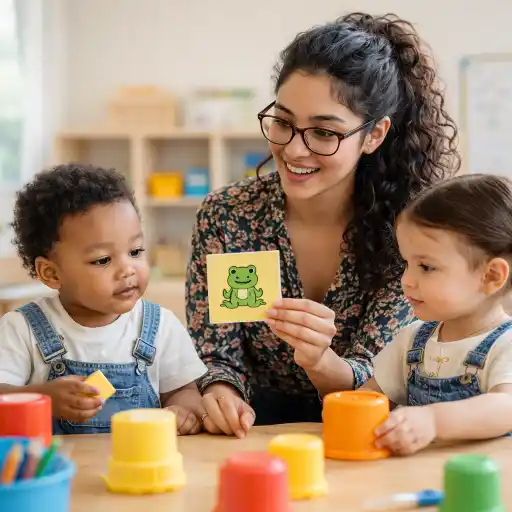
Why it matters:
1) Children learn best when they feel safe and seen. When you welcome a child’s home language and culture, they relax and try new words.
2) Keeping a child’s home language helps them learn English faster and supports later reading and school success. See tips from Supporting Dual Language Learners in Child Care Settings for classroom ideas.
How can I make my New York classroom welcoming for children learning English?
Use these numbered steps to make the room feel like home. Small changes help children follow routines and feel proud of their #bilingual strengths.
- 😊 Start with visuals and labels. Put picture labels and words in English and the child’s home language on shelves and bins. This simple move is recommended in How Can Child Care Programs Best Support Dual Language Learners?.
- 📚 Add books and music in families’ languages. Invite families to share favorite books or songs. See ideas in Many Languages, One Classroom.
- 📷 Use picture schedules and routine photos so children know what comes next without hearing every word.
- 🎨 Create a small cultural corner with family photos, toys, or art items that reflect children’s lives. Rotate items so that many families feel represented. You can also align displays and short activities with cultural celebrations — see Hispanic Heritage Month resources for songs, books, and classroom ideas to help include and honor families’ cultures.
- 🔤 Support print knowledge with name cards and alphabet posters. Simple print supports help literacy in any language (see Language and literacy strategies).
Why these steps help: visuals and familiar items lower stress, so children use language more. The room becomes a place of #inclusion where kids try English while keeping their home language.
What everyday teaching moves help children learn English while keeping their home language strong?
Daily routines are prime teaching time. Use short, repeated moves that fit into snack, play, and transitions. You don’t need long lessons—small, steady actions work best.
- 😊 Model language with short sentences. Use self-talk and parallel talk (“I am pouring juice. You are stirring.”). Repeat important words many times. The practice of language modeling is described in Language Modeling With Dual Language Learning Toddlers Buy Now $0.00.
- 📷 Use gestures, real objects, and pictures when you name things. Pointing plus the word helps children link meaning and sound.
- 🔁 Repeat and expand: when a child says “ball,” reply “Yes, big red ball! Roll the big red ball.” Add one word at a time to grow sentences.
- 📖 Build print knowledge during play: name cards, magnetic letters, and short shared reading help children notice print. See classroom print ideas at How Can Teachers Support Language and Literacy Every Day?.
- 🤝 Use peer buddies and routines. Pair children for play so they hear words in real play contexts.
Quick tip: learn 5–10 key words in each child’s home language (hello, bathroom, eat, help). Ask families to write them phonetically. This shows respect for #families and builds trust fast. For more adult learning, consider Building Bridges for Dual Language Learners Buy Now $25.00.
How can New York providers partner with families to support English learning?
Families are the child’s first teachers. Strong partnerships make learning smoother and keep culture alive in your program. Follow these simple numbered steps.
- 😊 Greet families warmly and ask how they prefer to get messages (text, phone, note). Small daily contacts build trust fast. See family partnership tips in How Can We Partner With Families?.
- 📩 Invite family input: ask for favorite songs, words, and family photos. Keep a notebook of phonetic word families that give you.
- 📚 Share 1–3 easy home activities (read one page, sing a song). Make activities short and doable.
- 🔗 Connect families to local supports like bilingual story times. ChildCareEd lists free resources and tools in its Resources area.
- ⚖️ Remember: state requirements vary - check your state licensing agency for translation or record-keeping rules.
Why this matters: when families see you respect their language, they join your effort. That support accelerates children’s language growth and builds program loyalty.
How do we track progress and avoid common mistakes?
Use simple tracking and avoid these common pitfalls. You do not need complex tests—short notes and observations work well.
- 📈 Track small wins: note one new word, one social step, or one routine the child now follows. Keep a short monthly log for each child.
- 🗣️ Observe in both languages. Ask families what words the child uses at home. Progress can show up first in the home language and then in English.
- 📷 Use photos and child quotes to show progress during conferences.
- ⚠️ Common mistakes to avoid:
- 🚫 Telling families to stop the home language — don’t. Home language helps with English learning.
- 🚫 Assuming silence means lack of skill — children often have a silent period when learning a second language.
- 🚫 Using only English assessments — include family reports and observation across languages.
- 🔁 If you need deeper support, use trainings like Building Bridges (online)
 Buy Now $16.00 or community resources such as the CDC early care strategies.
Short FAQ (quick answers):
- Q: Do I need to speak the child’s language? A: No. Use gestures, visuals, and family help.
- Q: Will two languages confuse a child? A: No. Bilingualism is a strength.
- Q: How often should we contact families? A: Aim for at least one positive contact each week.
- Q: Where can I get training? A: Search ChildCareEd courses like Building Bridges Buy Now $25.00.
Thank you for the caring work you do. Keep trying small steps: label one shelf, teach one home word, send one positive note. Those steady actions build confidence and success for #DLLs and help your program celebrate language as a strength. #families #inclusion
- ChildCareEd is now an EIP Training Organization!
- How Can Childcare Educators Thrive in the Big Apple?
- From Challenges to Triumphs: Strategies for Childcare Educators in New York
- Maximize Your Training Opportunities with the Educational Incentive Program (EIP)
- Welcome to New York: Early Childhood Education
- CDA Certification en Español: Recursos y Consejos para Educadores Bilingües
- How Can New York Educators Strategically Plan Their 30 Hours of Training
- 💛🧩 ¿Cómo puedo hacer que mi enseñanza sea inclusiva para los niños con autismo?
- Proporciones de Cuidado Infantil y Tamaños de Grupo por Edad en Virginia (Guía Rápida para Centros y Hogares)
- How can child care providers use the science of reading to boost early literacy in New York?
- What do I need to know to provide child care in New York?
- How can reading aloud build literacy in New York toddler rooms?
- How can New York childcare workers in the Bronx find Spanish-language CEU courses?
- What Qualifications Does a New York Child Care Director Need?
- How Many Annual Training Hours Do Child Care Providers Need in New York?
- Canciones, juegos y preguntas de círculo para niños
- How can I renew my New York child care license without a gap?
- How Can New York Providers Support Health, Family, and Learning Together?
- How Can New York Providers Support Children Learning English?
