Hot days can be dangerous for little bodies. This short guide helps New York child care providers and directors learn how to spot the signs of heat exhaustion and heatstroke in young children and what to do right away. Keep this page handy, share it with your team, and remember: state requirements vary - check your state licensing agency. Watch for the big ideas: #heat #children #hydration #safety #signs.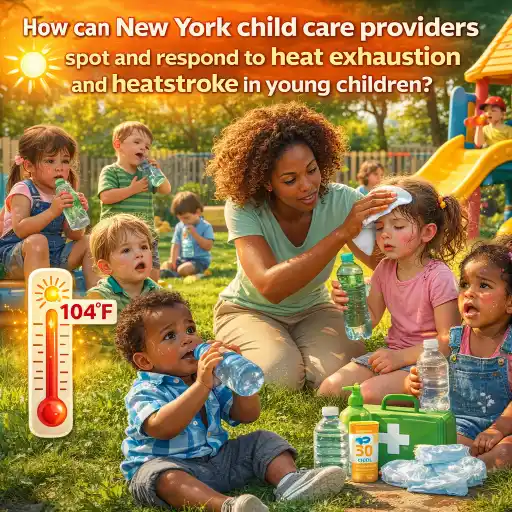
Why does heat affect young children more than adults?
1. Children sweat less. Sweating helps cool the body. Many little children and babies do not sweat as well, so they may not cool down on their own.
2. Children depend on adults. Babies and young children cannot get water or move to shade by themselves. They rely on adults to notice needs and act.
Why it matters:
3. Quick action prevents serious harm. Heat exhaustion can become life‑threatening heatstroke if not treated fast. See the CDC tips for Infants and Children and Heat.
4. Planning saves lives. Small changes in routine — more breaks, shade, and frequent drinks — prevent most problems. ChildCareEd explains how to prepare for extreme heat and keep kids safe.
What are the common signs of heat exhaustion and heatstroke in young children?
1. Heat exhaustion (early, treat quickly):
- 🙂 Heavy sweating and tiredness
- 🙂 Headache, dizziness, or nausea
- 🙂 Pale or cool, moist skin
- 🙂 Fast pulse, muscle cramps, or fainting
2. Heatstroke (emergency):
- 🚨 Very high body temperature (often 104°F/40°C or higher)
- 🚨 Confusion, passing out, seizures, or not responding normally
- 🚨 Hot, red, dry skin (may stop sweating)
3. Other warning signs for young children: less urine, very thirsty, or sudden behavior change (sleepy or cranky). The CDC lists heat-related illnesses and first-aid steps in detail at Heat-related Illnesses | CDC. ChildCareEd also has an easy reference: Heat Awareness Buy Now $0.00.
What immediate steps should staff take if a child shows signs of heat illness?
- 🚑 If you see signs of heatstroke (confused, passed out, very hot skin), call 911 immediately. Then start cooling.
- 🏃 Move the child to shade or an air-conditioned area right away.
- 🧥 Loosen or remove extra clothing and shoes to help cool down.
- 🧊 Cool the child quickly by using these options in order as available:
- Put cool, wet cloths on the head, neck, armpits, and groin.
- Sip small amounts of cool water if the child is alert and not vomiting.
- Use spray bottles, misting, or a lukewarm bath to cool. Do not use very cold water for infants without medical advice.
- 📣 Stay with the child, monitor breathing and alertness, and call parents as you follow your emergency steps.
- 📝 Document what happened and review your plan afterward so staff learn from the event.
- 🚑 Responding to emergencies: For staff who need to feel confident acting quickly when a child shows signs of heat exhaustion or heatstroke, ChildCareEd's Responding to Emergencies
 Buy Now $16.00 is a 2-hour online course covering how to recognize emergency situations, follow first aid steps, and communicate clearly with families and emergency services — a direct match for the cooling steps, 911 decision points, and incident documentation routines outlined in this article.
For step-by-step first aid tools and printable sheets, see ChildCareEd’s First Aid for Heat Illness Buy Now $0.00 and the Red Cross guidance on cooling and when to call 911 at Extreme Heat Safety | Red Cross. The CDC also gives clear first-aid advice for workers and caregivers at Heat-Related Illnesses | CDC.
Vehicle safety reminder: never leave a child alone in a parked car. Cars heat up fast — even on mild days. Local New York guidance and ChildCareEd resources remind providers that this is a leading cause of preventable child deaths (How can New York child care programs keep young children cool, and see local alerts such as Erie County guidance).
How can my program prevent heat illness and avoid common mistakes?
Prevention is the best care. Use routines, clear roles, and simple checks every day.
Daily prevention checklist (easy to copy onto your staff board):
- 🔍 Morning heat check: look at the heat index before outdoor time and again before each outdoor block. ChildCareEd suggests a traffic-light rule: go/shorten/stay inside (Preparing for Extreme Heat).
- 🌳 Shade and timing: schedule outdoor play in cooler parts of the day; set up shade (canopies, trees, umbrellas).
- 💧Hydration plan (use a timer):
- At arrival
- Before going outside
- Every 10–15 minutes while outdoors in the heat
- Before nap or leaving
- 👕 Clothing & sun safety: light, loose, light-colored clothes; hats when outside; sunscreen with family permission.
- 👀 Staffing roles: assign a water watcher and zone leads for supervision and headcounts at transitions.
- 🌿 Everyday safety and healthy environments: To help staff build the consistent daily habits that prevent heat illness before it starts, ChildCareEd's Everyday Safety: Creating Healthy Environments Buy Now $55.00 is a 6-hour online course covering how to anticipate health risks, maintain safe outdoor spaces, and build consistent supervision and hygiene routines — directly supporting the morning heat checks, hydration scheduling, shade preparation, and role assignment steps described throughout this guide.
- 🧰 Heat kit: spray bottles, cool towels, wrapped ice packs, first-aid supplies, and emergency contact list.
Common mistakes and how to avoid them:
- ❌ Skipping the heat check. ✅ Make it part of the morning routine and post a quick chart.
- ❌ Letting staff guess when to shorten play. ✅ Use a simple heat index rule and practice it in drills.
- ❌ Forgetting vehicle safety. ✅ Remind families daily and use back-seat checks; see ChildCareEd's vehicle safety suggestions (How can New York child care programs keep young children cool).
Policies and training: follow best-practice standards like Caring for Our Children and build a written emergency action plan (sample plan at ChildCareEd: Sample Childcare Emergency Action Plan Buy Now $0.00).
FAQ (short):
- Q: When should we call 911? A: Call 911 for any confused child passed out, seizing, or having very hot, dry skin and a high temperature. The Red Cross and CDC say heatstroke is a medical emergency.
- Q: Can we give sports drinks? A: Small amounts can help replace salt during heavy sweating, but water is best most of the time. Check child health needs and family preferences.
- Q: How often train staff? A: Do a short heat-safety huddle daily during hot months and annual first-aid refreshers. Keep documentation of training.
- Q: Is using fans enough? A: Fans help a bit, but when the heat is extreme, move children to air conditioning or a cooling center. See Red Cross tips on staying cool.
Conclusion
Spotting and treating heat illness in young children is something every New York child care program can do well with simple routines, clear roles, and quick action. Use the daily checks (heat index, shade, hydration), train staff on the signs, and keep first-aid steps posted and practiced. ChildCareEd offers helpful resources and short trainings you can use with staff (Preparing for Extreme Heat, First Aid for Heat Illness Buy Now $0.00).
For help recognizing general sickness symptoms, deciding when a child should stay home, and basic infection-control steps, see ChildCareEd's Ah-Choo!.You are not alone — protect the children in your care with routines that make safety simple and automatic. Remember: state requirements vary - check your state licensing agency.
Act fast, stay calm, and follow a clear plan. Numbered steps help staff move quickly and safely. Use a short checklist and share it with staff. Know these differences so you can act fast. 1. Children’s bodies warm faster. Young children have more surface area compared to their weight, so they gain heat more quickly. This means a child can get sick from the heat faster than an adult.
- 45 Hour Child Growth and Development
- 45 Hour Preschool Methods and Materials
- Mastering Supervision: Keeping Children Safe in All Settings
- Pediatric RSV First Aid & CPR/AED
- CDA Bridge Bundle: Family Child Care without Portfolio Review
- CDA Bridge Bundle: Infant/Toddler without Portfolio Review
- CDA Bridge Bundle: Preschool without Portfolio Review
- Texas Director Credential
- Vehicle Safety Tips for Summer
- CDA Certification en Español: Recursos y Consejos para Educadores Bilingües
- 🔍 ¿Qué ves cuando observas a un niño aprender?
- Capacitación en Salud y Seguridad Preventiva en Línea para Proveedores de Cuidado Infantil
- Regulaciones de Cuidado Infantil en Maryland para Centros y Hogares de Cuidado Infantil Familiar
- Regulaciones de Licenciamiento de Cuidado Infantil en California para Centros y Hogares de Cuidado Infantil Familiar
- Proporciones de Cuidado Infantil y Tamaños de Grupo por Edad en Maryland (Guía Rápida para Centros y Hogares)
- Proporciones de Cuidado Infantil y Tamaños de Grupo por Edad en Nueva Jersey (Guía Rápida para Centros y Hogares)
- Proporciones de Cuidado Infantil y Tamaños de Grupo por Edad en Virginia (Guía Rápida para Centros y Hogares)
- Lista para Abrir una Guardería en Casa en Dakota del Norte: Cómo Empezar
- Lista para Guardería en Casa en Texas: Cómo Iniciar una Guardería en el Hogar
- Apoyo en Preescolar para Retrasos del Habla: Estrategias Simples que Ayudan
- Retraso del Habla en la Guardería: Cómo Pueden Ayudar los Proveedores
- Cómo Trabajar en el Cuidado Infantil en California: Requisitos y Pasos
- Canciones, juegos y preguntas de círculo para niños
- How can New York child care providers spot and respond to heat exhaustion and heatstroke in young children?
- Cómo simplificar la capacitación para sus empleados de daycare
- When should New York child care programs move play indoors during heat?
- How can North Dakota providers recognize and respond to heat stress in young children?
