A child should NEVER be in or near a car without an adult to supervise. Pediatric vehicular heatstroke (PVH) remains a preventable cause of death and severe injury; child-care professionals must understand how quickly vehicles heat, how hyperthermia presents in young children, and what policies and response programs should use. To strengthen your program's preparedness, consider these state-approved trainings: Pediatric First Aid & CPR/AED Buy Now $85.00$80.00 and Basic Health & Safety and Breastfeeding Awareness Buy Now $35.00. These courses build clinical response skills and program-level prevention practices that reduce risk during transportation and drop-off/pick-up routines. Staff trained to operate an AED and perform high-quality CPR are better equipped to manage sudden collapse; for practical guidance on AED use and local training options, see our article on how to use an AED.
This article explains: how rapidly interiors warm, clinical signs of heat-related illness in infants and young children, immediate first-aid and escalation steps, and practical program and family controls to prevent hot-car incidents during summer months.
Even if it's not very cold outside, hyperthermia can happen in a car. When the outside temperature is between 60 and 70 degrees Fahrenheit, the inside of a car can quickly reach temperatures that are dangerous and life-threatening. Sunlight can make the temperature inside the car rise even more quickly.
The temperature rising in the car is very dangerous for young children. Three to five times faster than an adult, a young child's body temperature rises. Rolling the windows down a few inches is not enough to keep a car cool and well-ventilated, and parents and/or caregivers should NEVER leave their children alone in a car.
When a person's body temperature goes above 104 degrees Fahrenheit, and their cooling system can't keep them cool, they develop hyperthermia. When the body's temperature reaches 107 degrees Fahrenheit, organs start to shut down, which can be fatal.
What are the signs of heat-related illness in children?
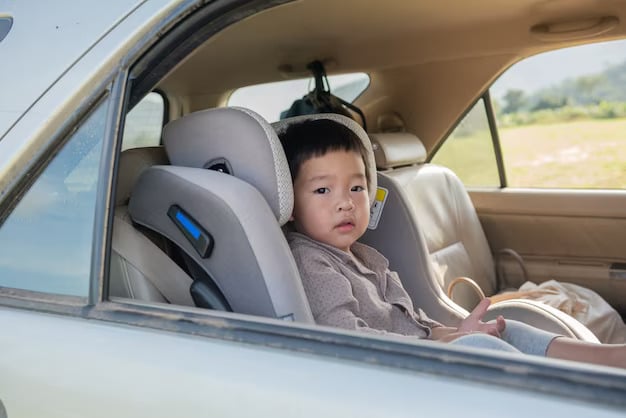 Some signs of heatstroke are:
- Confusion
- Dizziness
- Fussiness or unusual irritability
- Tachycardia or weak/abnormal pulse
- Flushed, hot, dry skin (lack of sweating may be present)
- Marked lethargy or unresponsiveness
- Seizure activity
How quickly can temperatures rise inside a parked vehicle?
Interior temperatures can escalate from mild to life-threatening in minutes. Studies and government guidance demonstrate that even with outside temperatures in the 60s Fahrenheit, interior cabin temperatures may climb rapidly; Consumer Reports-style testing cited by industry sources found an interior rise to dangerous levels within an hour. The National Highway Traffic Safety Administration (NHTSA) emphasizes that never leaving a child unattended in a vehicle is the only reliable preventive measure. For an authoritative summary of vehicle heat risks and vehicle-prep checks, see the NHTSA guidance linked below.
What immediate actions should caregivers take if a child shows heatstroke symptoms?
If you find a child who is hot and showing signs of hyperthermia, act immediately: 1) Move the child to a cooler environment (shade or air-conditioned space) and remove excess clothing, 2) Cool the child with tepid to cool water (sponging, misting, or cool packs to the neck, groin and armpits), 3) Monitor airway, breathing and circulation and be prepared to call emergency medical services (911) if the child is altered, seizuring, or if cooling is not effective, and 4) Provide continuous supervision and hand off to EMS on arrival. Completing a Pediatric First Aid & CPR course will give staff the skills to evaluate breathing, pulse, and responsiveness and to coordinate with EMS and caregivers effectively (Pediatric First Aid & CPR/AED Buy Now $85.00$80.00).
How can child care programs and families prevent hot-car incidents?
Prevention requires both individual vigilance and written program procedures: adopt formal transportation policies (who is responsible for arrival and departure checks), use checklists that require staff to confirm each child’s status when a vehicle is used, require staff to check the vehicle interior immediately after every trip, and institute staggered handoff procedures so two adults are present when moving groups. Encourage families to never leave children unattended and to lock vehicles when not in use. Training such as Transportation and Field Trip Safety Buy Now $25.00 supports program-level policies and compliance with licensing rules on transporting children. For program-level tactics (hydration, shaded staging areas, and activity planning) see the related ChildCareEd guidance linked below.
What New York transportation and supervision rules apply to child care programs?
Programs operating in New York must align their transportation, supervision, and incident-reporting practices with state licensing expectations (OCFS). That includes maintaining accurate rosters for pick-up and drop-off, documented arrival/departure checks, required staff-to-child ratios for transport, regular vehicle maintenance records, and clearly defined responsibilities for post-trip interior checks. Refer to ChildCareEd's New York guidance on spotting and responding to heat exhaustion and heatstroke and on keeping young children cool and hydrated during a heat wave, for example, checklists, documentation templates, and steps for reporting an incident to licensing authorities. Aligning program checklists and incident workflows with OCFS and local licensing guidance ensures compliance and smoother investigations if an event occurs.
Where can I read more about related summer safety topics?
Related ChildCareEd articles with practical guidance include: How can child care programs prevent heat-related illness during outdoor play?, How can New York programs keep young children cool and hydrated during a heat wave?, How can childcare programs make transportation safe, inclusive, and compliant?.
What should programs do now?
Preventing pediatric vehicular heatstroke depends on clear policies, consistent checks, and trained staff. Require a post-trip interior check every time a vehicle is used, keep updated pick-up rosters, and ensure at least two adults are present during group transfers or handoffs. Train staff in Pediatric First Aid & CPR and Transportation and Field Trip Safety, practice your incident response, and document any event promptly for follow-up with licensing authorities and families. Use ChildCareEd course resources and the state-specific guidance in Related links to adapt templates and checklists to your program. Consult the ChildCareEd New York guidance linked above to align your checklists with OCFS expectations, run an annual training drill that includes post-trip checks, and designate a transportation safety lead who verifies each vehicle before unlocking. Treat any child found alone in a vehicle as an emergency and activate EMS and your incident-report workflow without delay. #heatstroke #transportation #safety #supervision #firstaid
- Basic Life Support (BLS) In-Person Healthcare Providers
- Health and Safety Orientation
- Pediatric Blended First Aid & CPR/AED Adult, Child, Infant
- Pediatric RSV First Aid & CPR/AED
- Pediatric In-Person First Aid & CPR/AED Adult, Child, Infant
- CDA Bridge Bundle: Family Child Care without Portfolio Review
- CDA Bridge Bundle: Infant/Toddler without Portfolio Review
- CDA Bridge Bundle: Preschool without Portfolio Review
- Texas Director Credential
- Vehicle Safety Tips for Summer
- Summer Fun Meets Summer Safety: The Importance of Pediatric First Aid and CPR Training
- 10 Reasons this Summer to Take Pediatric First Aid and CPR with ChildCareEd
- 🥦✨ ¿Cómo apoyar a los niños selectivos a probar nuevos alimentos sin presión?
- Reglas de Cuidado Infantil en Carolina del Norte para Centros y Hogares de Cuidado Infantil Familiar
- Requisitos de Cuidado Infantil en Nueva Jersey para Centros y Proveedores de Cuidado Infantil Familiar
- Lista para Guardería en Casa en Texas: Cómo Iniciar una Guardería en el Hogar
- Consejos de Supervisión Activa para Salones de Preescolar y el Juego al Aire Libre
- Las Mejores Ideas de Excursiones para Guarderías en Texas
- Summer Field Trips for Daycares in Texas
- Summer Field Trips for Daycares in Wisconsin
- Summer Field Trips for Daycares in Illinois
- How can New York child care programs keep young children cool and hydrated during a heat wave?
- How can Michigan home-based providers plan engaging and safe summer programming?
- How Can Michigan Providers Prevent Summer Learning Loss in Young Children?
- How can New York providers bridge the summer gap with year-round learning?
- How can Minnesota child care programs keep kids learning and engaged over the summer?
- How can Michigan child care programs plan staff schedules and coverage around summer holidays?
- Summer Preschool Activities for Art, Science, and Sensory Play
