Good supervision keeps children safe and helps staff do their best work. This short guide is for child care providers and directors in New York. It explains simple, clear steps you can use every day to support active #supervision, strong #safety habits, and smart record-keeping for #children. You will find practical tips, common mistakes to avoid, and links to helpful resources. Remember: state requirements vary - check your state licensing agency.
Why does supervision matter in New York?
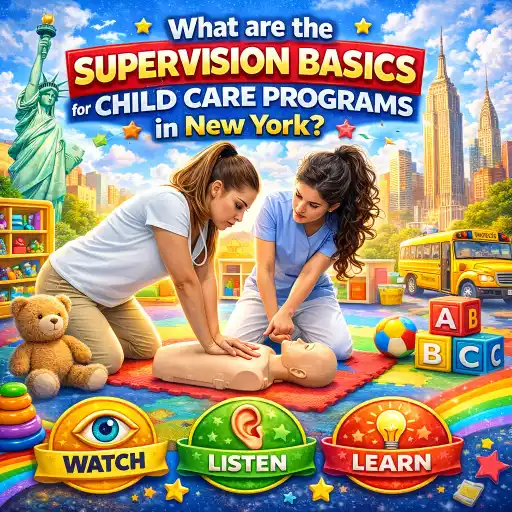
1) Safety first: Young children move fast and try new things. Good supervision stops small risks from becoming injuries. ChildCareEd explains how supervision supports safety and learning in The Vital Role of Supervision and why active attention matters in Why Active Supervision Is Important.
2) Trust and compliance: Families and inspectors want to see steady, trained adults watching children. Knowing supervision basics helps your program pass licensing checks and keeps your staff confident. See how to prepare for visits at How Can New York Providers Prepare for Licensing Visits?.
3) Learning and relationships: Supervision is also observation. When staff watch with intent they find teachable moments and support children’s growth. This makes your program higher quality and more nurturing for every child.
Quick link: for New York licensing basics see Understanding Childcare Licensing and Regulations in New York. Your daily choices matter for #staff, families, and #licensing.
What are the everyday supervision practices to use?
- 😊 Position: Put adults where they can see and reach most children. Keep pathways clear and furniture low so sight lines are open.
- 👀 Scan and count: Count children at transitions and scan areas every few minutes. Make it a habit at doorways, bathrooms, and playgrounds.
- 👂 Listen: Pay attention to sudden quiet, loud calls, or unusual sounds—these often warn you first.
- 🔍 Anticipate: Know children’s interests and who is likely to try risky actions. Move closer before a problem happens.
- 💬 Engage: Talk, join play, and redirect when needed. Engagement prevents trouble and builds relationships.
- 🧩 Arrange the space: Set up zones and put a staff member in each zone. Use a floater for transitions like arrival and outdoor time.
For infants, pair active supervision with safe sleep rules (Back to sleep, empty cribs). See CDC: Providing Care for Babies to Sleep Safely and ChildCareEd infant guidance at How Can Child Care Programs Keep Infants Safe During Sleep?. These daily practices help your team keep every child healthy and monitored.
How do New York rules affect supervision and staffing?
2) Training: In New York all staff and volunteers with regular contact must complete required training hours. ChildCareEd lists required topics and courses in New York Child Care Provider Training Requirements. Make sure staff track their 30 hours every two years and record CPR/First Aid certificates.
3) Background checks and documentation: OCFS requires fingerprinting and background checks for staff and household members in home programs. Keep background packets, training certificates, attendance logs, medication records, and incident reports ready for licensing visits. Use the licensing visit checklist at How Can New York Providers Prepare for Licensing Visits?. State requirements vary - check your state licensing agency.
4) Supervision policies: Write simple written policies about active supervision, ratios, infant sleep, and field trips. Post them in the staff room and review in staff meetings. Inspectors look for consistent practice, not perfection.
How can directors support staff and avoid common mistakes?
Directors set the tone. Use these numbered steps to support your team and prevent common pitfalls.
- 😊 Build simple systems: 1) a licensing binder, 2) daily safety checklist, 3) short shift handoff notes. Keep digital copies too.
- 👩🏫 Coach often: Do short 10–15 minute observations, give one praise plus one tip, and repeat weekly. Use mentoring courses like Staff Supervision, Observation & Feedback Buy Now $20.00 to grow skills.
- 📊 Plan staffing: Post ratio charts, schedule a floater for busy times, and plan extra help for trips and outdoors.
- 📚 Keep training fresh: Offer short refreshers on active supervision and safe sleep. ChildCareEd has courses such as Active Supervision: A Strategy That Works Buy Now $35.00 and Safe Supervision: Birth to School Age
 Buy Now $24.00.
Common mistakes and quick fixes:
- ❌ Missing or expired certificates — Fix: keep a renewal calendar and both paper and digital copies.
- ❌ Blind spots in rooms — Fix: lower shelves, move furniture, and test sight lines regularly.
- ❌ Staff distracted by phones or paperwork — Fix: schedule admin time away from active duty and set a phone policy.
- ❌ Relying on minimum ratios only — Fix: add help for transitions and risky activities.
FAQ (short):
- Q: How often should staff count children? A: At every transition and anytime a child moves between spaces.
- Q: Can monitors replace visual checks? A: No — line-of-sight and active checks are best. Cameras do not replace supervision rules.
- Q: What if staff shortages happen? A: Reduce group size, limit access to risky areas, and call substitutes. Follow OCFS guidance.
Final thoughts: Supervision is a clear set of daily habits. Use position, scan, listen, anticipate, engage, and arrange. Train and coach your #staff, keep records for #licensing, and make safety a team habit for every #children in your care.
Use these six simple, numbered steps each day. They come from active supervision strategies used across ChildCareEd courses and resources.1) Ratios and group size: New York sets staff-to-child ratios that vary by age. Follow them carefully and plan extra staff for transitions. See ratio guidance at the University at Buffalo handbook and New York OCFS links in Understanding Childcare Licensing and Regulations in New York.- 45 Hour Child Growth and Development
- Basic Health & Safety and Breastfeeding Awareness
- Administering Basic Health and Safety ONLINE
- 45 Hour Preschool Methods and Materials
- Mastering Supervision: Keeping Children Safe in All Settings
- 1,2,3, Eyes on Me: Classroom Safety
- Pediatric RSV First Aid & CPR/AED
- Balancing Act: Record Keeping & Supervision
- Texas Director Credential
- CDA Certification en Español: Recursos y Consejos para Educadores Bilingües
- Recursos en Español sobre el Sueño Seguro del Bebé
- ¿Cómo solicito la licencia para una guardería en California?
- Regulaciones de Licenciamiento de Cuidado Infantil en California para Centros y Hogares de Cuidado Infantil Familiar
- Normas de Licenciamiento de Cuidado Infantil en Virginia para Centros Diurnos Infantiles y Hogares Diurnos Familiares
- Proporciones de Cuidado Infantil y Tamaños de Grupo por Edad en Maryland (Guía Rápida para Centros y Hogares)
- Horas de Capacitación Anual para Proveedores de Cuidado Infantil en Maryland
- Lista para Abrir una Guardería en Casa en Dakota del Norte: Cómo Empezar
- What do child care providers need to know about pre-service trainings in New York?
- What do I need to know to provide child care in New York?
- How Can New York Childcare Educators Support Children After Trauma?
- How can New York early childhood programs use garden-based learning?
- How can New York childcare programs help children in the concrete jungle fall in love with nature?
- How can New York childcare workers serving children with disabilities find specialized online CEU courses?
- New York EIP Scholarship: Training Funding for Child Care Providers
- What are the supervision basics for child care programs in New York?
- What Does New York's Health Care Plan Requirement Mean for Your Program?
- How Can I Pass My OCFS Inspection: A New York Provider's Checklist?
- How do New York day care supervision and ratio rules keep children safe?
- What are New York child care ratios and group sizes by age for centers and homes?
