Global events—like world holidays, news stories, and cultural festivals—give us real chances to teach about #diversity and #inclusion. In Michigan child care settings, these moments help children notice that people live in different places, speak different languages, and have different stories. This short guide is for directors and providers who want safe, respectful, and practical ideas to use right away. Remember: state requirements vary - check your state licensing agency.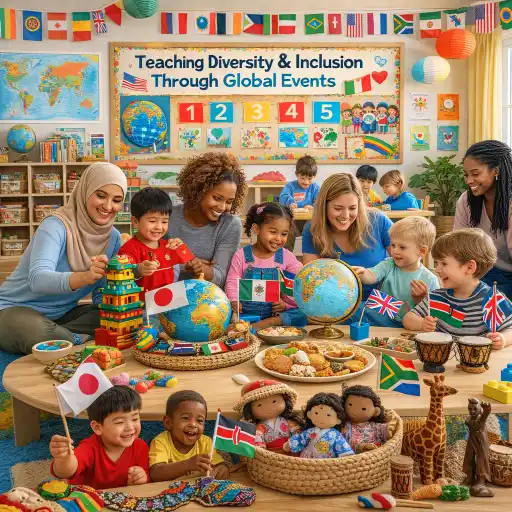 For a broader framework on connecting these moments to your curriculum and promoting young children’s global awareness and critical thinking, see Global Education.
Why should we use global events to teach diversity and inclusion?
Why it matters:
- Children learn from real life. A global event is a natural way to show how people are different and similar. See ideas in How Can Early Childhood Classrooms Celebrate Diversity and Inclusion?.
- It builds empathy and safety. When children know about others, they are kinder and braver with friends.
- It helps families feel seen. Inviting family stories ties the #families in your program to classroom learning.
Practical reasons:
- Global events are teachable moments you do not have to invent.
- They are age-appropriate: choose one small idea for toddlers and a richer activity for preschoolers.
- They connect to your daily routines (greetings, story time, art).
Cite: For program ideas and checklists, review How to Create an Inclusive Childcare Environment.
How can I plan respectful, safe activities around world events?
Plan with care. Use these steps so your work is respectful and family-friendly.
- Ask families first. Send a short note with choices: photo, song, short demo, or "pass". See family-engagement tips in ChildCareEd’s guide.
- Pick one clear goal: 1) Name the place, 2) hear a family story, or 3) try a song. Small goals keep activities safe for young children.
- Use real items, not costumes that stereotype. ChildCareEd warns about common slip-ups in How to Teach Children About Diversity Through Activities.
- 🤝 Supporting diverse learners: For staff who want practical tools to recognize and respond to children's individual cultural and family needs, ChildCareEd's Recognize, Respond, Respect: Supporting Diverse Learners
 Buy Now $55.00 is a 6-hour online course covering how to identify bias, respond to individual needs, and build environments where every child feels seen — directly supporting the greeting board, family wall, and one-clear-goal planning steps described throughout this article.
 - Support feelings. If a global event is upsetting in the news, give quiet space and reassure children—see trauma support ideas from St. Jude.
- Plan logistics: timing, translations, and consent for photos. State rules matter—state requirements vary - check your state licensing agency.
What classroom routines and activities work best in Michigan?
Keep activities short, repeated, and hands-on. Use simple materials and daily routines so learning sticks. Here are easy choices you can try this week.
- 🎶 Greeting Board: Teach 2–3 greetings in children’s home languages. Repeat each day. (See multilingual tips in ChildCareEd.)
- 🎨 Story & Art Corner: Read a short picture book about a place or family. Let children draw a family portrait and label it with one word in their home language.
- 📚 Passport Play: Give each child a paper passport sticker for each country or culture you explore—simple, fun, and repeated play helps memory (ChildCareEd activities).
- 🍽️ Food Talk (photo-based): Use pictures only if you cannot serve real foods. Talk about mealtime traditions and check allergies and beliefs first.
- 📷 Family Wall: With permission, display family photos and short captions that children help write. Family choice matters—always ask.
Professional learning: Michigan programs can use local courses and online options to train staff. See Michigan course listings at Childcare Courses in Michigan.
🌍 Diversity, equity, and inclusion: To help staff plan culturally respectful activities around global events, ChildCareEd's Diversity, Equity, and Inclusion in Education Buy Now $16.00 is a 2-hour online course covering how to create inclusive learning environments, recognize bias, and build classroom practices that honor every child's background — a direct match for the family engagement, real-item, and avoid-stereotype steps outlined in this guide.
How do we support children who are upset and avoid common mistakes?
Global news or events can worry children. Use these steps to support them and avoid pitfalls.
- Listen and reassure. Simple words help: "I’m here. You are safe."
- Limit media exposure. Too much news can increase fear—St. Jude suggests limiting images for young children (St. Jude).
- Keep routines: regular meals, rest, and greetings help children feel steady.
- Document and follow-up: note concerns, inform families, and plan support together. Good family communication tips for Michigan centers are in How can Michigan childcare centers improve parent communication?.
Common mistakes and how to avoid them:
- 🚫 One-day events only — fix: weave culture into daily materials and routines (ChildCareEd DEI guide).
- 🚫 Asking one child to represent a whole culture — fix: use books, photos, and family volunteers.
- 🚫 Using stereotypes or costumes — fix: choose real-life stories and respectful items.
Conclusion
1) Use global events as small, regular teaching moments. 2) Plan with families and choose one clear goal for each activity. 3) Keep activities short, repeat them, and support children’s feelings. 4) Train staff and check state rules—state requirements vary - check your state licensing agency. For ready tools, see ChildCareEd resources such as How to Teach Children About Diversity Through Activities and How to Create an Inclusive Childcare Environment. Your steady, kind work helps Michigan children and #children, and your #Michigan programbecomese more caring, curious, and connected to the world.
- CDA Home Visitor Subject Area 3 Part 3 Birth to 5
- Engaging Families During a Pandemic
- Diversity, Equity, and Inclusion in Education: For Workforce Solutions
- From Play to Planning: Building Culturally Competent, Child-Centered Curriculum
- Open Ears: Listening in Child Care
- Diversity, Equity, and Inclusion in Education
- Diversity, Equity, and Inclusion in Education
- Texas Director Credential
- Access for All: Inclusion and the ADA
- Supporting Families and Caregivers in Language and Literacy
- CDA Certification en Español: Recursos y Consejos para Educadores Bilingües
- 🌎 ¿Cómo apoyo a las familias diversas mientras honro su cultura y valores? 💜
- ¿Cómo hacer actividades navideñas inclusivas para todas las familias?
- Recursos en Español sobre el Sueño Seguro del Bebé
- 10 Ejemplos de Cómo la Cultura Influye en el Desarrollo Infantil
- Normas de Licenciamiento de Cuidado Infantil en Virginia para Centros Diurnos Infantiles y Hogares Diurnos Familiares
- Proporciones de Cuidado Infantil y Tamaños de Grupo por Edad en Maryland (Guía Rápida para Centros y Hogares)
- Proporciones de Cuidado Infantil y Tamaños de Grupo por Edad en Nueva Jersey (Guía Rápida para Centros y Hogares)
- Proporciones de Cuidado Infantil y Tamaños de Grupo por Edad en Virginia (Guía Rápida para Centros y Hogares)
- Cómo Trabajar en el Cuidado Infantil en Carolina del Norte: Requisitos y Pasos
- Cómo Trabajar en el Cuidado Infantil en California: Requisitos y Pasos
- Cómo Ser Maestra de Preescolar en Maryland
- Capacitación Previa al Servicio para Proveedores de Cuidado Infantil en Nevada
- How can we celebrate diversity and inclusion in California early childhood classrooms?
- Celebrando la amistad en el cuidado infantil durante el Día de los Mejores Amigos
- Canciones, juegos y preguntas de círculo para niños
- How can Michigan child care programs use global events to teach diversity and inclusion?
- Cómo simplificar la capacitación para sus empleados de daycare
- How can I integrate the World Cup into my daycare program in an inclusive, safe, and developmentally appropriate way?
- How Can You Celebrate Black Culture and Music Effectively in Your Program?
