Every day in your program shows how rules help children feel safe and learn. Short, clear rules make the day calmer for teachers and kids. This article is for child care providers and directors. You will get easy steps, posters, and scripts you can use tomorrow. Remember: state requirements vary - check your state licensing agency.
Why this matters: When children know the plan, they worry less, join activities more, and behave kinder with friends. Clear rules protect everyone, build trust, and help learning. For quick tips on building a positive learning space, see ChildCareEd: Creating a Positive Learning Environment.
What short rules should we use so preschoolers can remember them?
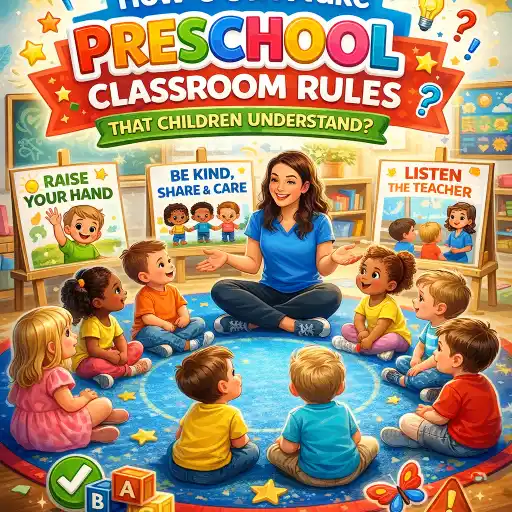
- 😊 Keep rules to 3–5 statements (example: "Walking feet", "Hands are for helping", "Use kind words"). See ChildCareEd's guide on clear rules.
- 🔢 Number or use icons for each rule so children can point and count the rules during circle time.
- 📷 Add a photo or drawing to each rule. Real photos from your room help most; free posters are available at ChildCareEd posters Buy Now $0.00.
- 👉 Teach rules with a short gesture or song so non-readers learn fast (see CSEFEL tips on routines: CSEFEL What Works Brief #3).
Why it works: Short and positive rules tell children what to do, not just what to stop. When children help make or act out rules, they remember them more. For ideas on involving children, check Eastern CT's guide. Use these to shape your #rules and your #preschoolers' day.
How do we teach and practice the rules so children actually follow them?
- 😊 Say it: Tell the rule in a short phrase ("Our rule: walking feet").
- 🔁 Show it: Model the rule with a puppet, a photo, or a teacher acting it out.
- 🎭 Try it: Let children practice with a quick role-play or game right away.
- 👏 Praise it: Give specific praise ("I see Ana using walking feet—thank you!").
Extra tips:
- 🎵 Make a tiny chant or song for each rule so it sticks. ChildCareEd has short phrase ideas in their classroom management post. For a broader set of practical strategies to manage group behavior and structure engaging activities, see Preschool Classroom Management: Tips for Success.
- 👉 Use gestures (pointing foot for walking feet) and keep practice during transitions.
- 📅 Repeat teaching often—little bits every day work better than a long talk.
Teaching helps children learn cause and effect and builds their skills. If some children need extra help, make a one-page support plan so all staff respond the same way. For teaching routines, see CSEFEL What Works Brief #3. Keep your language simple and supportive so children and families feel respected. These steps help your #classroom become calm and kind.
How can the room layout and daily routines help rules succeed?
The room and schedule are helpers. When materials, centers, and transitions match how children learn, following rules becomes easier.
- 😊 Define centers clearly: blocks, art, books, sensory. Label bins with pictures so children know where things go. ChildCareEd explains using centers to cut down conflict in Classroom Management.
- 📏 Make wide traffic lanes and remove long runways to prevent indoor running.
- 🧰 Provide duplicates of popular materials so children don’t need to fight over one toy.
- ⏲️ Use a visual daily schedule at child height and give short warnings before transitions ("2 minutes"). For visual schedule ideas, see ChildCareEd morning routine Buy Now $0.00 and CSEFEL tools (What Works Brief #3).
- 🛋️ Create a cozy calm corner with 2 choices (breathing or a sensory toy) and teach children to use it when calm.
Simple signals help: a bell, clap pattern, or raising a hand. Teach the signal the same way you teach a rule: say, show, practice. Small classroom jobs help children feel responsible and remind them of rules; see job ideas at ChildCareEd: Classroom Dos and Don'ts Buy Now $0.00. When space fits the children’s needs, your #routines work and stress drops for staff.
What can I do when rules are broken without yelling or shaming?
Stay calm. Short, consistent responses teach more than long lectures. Use a 3-step calm script and follow through kindly.
- 🧘 Stay calm and get to the child's level. Lower your voice and breathe.
- 📣 Name the rule and the action: "Hands are for helping. Put your hands in your lap."
- 🔁 Give the next step: "When you are ready, you may join the blocks."
If a child keeps testing, offer two teacher-approved choices. Examples:
- 😊 "You can put your shoes on now, or in one minute."
- ✋ "You can sit on the carpet or at the table."
Fair follow-through examples:
- If a child throws a toy: remove it briefly and offer a safe alternative.
- If a child runs: walk back together and practice walking feet.
- If a child hurts another: support the injured child, then help repair the relationship with a short guided chat.
Common mistakes and how to avoid them:
- 🚫 Too many rules — keep 3–5 main rules.
- 🚫 Posting rules but not teaching — practice with role-play and chants.
- 🚫 Inconsistent adult responses — make a simple team plan and share it with all staff.
- 🚫 Blaming environment — check room setup and schedule first as causes.
After things calm, use a short repair chat: "What happened? How did it feel? What can we do next time?" For scripts and role-play ideas see ChildCareEd's management strategies and CSEFEL guidance (What Works Brief #3). These steps teach skills and keep dignity intact for the child and the group. Focus your team on being #calm and #consistent for best results.
Conclusion — What should you try this week?
Try one small change and watch the difference:
- 😊 Pick one rule and post a photo poster at child height.
- 🔁 Teach it with the 4-step plan: say, show, try, praise.
- 🧰 Label one center and add one duplicate toy to reduce conflict.
- 📣 Send one positive note to a family this week (strength + fact + plan).
Quick FAQ:
- Q: How many rules? A: Aim for 3–5 short rules. See Study.com.
- Q: Should children help make rules? A: Yes—children remember better when they help create rules (Eastern CT).
- Q: What if one child keeps breaking a rule? A: Collect simple data, check triggers, and use a small support plan with family input.
You are doing important work. Small, steady steps make big changes for children and staff. For extras like printable posters, job charts, and lesson plans, start at ChildCareEd. Keep your focus on clear #rules, steady #routines, and kind teaching for every #child in your #classroom.
Use 3–5 simple, positive rules. Keep each rule short (1–7 words) and add a picture. Children learn best when rules are easy to say and to see.Teaching rules takes short, repeated steps. Do not just post a rule—teach it. Use a simple 4-step routine each time you introduce a rule.- Exploring the World: Fun and Educational Social Studies Activities for Preschoolers
- Playful Learning: How Games Help Preschoolers Grow
- Winter Wonders: Incorporating Seasonal Science in Preschool Curriculum
- How to Create and Implement a Visual Schedule for Your Preschool Classroom
- Benefits of Preschool: Early Education Matters
- Celebrate Mahavir Jayanti with These Fun Kids Activities
- Creative Martin Luther King Jr. Day Activities for Preschool, Pre-K, and Kindergarten
- How to Become a Preschool Teacher in Illinois
- How can preschool teachers use simple classroom management techniques that really work?
- How can I organize an effective preschool classroom?
- Canciones, juegos y preguntas de círculo para niños
- What qualifications do preschool teachers need to work in my program?
- What Do You Need to Become a Pre-K Teacher?
- How Do I Become a Pre-K Teacher?
- Preschool Classroom Rules: How to Teach Expectations Without Constant Reminders
- What Does California Preschool Compliance Really Cost? A Director’s Annual Budget Checklist
- How Can Child Care Providers Help Children Understand Classroom Expectations?
- How Can Child Care Providers Create Classroom Rules That Children Understand and Use?
