When toddlers push a cart, pull a wagon, and deliver pretend harvest goods, everyday movement becomes purposeful play. Explore how to turn a few safe props into opportunities for strength, coordination, language, and early problem-solving—and deepen your planning with Baby Play: Planning Infant and Toddler Activities  Buy Now $16.00, a course that can help you create individualized, developmentally appropriate experiences. For a practical seasonal starting point, the Toddler Harvest Delivery Play Pack can inspire a welcoming harvest-themed setup; explore it alongside the ideas below.
Why is push-pull delivery play a meaningful fall experience?
Mobile toddlers are often eager to move objects, repeat actions, and test what their bodies can do. A harvest-delivery game gives those impulses a simple, child-centered purpose: load a large pretend pumpkin, push a sturdy cart to a destination, unload it, and begin again. The play can feel like a tiny adventure while offering practice in balance, coordination, spatial awareness, and persistence.
Outdoor experiences add changing colors, breezes, and sounds that can make the route interesting without requiring an elaborate lesson. Head Start describes how outdoor play can extend learning through experiences and materials not typically available indoors. A short route across a clear outdoor area can therefore connect seasonal noticing with active movement.
The social and cognitive opportunities matter, too. Children may decide what to deliver, where it goes, or whether a basket is “full.” Caregivers can name actions—“push,” “pull,” “stop,” “deliver”—and respond to toddlers’ gestures and words. This is not a race or a task to complete correctly. The aim is joyful #movement, shared attention, and opportunities for each child to explore at their own pace.
How can providers set up a simple harvest delivery route?
A successful invitation can use familiar, sturdy materials and a route that is easy to supervise. Set up two or three clearly marked places, such as a “harvest patch,” a “market,” and a “barn.” Use large pretend produce or soft fabric items, a low-sided basket, and a stable push toy or wagon that is appropriate for the children in your care. Keep the route short and uncluttered.
- Place a few large, lightweight pretend pumpkins or apples in a basket at the starting point.
- Invite toddlers to load one or two items, then push or pull the cart toward a marked destination.
- At the destination, let children unload, sort, or hand an item to a caregiver or peer.
- Repeat the route or let children choose where the next delivery goes.
- 🍂 Add a seasonal touch with fall-colored fabric or a picture sign, rather than small loose decorations.
Follow children’s interests instead of insisting that everyone complete every step. Some may prefer walking beside the cart, carrying one large item, or watching before joining. Adapt the distance and materials for children’s mobility, balance, sensory preferences, and confidence. A play pack can offer useful prompts and visual ideas, but providers should select only the pieces that fit their group and supervision capacity.
What skills can children practice as they push, pull, and deliver?
Transport play brings together whole-body movement and purposeful action. Pushing a stable cart calls for forward movement and coordination; pulling a light wagon invites children to adjust their steps and notice what follows behind them. Picking up and placing large pretend produce adds reaching, grasping, and controlled release. The specific movement challenge will vary with each toddler’s experience and abilities.
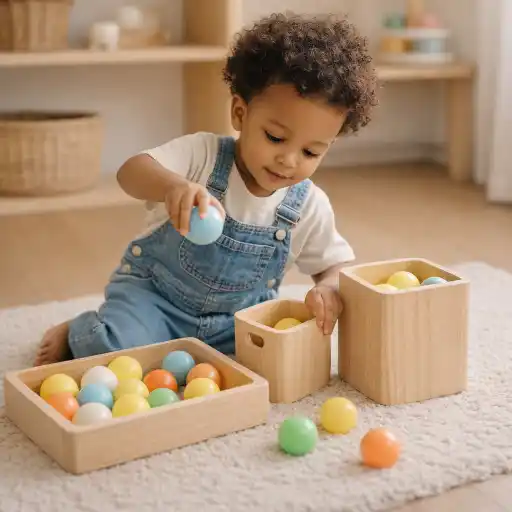
Play also offers natural opportunities for early concepts. Children can notice that a cart moves when pushed, that a basket becomes full as objects are added, or that the same item can be taken to a different destination. These observations support early problem-solving without turning play into a formal lesson. Keep language descriptive and responsive: “You pushed it to the market,” “The basket is full,” or “Let’s see what happens when you pull slowly.”
- Gross-motor coordination: walking, stopping, steering, and changing direction.
- Fine-motor practice: placing large objects in and out of a container.
- Communication: using words, gestures, sounds, or signs to request, label, and share.
- Social learning: taking turns, delivering to another person, or solving a simple play disagreement.
Research-informed guidance on outdoor play notes benefits for physical development as children move, explore, and practice emerging skills. The caregiver’s role is to notice each child’s efforts and offer just enough support to keep the experience accessible and engaging.
How can caregivers extend the play without taking over?
Start by observing what toddlers choose to do. One child may repeatedly push the cart along the same path; another may focus on loading and unloading. Repetition is purposeful practice, not a sign that the activity needs constant adult changes. Join as a play partner: narrate an action, offer a simple choice, or introduce one new idea when the child seems ready.
Use short phrases that connect actions, objects, and destinations. “The apple goes to the market,” “You’re pulling the wagon,” or “Should we deliver the pumpkin to the barn?” Give children time to respond in their own way. A point, glance, movement, sound, or word can all communicate a choice. If children show interest, add pretend roles such as grower, delivery helper, or customer without assigning roles rigidly.
Adjust the invitation to include different ways to participate. A child who is not ready to push a cart may place a large item in a stationary basket or hand it to an adult. A child who uses a mobility aid can participate with accessible destinations and adapted materials. Keep expectations flexible and celebrate exploration rather than speed or accuracy. For more on individualized planning, the course linked above offers a broader learning experience for designing infant and toddler activities around children’s abilities and interests.
How can programs keep transport play safe and inclusive?
Before play begins, inspect the route, equipment, and materials. Choose a level, clear surface and remove trip hazards, sharp debris, standing water, or unstable objects. Check that push toys and wagons are sturdy, age-appropriate, and in good repair; avoid overloading them or using equipment that tips easily. Keep the play area away from roads, parking areas, stairs, and water.
- Maintain active supervision and position yourself to see and reach children along the route.
- Use large, clean, durable pretend items; avoid small objects that could create choking risks, especially for children who mouth materials.
- Set clear boundaries and keep the route short enough for staff to supervise effectively.
- Consider weather, shade, clothing, and children’s comfort when playing outdoors.
- Clean reusable props according to program procedures and remove damaged materials.
Outdoor play can support health and movement, while thoughtful preparation helps reduce preventable risks. State requirements vary - check your state licensing agency and follow your program’s safety policies. Inclusion is part of safety: provide appropriate space, manageable distances, and alternate ways to join so every toddler can participate meaningfully.
How can teams observe learning and avoid common pitfalls?
Use brief, objective notes to connect the experience to future planning. Record what a child did, the support offered, and what might be interesting next—not a judgment about whether the child succeeded. For example: “Mina pushed the empty cart along the path, paused at the market sign, and placed a large fabric apple in the basket. Next time, offer a second destination.” Observations like this help educators coordinate with colleagues and share concrete details with families.
Common pitfalls are manageable with a little preparation:
- Making it a race: Remove timers and competition; toddlers benefit from exploring at their own pace.
- Overloading the cart: Offer only a few large, light items so the cart stays manageable.
- Over-directing: Use a simple prompt, then allow children to decide how to play.
- Creating a crowded route: Keep paths clear and make sure supervision remains effective.
- Expecting identical participation: Accept watching, carrying, walking beside the cart, or using adapted materials as valid ways to engage.
For directors, a brief staff huddle can clarify the play intention, supervision positions, materials, and cleanup responsibilities. A repeatable plan makes seasonal experiences easier to offer while leaving room for children’s ideas.
Conclusion: What makes fall delivery play valuable for mobile toddlers?
Fall transport play is valuable when it combines movement, child choice, responsive language, and careful supervision. Pushing, pulling, loading, and delivering pretend harvest goods can give toddlers meaningful practice with coordination, communication, persistence, and social connection. The activity does not need elaborate equipment: a short, safe route and a few large props are enough to begin.
Plan for the children you know. Offer alternate ways to participate, notice what captures each child’s attention, and adjust the setup as their skills and interests change. The central question—how can fall transport play help mobile toddlers learn through movement?—has a practical answer: let children move with purpose, stay alongside them as a responsive partner, and make safety and inclusion part of the design.
Explore five ChildCareEd courses
- What Makes Me Special: An Overview of Autism and ADHD
- The ABCs of Behavior: Turning Challenges into Learning Opportunities
- CDA Bridge Bundle: Infant/Toddler without Portfolio Review
- Mysteries of Challenging Behavior Solved
- Play with Purpose: Supporting Children with Autism
- Sensitive Periods in Montessori: Guiding Natural Learning
- CDA Infants/Toddlers: Health and Safety
- Wellness in Action: Teaching Healthy Habits to Children
- CDA Infants/Toddlers: Smart Nutrition & Feeding
- Playing with a Purpose: Infant/Toddler Lesson Planning
- CDA Certification en Español: Recursos y Consejos para Educadores Bilingües
- ¿Cómo puedo usar escenarios de juego de roles de primeros auxilios en mi aula?
- 10 Ejemplos de Cómo la Cultura Influye en el Desarrollo Infantil
- Proporciones de Cuidado Infantil y Tamaños de Grupo por Edad en Virginia (Guía Rápida para Centros y Hogares)
- Actividades de Otoño Fáciles para Preescolares esta Temporada
- Cómo Trabajar en el Cuidado Infantil en Carolina del Norte: Requisitos y Pasos
- Summer Field Trips for Daycares in Texas
- Celebrando la amistad en el cuidado infantil durante el Día de los Mejores Amigos
- Canciones, juegos y preguntas de círculo para niños
- Baby’s First Fall: Simple Ways to Explore the Season Through Play
- Hello, Fall! Cozy Activities to Help Babies Explore the Season
- How Can Child Care Providers Plan Infant Activities Around Developmental Milestones?
- What Is Developmentally Appropriate Practice? Examples by Age
- How Can You Support Safe Transporting Play Without Losing Your Learning Center?
- What Does a Toddler Block Area Need for Real Experimentation?
- How Can One Floor Mat Offer Two Experiences for Crawlers and Walkers?
- How Can Fall Sensory Activities Support Infant and Toddler Development?
- How Can Everyday Fall Routines Support Infant and Toddler Development?
- How Can Educators Keep Toddlers Moving Indoors When Outdoor Play Isn’t Possible?
- How Can Fall Transport Play Help Mobile Toddlers Learn Through Movement?
