Lunchbox conversations can support curiosity and belonging—or leave a child feeling judged about what their family packed. Build practical, respectful strategies with the [On My Plate: Children’s Nutrition course](https://www.childcareed.com/courses-on-my-plate-children-s-nutrition.html), which explores children’s nutrition, MyPlate, meal planning, and portion sizes. Read on for ways to discuss variety while honoring each child and family.
Why does neutral food language matter?
Children notice how adults talk about food. Comments such as “That’s junk,” “You need something healthier,” or “Why didn’t your family pack vegetables?” can turn lunch into a moment of embarrassment. Even when an adult intends to encourage variety, judging a lunch may sound like judging the child or their family.
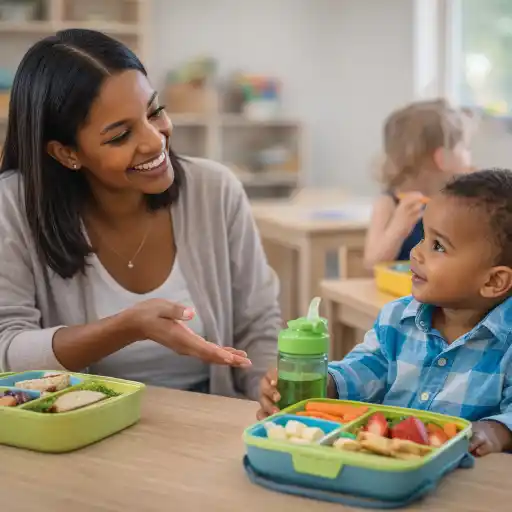
Neutral language keeps attention on the food’s name, qualities, and place in a meal—not on moral labels. The food-neutral language discussion recommends using actual food names, allowing children to make choices, and exploring foods through the senses rather than ranking them. Providers can say, “Your sandwich has a soft filling,” or “I see orange slices,” without implying that one lunch is superior.
This matters because meals are social learning experiences as well as nourishment. A review of early childhood mealtimes found that repeated exposure, adult modeling, and the social life of meals are important themes in the research. Respectful conversation helps preserve a welcoming table where children can notice, talk, and learn without pressure.
How can providers invite curiosity without judging a lunch?
Use open, optional invitations rather than evaluations. A child is not required to explain, share, or taste their food. Let them decide whether to join the conversation, and accept pointing, gestures, home-language words, or silence as valid responses.
- “What do you notice about the color or shape?”
- “That cracker looks crisp. What do you notice?”
- “Would you like to tell us what this food is called at home?”
- “Foods can taste, smell, and feel different. You can explore in the way that feels comfortable.”
Use descriptive words such as crunchy, juicy, warm, smooth, or tangy. Avoid praise that ranks children—“best eater”—and avoid criticism such as “picky” or “bad food.” Children may be ready to look, talk, smell, or touch long before they choose to taste. As guidance on positive food environments notes, pressure can undermine autonomy and make meals more stressful; repeated, low-pressure exposure is a more supportive approach.
🍎 Try a simple observation prompt: “I notice the apple is red and shiny.” Then pause. A pause makes room for the child’s own idea without turning the exchange into a quiz.
How can an activity teach variety without ranking foods?
Use the Picnic Food Categories: Cut-and-Paste Sorting Activity as a playful invitation to notice and classify food pictures. Explain that sorting is one way to organize foods, not a scorecard for lunches. Children can sort by color, texture, shape, where a food grows, or how people might serve it. For older preschoolers, you can introduce food-group categories in simple, flexible terms.
Try asking, “What do these foods have in common?” or “Could we sort them another way?” A tomato, for example, may fit a botanical fruit category and also be commonly grouped with vegetables in everyday meals. Such examples show that categories depend on the question being asked; they do not determine whether someone’s lunch is acceptable.
Pictures and play food can make the activity accessible and reduce concerns about allergy exposure. Invite children to contribute familiar foods and names from home, without asking them to represent an entire culture or disclose private family circumstances. The Food scramble and sort activity also encourages educators to include foods that reflect different cultures and food traditions.
- Offer several ways to participate: sorting, pointing, describing, or observing.
- Pair new examples with foods children recognize.
- Focus on language, comparison, and reasoning—not on whether children eat a food.
How can staff respond to different lunches and family choices?
Children’s lunches reflect many realities: culture, schedule, family preferences, food access, medical needs, and what a child currently accepts. Providers may not know the story behind a lunch, so curiosity and respect are safer than assumptions. Avoid comparing lunchboxes or making public comments about cost, quantity, or perceived nutritional quality.
If a child asks why lunches differ, answer simply: “Families choose different foods. People have different favorites, traditions, and needs.” Then bring the conversation back to discovery: “What colors do you see?” or “What foods do you enjoy at a family celebration?” Participation should always be optional.
When a concern relates to a written dietary plan, allergy, choking risk, or program policy, handle it privately and follow established procedures. Discuss practical questions with the family in a collaborative tone, not in front of children. Research on nutrition communication in early childhood settings identifies trust, time, and language differences as factors that can shape family-provider conversations; respectful, specific communication can support partnership. State requirements vary - check your state licensing agency.
Directors can help by agreeing on shared language, reviewing mealtime expectations with staff, and making sure substitutes know the program’s approach. Consistent, respectful responses help children experience mealtime as a place of welcome.
What common pitfalls should providers avoid?
Good intentions can still create pressure. A provider may want to encourage a child to try an unfamiliar food, but repeated prompts can make the child feel observed or compelled. The goal is to create opportunities for positive food experiences—not to secure a bite or correct a lunchbox.
- Avoid labeling foods as “good” or “bad.” Use names and sensory descriptions instead.
- Avoid comparing children’s lunches. Do not use one child’s meal as a standard for another.
- Avoid requiring children to taste. Looking, sorting, smelling, and talking are meaningful forms of exploration.
- Avoid asking a child to defend a family choice. Keep sensitive questions private and focused on care needs.
- Avoid treating a sorting category as a judgment. Categories are learning tools, not measures of a child or family.
Staff can practice neutral phrases during a team meeting. For instance, replace “You should eat your vegetables” with “The peas are on the plate if you want them,” or replace “That’s a healthy lunch” with “I see bread, cheese, and pear slices.” The mealtime practice guidance emphasizes reducing pressure, noticing children’s communication, and making room for diverse food traditions.
When a child declines food, respond calmly and continue the routine. When staff have a genuine nutrition or safety concern, address it through program policy and respectful family communication—not through comments at the table.
Conclusion: How can providers talk about variety without shaming lunches?
Providers can discuss food variety without shaming children’s lunches by using neutral words, inviting curiosity, and respecting children’s choices and family contexts. Describe what food looks, smells, or feels like; offer playful classification activities; and let children participate without an expectation to taste or explain.
For directors, the practical next step is to build shared staff language and routines that make meals welcoming and safe. The Picnic Food Categories sorting activity can support playful learning, while the On My Plate: Children’s Nutrition course  Buy Now $24.00 offers a deeper opportunity to strengthen professional knowledge about nutrition and meal planning. The guiding question remains simple: how can we encourage variety while protecting every child’s dignity? Start with respect, and let curiosity follow.
Courses to explore
- Roots & Resilience: Understanding What Shapes a Child
- Building Equity: Inclusionary Practices in Preschool
- Bienvenido! Welcoming All Families
- CDA Bridge Bundle: Preschool
- CDA Bridge Bundle: Family Child Care
- CDA Bridge Bundle: Infant/Toddler
- Emergent Learning & Development
- Creating Environments that Nurture Growth and Community
- Texas Director Credential
- On My Plate: Children's Nutrition
- Healthy Lunchbox Ideas for the New School Year: Keep Kids Energized & Excited about Their Meals
- CDA Certification en Español: Recursos y Consejos para Educadores Bilingües
- 💛🧩 ¿Cómo puedo hacer que mi enseñanza sea inclusiva para los niños con autismo?
- Curso de Comunicación de 9 Horas de Maryland
- 10 Ejemplos de Cómo la Cultura Influye en el Desarrollo Infantil
- Cómo Empezar una Guardería en Casa: Requisitos y Pasos
- Proporciones de Cuidado Infantil y Tamaños de Grupo por Edad en Maryland (Guía Rápida para Centros y Hogares)
- Proporciones de Cuidado Infantil y Tamaños de Grupo por Edad en Nueva Jersey (Guía Rápida para Centros y Hogares)
- Proporciones de Cuidado Infantil y Tamaños de Grupo por Edad en Virginia (Guía Rápida para Centros y Hogares)
- ¿Cuál es la Diferencia Entre la Crianza Respetuosa y la Crianza Permisiva?
- Lista para Guardería en Casa en Texas: Cómo Iniciar una Guardería en el Hogar
- Apoyo en Preescolar para Retrasos del Habla: Estrategias Simples que Ayudan
- Retraso del Habla en la Guardería: Cómo Pueden Ayudar los Proveedores
- Cómo Trabajar en el Cuidado Infantil en Carolina del Norte: Requisitos y Pasos
- Requisitos para Guarderías en Casa en Georgia
- Celebrando la amistad en el cuidado infantil durante el Día de los Mejores Amigos
- Canciones, juegos y preguntas de círculo para niños
- Cómo simplificar la capacitación para sus empleados de daycare
- How Can Providers Talk About Food Variety Without Shaming Children’s Lunches?
- How Can Child Care Providers Teach Healthy Habits Without Focusing on Children’s Weight?
