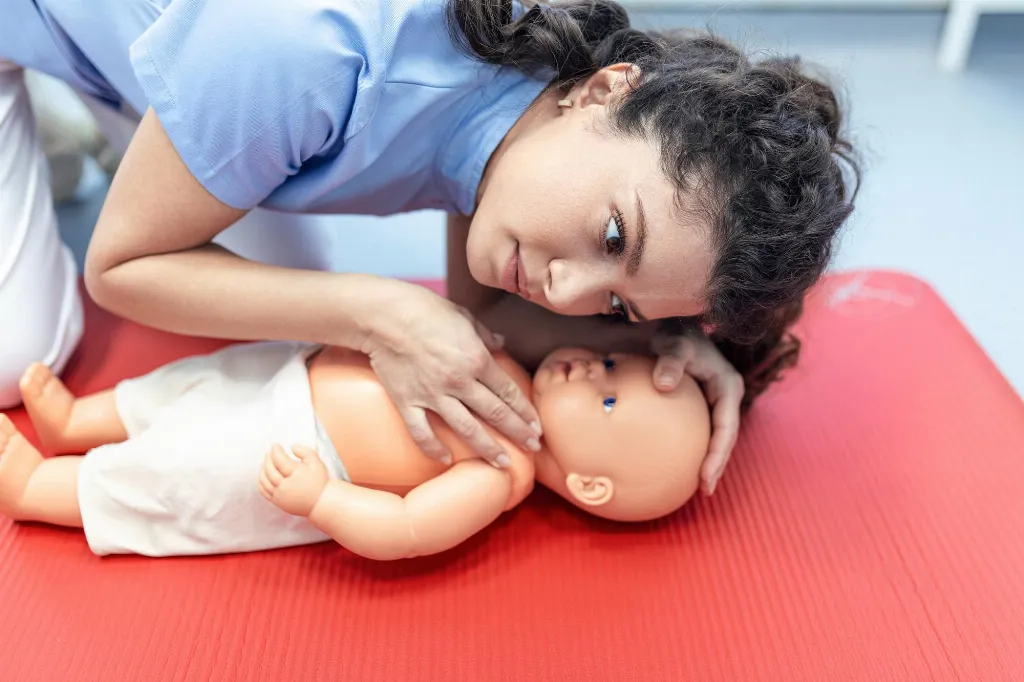
 Every child care team hopes they never need emergency skills. But accidents happen. Short, smart practice helps your staff act fast and calm. Practice builds muscle memory so hands and voices move without panicking. Practice with simple drills, role play, and equipment checks. Practice #firstaid and #CPR so your team keeps #children safe. Good #training builds #safety.
What are the first steps staff should practice every month?
Start with the “first minute” routine. When someone is hurt or not breathing, the first minute matters most. Make a short list and train it until everyone can say it without stopping.
🔍 Check the scene fast. Is it safe for staff and children?
🤚 Check the child. Tap and shout for older kids; touch and talk gently for infants.
📞 Send one staff member to call 911 and give clear directions (address, what happened).
⚡ Send another staff member to get the AED and first aid kit if available.
👐 Start care right away: compressions, rescue breaths, or choking steps as needed.
Practice these steps as a team, using short 10–15 minute drills. For checklist ideas and a monthly plan, see the ChildCareEd article on monthly practice: Aid CPR Skills Every Child Care Provider Should Practice Monthly. Also review the ABCs (Airway, Breathing, Circulation) as a guide in The ABCs of First Aid.
How do we practice compressions, rescue breaths, choking care, and AED use quickly and safely?
Hands-on skills need safe practice tools. Use manikins, barrier masks, or practice-only drills (no real breaths on children). Everyone should know how to do compressions and how to ask for help.
🧸 Use a child or infant manikin for chest compressions and rescue breaths. Manikins help build confidence and skill — see options and benefits in training manikins resources like medical training manikins.
👩🏫 Run short rounds: 30–60 seconds per person for compressions practice. Coach each other kindly.
🩺 Practice rescue breaths with a pocket mask or barrier device. Know where masks are stored and how to open them fast.
🚨 Practice choking response as age-specific drills: back blows and chest thrusts for infants; abdominal thrusts for larger children. Follow your training rules.
⚡ Practice AED steps monthly: location, open, power on, follow voice prompts. Even if you never touch it, staff should know who retrieves the AED and who stays with the child.
Use certified courses to learn correct technique. ChildCareEd offers in-person and blended Pediatric First Aid & CPR courses that meet many state rules: Pediatric In-Person First Aid & CPR/AED Buy Now $95.00 and Pediatric Blended First Aid & CPR/AED Buy Now $85.00$80.00.
For virtual or bundle options, review program bundles such as Heartsaver Pediatric training for workplaces: Heartsaver Pediatric First Aid CPR AED Virtual.
How can we run short, realistic drills that fit busy child care schedules?
Keep drills short, focused, and frequent. Busy programs can still build skill with 10–20 minute sessions. Here is a simple monthly schedule you can follow. It uses the same ideas found in the ChildCareEd monthly practice plan: monthly practice guide.
Week 1 (10–15 min): First-minute routine and compressions practice.
Week 2 (10–15 min): Choking drills (infant and child age steps) with role-play.
Week 3 (10–15 min): AED and teamwork practice — who retrieves, who stays, who moves children.
Week 4 (10–15 min): First aid scenario (bleeding, allergic reaction, or seizure) and supplies check.
Tips to keep drills realistic and fast:
- ✅ Rotate roles so everyone practices calling 911, getting the AED, and supervising the group.
- ✅ Use short role-play scripts. Practice the words staff say: “Call 911 now,” “Bring the AED,” “Move the children to the safe area.”
- ✅ Keep a log: date, skill, who attended, one improvement idea.
Also review community and school guidance on drills and training. The CDC gives tips for planning and practicing for emergencies in schools and child care: Before, During, and After an Emergency. FEMA has planning checklists you can adapt: FEMA preparedness for childcare Buy Now $0.00.
How do we avoid common mistakes and build lasting confidence?
Confidence comes from repetition, reflection, and safe rehearsal. Use short mental practice, physical rehearsal, and honest team feedback. Mental practice (imagining the steps clearly) can speed learning and help staff react calmly.
Common mistakes and how to avoid them:
- ❗ Skipping the “who does what” plan. Fix it by assigning roles and rotating them in drills.
- ❗ Forgetting supplies. Check kits monthly: gloves, masks, bandages, AED pads and battery dates.
- ❗ Practicing CPR on real children. Use manikins or hand-position practice only. See manikin options: training manikins.
- ❗ Doing a long, rare drill and calling it done. Instead, do short frequent practice and log it.
When staff practice often, they can act fast and calmly. That saves seconds and can save lives. Well-run practice also builds trust with families and meets professional safety expectations. For program-wide emergency planning and courses, ChildCareEd offers training and readiness resources: Stay Ready: First Aid and Emergency Procedures.
Quick FAQ
Q: How long should monthly practice take? A: 10–20 minutes per session works well.
Q: Do we need manikins? A: They help a lot. Use them for compressions and breaths when possible.
Q: Can we do blended or virtual courses? A: Yes. ChildCareEd offers blended and RSV options for skills verification: Pediatric RSV First Aid & CPR/AED Buy Now $115.00.
Q: Who should lead drills? A: A trained staff member or someone with current pediatric first aid certification.
Conclusion
Fast first aid starts with short, regular practice. Focus on the first minute steps, safe hands-on practice, quick team drills, and monthly checks of supplies. Use local and national resources — ChildCareEd courses and guides, the CDC, and FEMA checklists — to build a plan that fits your program.- CPR for childcare providers: what to know
- A Lifeline for Little Ones: Why First Aid and CPR Training is Essential for Teachers and Parents
- Pediatric First Aid and CPR Training with ChildCareEd - Empower Yourself!!
- Save Lives With Skill: CPR Training
- BLS Training For Healthcare Providers With ChildCareEd
- ¿Cómo pueden los equipos de cuidado infantil practicar habilidades rápidas de primeros auxilios en situaciones reales?
- ¿Cómo puedo enseñar habilidades de primeros auxilios con escenarios de juego de roles?
- Lista para Abrir una Guardería en Casa en Dakota del Norte: Cómo Empezar
- Actividades de Otoño Fáciles para Preescolares esta Temporada
- Lista para Guardería en Casa en Illinois: Cómo Iniciar una Guardería en el Hogar
- Lista para Guardería en Casa en Texas: Cómo Iniciar una Guardería en el Hogar
- First Aid Lessons for Kids: Simple Skills They Can Learn
- Can Superhero Day Capes and Pretend Play Teach Children to Help Others?
- First Aid Scenarios for Child Care Staff: 10 “What Would You Do Next?” Challenges
- Help or Step Back? First Aid Scenarios That Teach Students Their Safety Limits
